
Vandaag of morgen in huis

Kwaliteit gegarandeerd

Welkomstaanbiedingen ontgrendelen: GRATIS bezorging | Tot 80% korting | Gratis 30 dagen JoyPlus-proefperiode
Download de app
An outdoor pickleball ball set of 6 may seem like a straightforward purchase, but not every ball performs equally well outdoors. On a Dutch court, pickleball balls have to cope with wind, moisture, changing temperatures and rough surfaces. A ball that feels good indoors may deform, crack or fly unpredictably more quickly outdoors.
So don’t just look at how many balls are in the pack. The material, diameter, hole pattern and playing conditions are what really determine whether a set is right for your game.
A marketing term on its own doesn’t tell you much. Check whether the product information gives specific details about the material, temperature range and resistance to cracking. According to NIUPIPO’s product description, the 6-piece set is designed for use across a range of temperatures and comes with a one-year limited warranty. That’s easier to verify than a general claim that a ball is “extremely durable”.
Bear in mind, though, that weather resistance doesn’t mean you should leave the balls out in the sun, rain or frost indefinitely. Store them somewhere cool and dry when you’re not playing.
Outdoor pickleball balls are generally larger and heavier than indoor balls. The sets discussed here have a stated diameter of 74 mm. Their weights vary by product: the set of 6 is listed at 23–26 grams, while the set of 12 is listed at 26.5 grams per ball.
A different size can affect the ball’s flight and how it feels when you hit it. If you’re playing with others, it’s worth agreeing in advance which type of ball you’ll use on court.
A ball may feel fine at first, but after lots of hard hits it can develop dents or start to bounce less predictably. Seams, thin walls and irregular holes can be weak points in particular. A seamless design can reduce the number of visible joins, but it doesn’t guarantee that a ball will never get damaged.
Inspect the balls before every session. Replace one if it’s visibly misshapen, cracked or flying differently from the others.
According to the product information, the 6-piece NIUPIPO set is made from TPE, a thermoplastic elastomer. The description associates this material with flexibility and wear resistance. The 12-piece version is listed as being made from PE. Both materials can be suitable for outdoor use, but the precise playing experience also depends on wall thickness, shape and manufacturing process.
When comparing sets, look for:
So, when assessing the term durable pickleball balls, look at these specific features rather than relying on the product title alone.
These NIUPIPO models are listed as having a diameter of 74 mm. The ball should remain round, with evenly shaped holes. A pattern with multiple holes affects how much air resistance the ball encounters.
According to the product description, the set of 12 has 40 precision-drilled holes. The set of 6 is also described as having a precisely designed hole pattern, but the exact number isn’t stated. For recreational play, a consistent flight is often more important than a broad marketing claim about spin. More advanced players may also want to consider how predictably the ball responds to topspin, slice and hard returns.
Six balls are handy for practising on your own, a casual game with friends or a small match. You’ll have spares if one rolls off the court or gets damaged.
For families, training groups or players who have several sessions a week, a set of 12 may be more convenient. More balls mean fewer interruptions during drills and make it easy to rotate them when some start to show signs of wear.
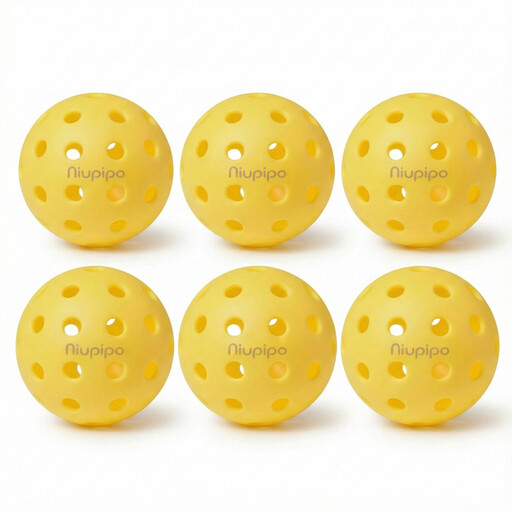
Why it suits this player: The set contains six balls and, according to the product information, is intended for outdoor use in parks, on playing fields and during recreational sessions. That makes it a straightforward choice if you’re just starting out.
The product information specifies TPE, a diameter of 74 mm, a weight of 23–26 g and a seamless design. This gives you key details to compare.
6 balls per set, TPE material, 74 mm diameter and packaging described as suitable for carrying and storage.
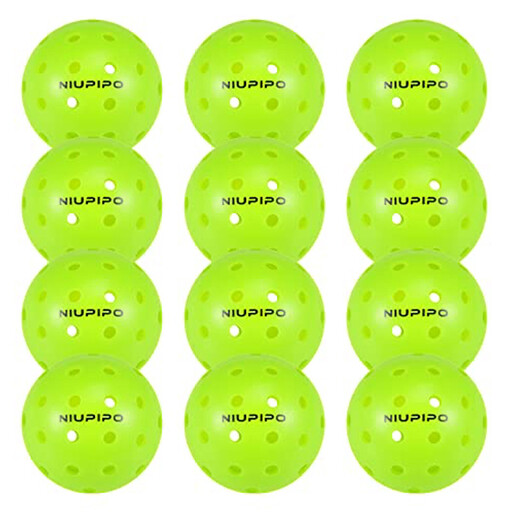
Why it suits this player: This set is ideal for groups, longer training sessions and players who want to take several spare balls to an outdoor court.
The description lists PE material, a 74 mm diameter, a weight of 26.5 g, 40 holes and a seamless construction. That gives you more to go on than an unspecified set.
12 balls, 40 holes according to the product information, PE material and a stated one-year limited warranty.
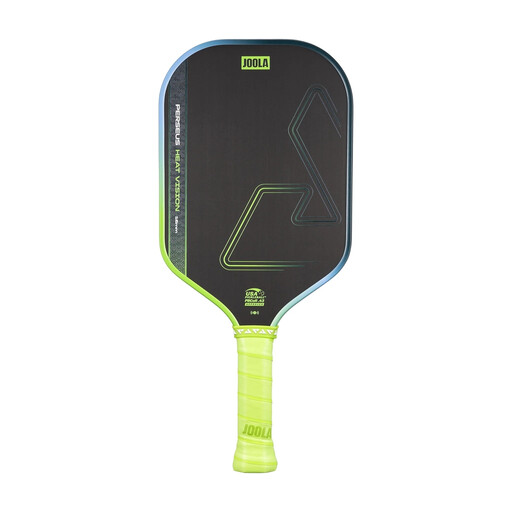
Why it suits this player: This isn’t a ball set, but it’s a useful addition for advanced players who pair their outdoor pickleball balls with a paddle for focused training or match play.
The product information lists a 16 mm core, a textured carbon-fibre surface and care instructions. This makes it easier to compare the materials in detail.
16 mm polymer core, textured surface according to the product description and a perforated handle.
We’ve put together a complete, up-to-date list of products that meet these strict selection criteria and the applicable European safety regulations.
A few simple habits can help prevent unnecessary wear:
Temperature ranges listed in product descriptions are information provided by the manufacturer. According to NIUPIPO’s own product information, the balls are said to withstand temperatures of approximately -30 °C to 40 °C. Treat this as a product specification, not a guarantee of the same playing experience in every type of weather.
For one player or a small recreational game, a set of 6 is often enough. For families, lessons and group matches, a set of 12 is more practical, as you’ll have more spares and won’t need to collect balls as often.
Their lifespan depends on how often you play, the type of court, the temperature and how they’re stored. There’s no set lifespan that applies to every player. Replace a ball as soon as it’s no longer round, shows visible damage or flies noticeably differently.
TPE balls may be marketed for outdoor use. Always check the full product information, including the diameter, weight, hole pattern and care instructions. The NIUPIPO set of 6 is listed as TPE, 74 mm and weighing 23–26 grams. This makes it easy to compare with other all-weather pickleball balls.
