
Vandaag of morgen in huis

Kwaliteit gegarandeerd

Welkomstaanbiedingen ontgrendelen: GRATIS bezorging | Tot 80% korting | Gratis 30 dagen JoyPlus-proefperiode
Download de app
A light that switches on automatically when it detects movement sounds simple. Yet many people buy outdoor lighting that disappoints in practice. The sensor responds too late, the battery runs flat after a dark week, or the casing turns out to be less suitable for rain than the product title suggests.
With this buying guide, you can compare outdoor lighting with a motion sensor using practical, verifiable criteria. Find the right outdoor solar light with a motion sensor, solar wall light, LED outdoor light or motion-sensor night light for your garden, driveway, balcony, entrance or dark indoor space.
A high lumen figure doesn’t automatically mean a light will illuminate your entire driveway. Positioning, beam spread and whether the lamp head can be adjusted also affect the result. A compact wall light with 400 lumens may be suitable by a front door, while a large garden or garage needs a wider spread of light.
Pay attention to the colour temperature, too. 2700–3000K usually gives a warmer glow. 4000–4500K looks more neutral. A higher value can appear whiter, which may not suit every exterior wall or bedroom.
Always check the IP rating. IP44 means protection against splashing water and is suitable for many sheltered outdoor locations, such as a covered entrance or balcony. According to the product specifications, IP65 offers greater protection against dust and water jets, making it a better fit for a light that is more exposed to the elements.
An IP44 light isn’t designed to be submerged or exposed to direct water jets for long periods. Install your light according to the instructions and consider the position of the exterior wall, garden wall or fence.
A solar-powered light only works well if its panel gets enough daylight. Shade from a canopy, tree or neighbouring building can limit how much it charges. Days are shorter in winter, too.
So check:
A sensor with a range of 3 to 5 metres is suitable for a hallway, bedroom or toilet. A longer range is more practical for a driveway or large garden. For example, the UME Solar Outdoor Lights has a stated detection distance of 60 feet and a detection angle of 180 degrees. Check that the stated distance suits your mounting height and the direction the sensor faces.
A wide angle is useful for a path or patio. For a narrow entrance, a smaller angle can help prevent the light switching on unnecessarily.
Lumens measure the amount of light produced. For a small point of orientation, 20 to 30 lumens is often enough. An entrance or wall light may provide around 400 to 1000 lumens. An outdoor security light for a large driveway usually needs a wider spread and strategic positioning.
As well as the lumen count, check:
An outdoor solar wall light doesn’t need a mains connection, but the panel needs to be positioned somewhere suitable. A rechargeable light is more flexible and can be charged via USB, but it needs charging regularly. A wired outdoor light will often need to be installed by a qualified electrician.
Clean solar panels and sensor windows with a soft, slightly damp cloth. For rechargeable models, use a suitable charger only. If you’re mounting a light on a wall, check that the surface is sturdy enough and use the supplied mounting materials as instructed.

Why it suits this buyer: This solar wall light needs no wiring and offers two light modes. It’s a straightforward choice for a front door, balcony or small patio where easy installation matters.
The product information lists an IP44 rating. This means you know the light is designed to withstand splashes, not submersion or direct water jets.
400 lumens per light source, integrated LED, motion sensor and installation without a mains connection.
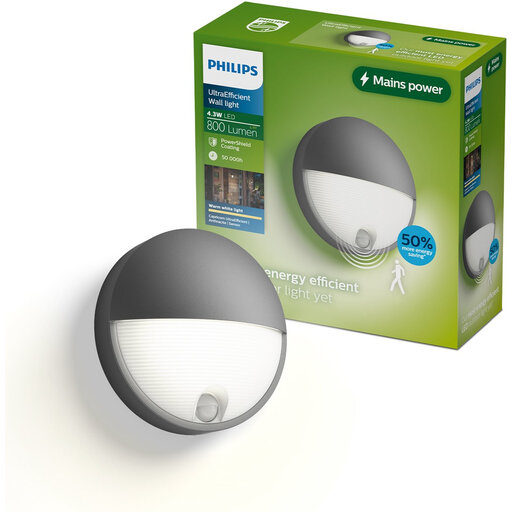
Why it suits this buyer: This fixed LED outdoor light is suitable for an exterior wall, garden or balcony when a neat appearance and automatic activation are important.
The specifications list the IP44 rating, 2700K light colour and 4.3-watt power consumption separately. This lets you compare the light using clear, practical details rather than appearance alone.
800 lumens, integrated LED, motion and dusk sensors, and an aluminium casing according to the product description.

Why it suits this buyer: The three adjustable lamp heads and wide light coverage make this a good fit for a large garden, driveway, garage or patio where light is needed in several directions.
The product details list 302 LEDs, 3000 lumens, three modes, a 180-degree detection angle and IP65. This makes the key lighting and protection details easy to check.
Three lamp heads, three light modes, solar power, a stated 1800 mAh battery and IP65 protection.
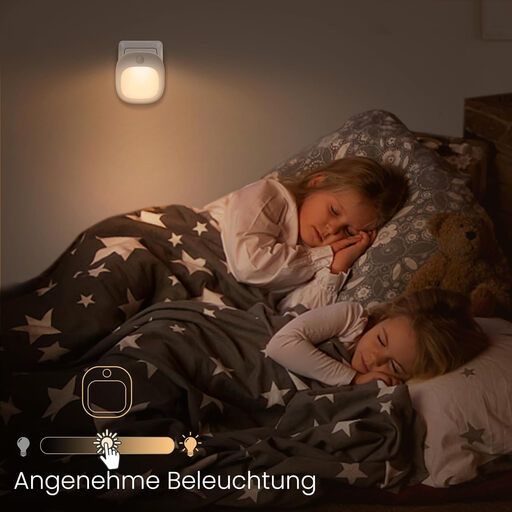
Why it suits this buyer: For a hallway, bedroom, nursery or cupboard, a compact LED night light with USB charging is more practical than a fixed wall light.
The light doesn’t rely on sunlight. Its stated motion detection range is 3 to 5 metres, and the battery charges via USB.
Pack of two, 500 mAh battery, three colour temperatures and five dimming levels according to the product information.
We’ve put together a complete, up-to-date list of products that meet these strict selection criteria and the applicable European safety regulations.
Place the solar panel somewhere it will get as much direct daylight as possible. Point the sensor towards the area where you expect movement, such as a path or driveway. Mount the light securely and make sure branches, drainpipes or walls don’t unnecessarily block its detection range.
A solar outdoor light doesn’t use mains electricity, but how well it works depends on sunlight and battery capacity. A wired LED light uses electricity while it’s on. Actual consumption depends on the wattage and how often the sensor activates the light. So check the wattage, how long the light stays on and how many times it switches on each night.
Lifespan varies depending on the LED module, battery, casing and conditions of use. An integrated LED usually isn’t designed to be replaced by the user. Keep the solar panel and sensor clean, protect the light from water damage and follow the safety instructions. When buying, also check the warranty and whether replacement parts are available.
