
Vandaag of morgen in huis

Kwaliteit gegarandeerd

Welkomstaanbiedingen ontgrendelen: GRATIS bezorging | Tot 80% korting | Gratis 30 dagen JoyPlus-proefperiode
Download de app
A light that only comes on when someone walks past is handy by the front door, garage, driveway or garden path. Outdoor lighting with a motion sensor can also work without fixed wiring if you choose a solar-powered model. However, not every solar outdoor light with a motion sensor is suitable for every location.
Marketing often focuses on a high number of LEDs, a high lumen output or an IP rating. But it’s the practical details that determine whether a light works well in a British garden. So, pay particular attention to these three common pitfalls.
A light with a high output can illuminate a large area, but it can also cause uncomfortable glare. Soft, directed light is often enough for a path. A driveway or dark side wall is more likely to need a wider beam.
So, as well as checking the lumen output, look at:
Warm white outdoor lighting of around 2700 to 3000 K usually gives a softer look. For visibility or an outdoor security light, a more neutral or brighter light may be more practical.
An IP65-rated waterproof outdoor light is protected against dust and water jets under the IP rating system. This doesn’t mean the light can be submerged or exposed to unlimited direct water pressure. Also check where you’ll install it and make sure the connections are properly protected.
IP44 offers a lower level of protection and is best suited to sheltered spots, such as a covered balcony, an entrance with a canopy or a wall that isn’t constantly exposed to wind-driven rain.
An outdoor solar light depends on the amount of daylight it receives. Shade from a fence, tree or tall wall reduces the amount of charge it can collect. Days are shorter in winter, so the light may not stay on for as long.
So, check:
A light with a permanent low-light mode and a brighter sensor mode may use its stored energy more efficiently than one that stays at full brightness for a long time whenever it detects movement.
An outdoor sensor light needs to detect movement in the right place. Check the stated range and angle. A sensor with a long range isn’t always useful beside a busy pavement, where passers-by could trigger the light unnecessarily.
A shorter, more focused range is often enough for a front door. For a wide driveway or back garden, a sensor with a wider angle can provide better coverage. Don’t place the sensor directly behind an obstacle, and aim it towards the direction people are likely to walk from.
Lumens indicate how much light the product is specified to produce. Only compare lumen outputs between products with similar light distribution. An LED outdoor light with 300 lumens and a focused beam may be more practical than a dimmer model that throws light in all directions.
Lights with a low output are usually a good choice for creating ambience along a border or path. For example, the UME path lights below are listed as producing 10 lumens per light, with a colour temperature of 3000 K. A garage, patio or large garden area needs more light.
Check whether the light screws onto a wall, uses ground stakes or attaches with a magnetic plate. For a rented home, a solar wall light or ground light can be a good option because it doesn’t need an electricity cable. According to the product information, a fixed 230-volt light must be connected by a qualified installer.
Regularly clean solar panels and sensor lenses with a soft, damp cloth. Don’t use abrasive cleaners. This helps keep the amount of light reaching the panel as consistent as possible.
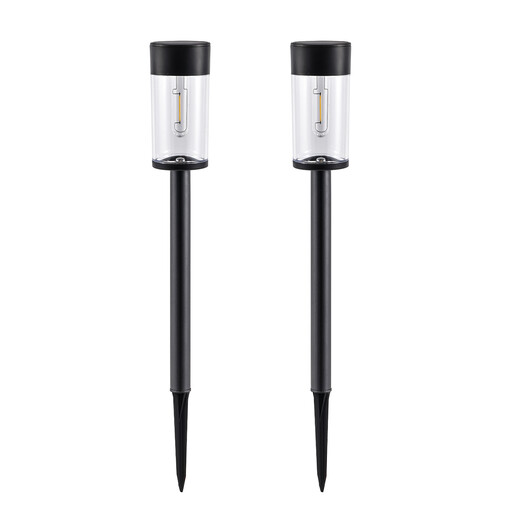
Why it suits this type of buyer: This set is designed for garden paths, borders, driveways and flower beds. The ground stakes mean you don’t need any wiring or electrical connections.
The specifications list 10 lumens per light and 3000 K. This makes it clear that these lights are primarily for visibility and ambience, rather than bright security lighting.
IP65 rating, automatic on/off and, according to the product information, 8 to 12 hours of light after 6 to 8 hours in sunlight.
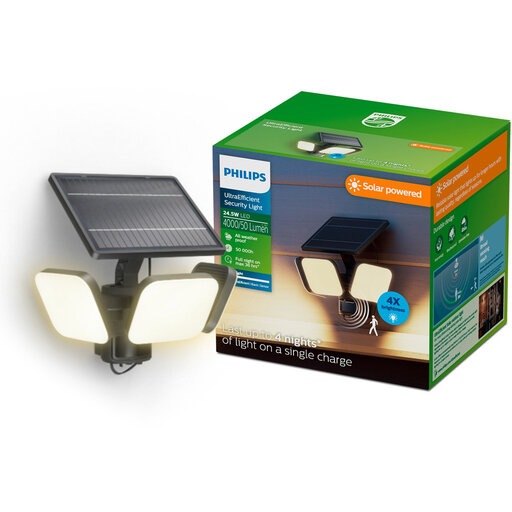
Why it suits this type of buyer: This model is designed for larger areas such as a driveway, garage or wide wall, where a high light output and adjustable light head are useful.
The product information separately lists the light output, IP65 rating and sensor distances: 8 metres when approached directly and 16 metres for movement from the side.
According to the product description, it offers 4000 lumens, 3000 K, two lighting modes and an adjustable head. The manufacturer also lists a built-in dusk and motion sensor.

Why it suits this type of buyer: The three adjustable light heads are designed to cover a large area around a garage, patio, garden or driveway.
The specifications list three lighting modes and a sensor range of 60 feet with a 180-degree angle. Check in advance that this wide detection area is suitable for your surroundings.
According to the product details, it has 302 LEDs, 3000 lumens, three light heads, an IP65 rating and can be installed without electrical wiring.
We’ve put together a complete, up-to-date list of products that meet these strict selection criteria and comply with current European safety regulations.
Choose a spot where the solar panel gets direct sunlight every day. Aim the sensor at the area where you expect movement, and make sure branches, roof edges or fences don’t block its view. Test the light after installation during the day and again in the dark.
How long it stays on each night depends on sunlight, the season, battery capacity, temperature and the selected lighting mode. Product information often gives an estimated run time after a specified charging period, but the actual duration can vary from one location to another. Clean the solar panel regularly and check that the battery is charging properly.
A solar outdoor light doesn’t use electricity from the mains while it’s running. However, there’s the initial purchase cost, and the built-in battery may lose capacity over time. So, compare more than just the price: check the IP rating, lighting modes, battery specifications and warranty terms too.
