
Vandaag of morgen in huis

Kwaliteit gegarandeerd

Welkomstaanbiedingen ontgrendelen: GRATIS bezorging | Tot 80% korting | Gratis 30 dagen JoyPlus-proefperiode
Download de app
A light with a motion sensor may seem straightforward to choose. Yet many buyers fall into the same traps: a high lumen rating without a clear operating time, an IP rating that does not suit the installation location, or a solar outdoor light that receives hardly any direct sunlight. The result is outdoor lighting that stays on for less time in winter, shines too brightly or needs more maintenance than expected.
As a Joybuy Product Recommendation Officer, I focus mainly on verifiable specifications. This helps you see which outdoor lighting with a motion sensor is right for your garden, balcony, patio, entrance or driveway.
Lumens indicate the amount of light, but they do not tell you everything about how that light is distributed. A light with a high output can illuminate a small area unnecessarily brightly. For a garden path, a lower light output is often sufficient, while a driveway or large back garden needs wider coverage.
So also look at:
The IP code consists of two digits. The first indicates protection against solid particles, while the second refers to water. An IP44 outdoor light is protected against splashing water, but is not designed to be submerged or exposed to powerful direct water jets. An IP65 outdoor light offers greater protection against dust and water jets.
That does not mean that every IP65 light can be placed underwater. Install the light according to the instructions and avoid locations where water remains for long periods.
A solar-powered light needs sufficient daylight to charge its battery. Shade from a canopy, tall fence or tree can affect the operating time. In winter, the days are shorter and sunlight is often less intense.
Before buying, check:
An outdoor light without wiring is convenient for a rented property or a location without a power point. On the other hand, performance remains dependent on the light conditions and battery capacity.
A modest light output may be enough for a path or flower bed. According to the product specification, the UME solar path light provides 10 lumens per light and uses 3000K warm white light. It is mainly designed for orientation and a calm appearance.
For an entrance or patio, models offering a few hundred lumens are more practical. According to the product specification, the Brilliant Iseo provides 300 lumens and 3000K. For a wide driveway or large garden, models with several light heads and a higher light output are more suitable.
A motion sensor does not respond equally well in every direction. The angle and distance determine whether someone approaching from the side or straight on is detected. The UME light with three light heads specifies a detection range of 60 feet, equivalent to around 18 metres, and a detection angle of 180 degrees.
According to the Philips Zyren product specification, the range is 8 metres when approached directly and 16 metres when approached from the side. Always check whether the sensor can be aimed at the path rather than at a busy road or moving branches.
Choose the protection rating based on the location:
The mounting hardware also matters. A secure wall mount, a flat surface and sufficient space around the solar panel can help prevent faults and the light coming loose.
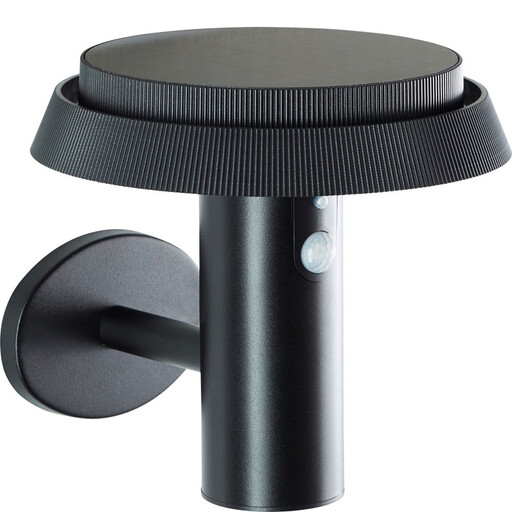
Why it suits this profile: This solar outdoor wall light is designed for an entrance, patio or garden where it is not possible to run a cable.
The specifications clearly state solar power, motion detection and IP44. This means you can see in advance that the light is mainly suitable for splashing water, not direct water jets.
500 lumens, 3000K warm white light, integrated battery and installation without mains wiring.

Why it suits this profile: For a spacious driveway, side wall or large garden where broad light coverage is wanted.
The product specification states both the light output and the sensor range. With IP65, the light is also suited to a more exposed outdoor location, although this does not allow submersion.
4000 lumens, IP65, adjustable light head and a specified sensor range of up to 16 metres from the side.

Why it suits this profile: For a large back garden, garage area, patio or driveway where a wide lighting angle is important.
The three light heads and stated coverage make the light distribution clearer than a simple lumen claim alone. However, the battery and solar panel require a sunny installation location.
3000 lumens according to the product specification, IP65, three lighting modes and a wide lighting angle.
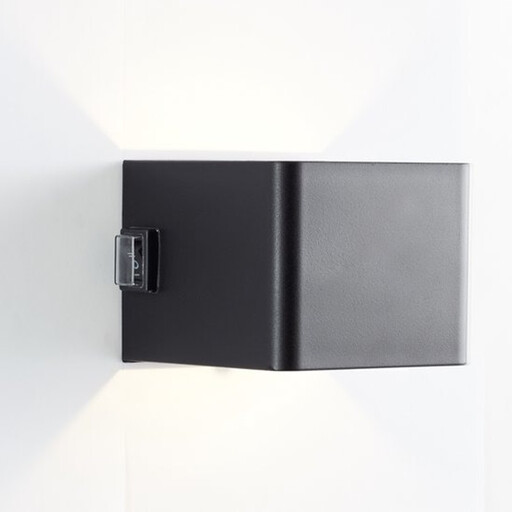
Why it suits this profile: Handy for tenants, balconies or locations where you want to move the light regularly.
The light has an integrated battery and magnetic mounting, but its IP44 rating means it needs a sheltered location. The product warning also states that the magnet must be secured firmly.
300 lumens, 3000K, motion sensor, USB-C charging and installation without fixed wiring.
We have put together a complete, up-to-date list of products that fully meet these strict selection criteria and the applicable European safety regulations.
Ideally, position a solar outdoor light where it will receive as much direct sunlight as possible. Aim the sensor at the area where movement is expected and avoid branches, ventilation openings or busy routes that could trigger it unnecessarily.
A fixed 230-volt wall light must be installed by a qualified electrician. Switch off the power before installation or maintenance. A model with a GU10 fitting, such as the Philips Fylx, is supplied without a light source. You can choose a suitable GU10 LED bulb yourself, but always check the fitting, wattage and IP rating.
Clean the solar panel and sensor regularly with a soft, slightly damp cloth, unless the instructions specify another method. Do not use aggressive cleaning products, and do not clean IP44 lights with a powerful water jet.
Yes, but the operating time can change due to shorter days, cloudy weather and less direct sunlight. Position the panel as unobstructed as possible and keep it clean. Choose a light with several modes if you want to limit energy consumption.
This depends on the type of light, battery, frequency of use and weather conditions. With integrated LED lighting, the light source is often not replaceable. According to the product specifications of various Philips models, lifespans of 25,000 to 50,000 operating hours are stated; this is information from the manufacturer and is not a guarantee for every usage situation.
A solar outdoor light does not use mains electricity while operating, but it depends on stored solar energy. A fixed LED light generally uses less electricity than a comparable light with a higher wattage. As well as wattage, consider the operating time and how often the sensor activates the light.
