
Vandaag of morgen in huis

Kwaliteit gegarandeerd

Welkomstaanbiedingen ontgrendelen: GRATIS bezorging | Tot 80% korting | Gratis 30 dagen JoyPlus-proefperiode
Download de app
An outdoor light with a motion sensor can be useful by the front door, garage, shed, driveway or garden path. The light switches on when movement is detected, so you do not have to search for a switch. However, not every outdoor light with a motion sensor is suitable for every location.
Many disappointing purchases result from three recurring pitfalls:
Below, you can read which specifications you should check in practice and which popular choices suit different uses.
The IP code indicates how well a product is protected against solid particles and water. IP44 outdoor lighting is protected against splashing water from different directions. This makes it suitable, for example, for a sheltered entrance, balcony or covered patio. IP44 does not mean that the light is waterproof or resistant to a direct jet of water.
IP65 solar lighting offers greater protection against dust and water jets. This makes the rating more appealing for an exposed façade, garage or driveway that is more exposed to rain. Even with IP65, immersion is not permitted. Also check that the connections and mounting location are suitable for outdoor use.
Do not rely solely on words such as “weather-resistant” or “waterproof” in an advert. Look for the specific IP rating in the product specifications.
Lumens indicate how much light a lamp produces according to the product specifications. As a guideline:
A higher lumen count is not automatically more pleasant. A very bright light can be dazzling by a front door. The colour temperature also makes a difference:
Also check whether the light head is adjustable and how many degrees the lamp illuminates. A light with several heads can cover a larger area than a compact model with the same light output.
A solar outdoor light works without a fixed power connection, but it needs sufficient direct daylight. Shade from a tree, balcony or north-facing façade can limit charging time. During the darker Dutch months, this can result in a shorter operating time than in summer.
A wireless outdoor light with a built-in rechargeable battery can be installed flexibly, but it needs to be recharged periodically. A wired model uses a fixed connection and, when installed on a 230-volt supply, must be fitted in accordance with the applicable regulations, usually by a qualified installer.
Before buying, check:

Why it suits this profile: This compact model runs on solar power and does not need a fixed power connection. With 180 lumens, 2700K and an integrated battery, it is suitable for a small entrance, balcony or patio.
The product specifications clearly state the IP44 rating and 180 lumens. This makes it clear that it is not intended for a large, exposed area.
Solar power, integrated motion sensor, dimming function and 2700K warm white light.

Why it suits this profile: This light combines solar power with 1,000 lumens, 3000K warm white light and two lighting modes. It is suitable for a front door, balcony or garden where you want wireless installation.
The light is rated IP44, so you can assess its splash protection against the actual installation location. Direct water jets and immersion are not suitable.
1,000 lumens, 3000K, motion and dusk sensor, two lighting modes and installation without wiring.
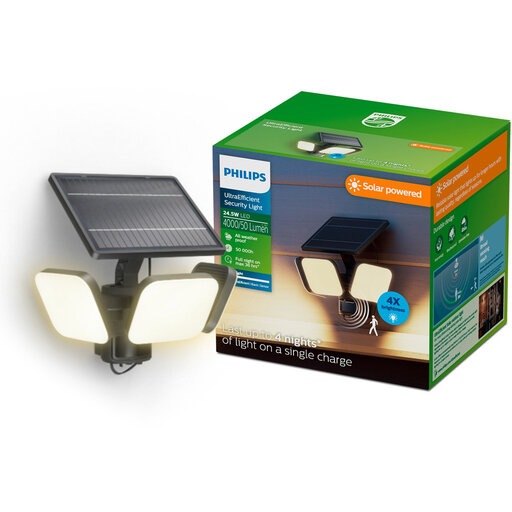
Why it suits this profile: This model is designed for larger areas such as a driveway, garage or grounds. Its stated light output is 4,000 lumens, while the IP65 rating offers greater protection than IP44 models.
The product specifications state both IP65 and a detection range of 8 metres for a direct approach and 16 metres for a sideways approach. However, check that your mounting height and direction of travel match these figures.
4,000 lumens, IP65, adjustable light head, solar power and motion plus dusk sensor.
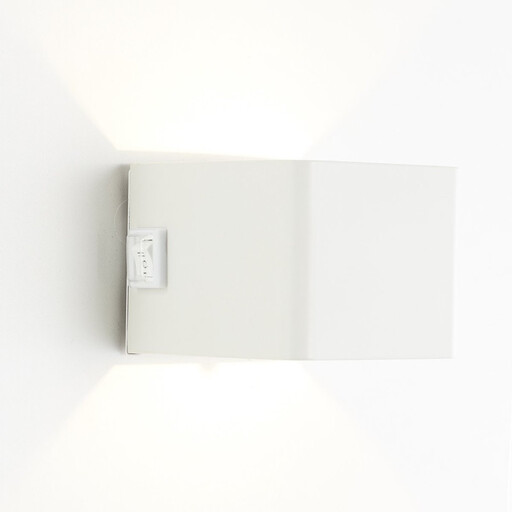
Why it suits this profile: This wireless light uses a rechargeable battery and magnetic mounting. With 300 lumens, 3000K and IP44, it is suitable for flexible use on a balcony, patio or sheltered exterior wall.
The magnetic mounting makes it easy to move, while the IP44 specification clearly indicates its limits: do not immerse it or expose it to strong water jets.
Battery power, USB charging, magnetic mounting, integrated 4W LED and motion sensor.
We have put together a complete, up-to-date list of products that fully meet these strict selection criteria and the applicable European safety regulations.
Position the light so that the sensor crosses the route people take, rather than having someone walk directly towards the sensor. Clean the sensor window and, for a solar wall light, the panel regularly with a soft cloth. For magnetic models, check that the surface is flat, clean and sufficiently magnetic.
For a wired LED outdoor wall light, the power must be switched off before installation or maintenance. Have the connection checked or carried out by a qualified installer. With a solar outdoor light, positioning is particularly important: direct sunlight during the day helps charge the battery.
Also be considerate of neighbours and public spaces. Do not point a bright outdoor security light unnecessarily at windows or a pavement. A sensor light should illuminate your own property, not disturb the surrounding area.
An integrated LED light generally uses little energy because it only switches on when movement is detected. A solar outdoor light does not use mains electricity, but its battery still needs to be charged by sunlight. With a wired model, the running costs depend on the wattage and how long the light stays on.
The operating time per night depends on sunlight, battery capacity, temperature, light intensity and how often the sensor is activated. Manufacturers may also state an expected lifespan for the LED or battery. According to Philips’ own information, some models are stated to have a lifespan of 25,000 or 50,000 operating hours; this is a brand claim and not a guarantee for every real-world situation.
IP44 outdoor lighting is suitable for splashing water and sheltered outdoor locations, such as a covered patio, balcony or entrance. For a light that is fully exposed to rain and water jets, a model with IP65 is more appropriate. Always check the complete installation and safety information for the product you choose.
