
Vandaag of morgen in huis

Kwaliteit gegarandeerd

Welkomstaanbiedingen ontgrendelen: GRATIS bezorging | Tot 80% korting | Gratis 30 dagen JoyPlus-proefperiode
Download de app
An outdoor light needs to do more than look good in a product photo. In a Dutch garden, lights have to cope with rain, wind, damp, temperature changes and sometimes limited sunlight. If you focus only on lumens, design or a low price, you could end up buying a light that isn’t right for its location.
The most common purchasing mistakes:
The IP code shows how well a product is protected against solid particles and moisture. For outdoor use, the second digit is the most relevant:
So an IP44 outdoor light isn’t automatically suitable for every location. Consider where it will be installed, the direction the rain comes from and whether there’s a canopy.
Lumens indicate how much light a product emits, according to its specifications. A lower light output can be ideal for ambient lighting, while a higher output is useful for lighting a driveway or a dark back garden.
Colour temperature is measured in kelvin (K):
Also consider how the light is distributed. A wall light that shines mostly downwards will illuminate an entrance differently from a model with a wide beam angle.
A solar outdoor light doesn’t need a fixed power connection, but it depends on sunlight and battery capacity. So check where it will be placed, the battery details and how it charges. For models with a motion sensor, it’s also worth checking the detection angle and range.
A fixed LED outdoor light or outdoor wall light generally has a reliable power supply, but often needs to be installed and connected to the mains. Products with an E27 or GU10 fitting are sometimes supplied without a bulb, so check whether you’ll need to buy a suitable LED bulb separately.
Fixed electrical connections must be installed by a qualified electrician in accordance with local regulations.

Why it suits this type of buyer: This solar wall light is designed to provide general lighting by an entrance, balcony or garden wall without fixed wiring. The product details list 1000 lumens, 3000 K, two light modes and a motion sensor.
The specifications make it clear that the light is solar-powered and has an IP44 rating. Place it somewhere with direct daylight rather than under a fully enclosed canopy.
No fixed wiring; integrated LED; 1000 lumens; 3000 K; motion sensor and two light modes.
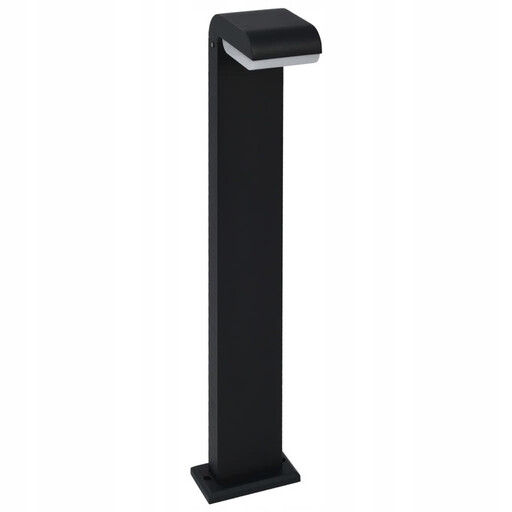
Why it suits this type of buyer: This fixed LED outdoor light is a good choice if you’re looking for a compact design and an integrated light source for a garden path or another outdoor space.
The product specifications clearly list 9 W, 550 lumens, cast aluminium and IP54. This lets you compare the light output and protection without judging by appearance alone.
Integrated LED; 550 lumens; 9 W; aluminium housing; IP54; 800 mm high.

Why it suits this type of buyer: According to the product description, this model is designed to provide wide coverage for areas such as a garage, garden, patio or driveway. Its three adjustable heads are designed to spread the light over a wide area.
The description lists IP65, a 180° detection angle, a range of 60 feet and three modes. Before buying, check that the stated brightness and dimensions are right for your needs.
302 LEDs; 3000 lumens according to the product details; IP65; three light modes; three heads with 270° coverage; solar-powered.

Why it suits this type of buyer: This set is suitable for garden paths, borders and decorative garden lighting. According to the product details, you can control the lights via Tuya and adjust the colour temperature and RGB colour.
The product details list IP44 and an 800 cm cable. This makes the limitations clear: plan the placement carefully, keep cables out of walkways and don’t expose the lights to direct jets of water.
Set of three; integrated LED; 660 lumens according to the specifications; dimmable; RGB and CCT; control via Tuya and Bluetooth.
We’ve put together a complete, up-to-date list of products that meet these strict selection criteria and the applicable European safety regulations.
For a sheltered entrance or balcony, IP44 may be suitable. For a more exposed location, consider IP54 or IP65. Always check the installation instructions and avoid direct contact with jets of water or submersion, unless the manufacturer explicitly says the product is suitable.
That depends on the amount of daylight, the angle of the panel, cloud cover and battery capacity. Charging conditions in the Netherlands are often less favourable in winter. So place the panel somewhere with as little shade as possible and clean it regularly with a soft cloth.
LED outdoor lights generally use little energy compared with older light sources, but actual consumption depends on the wattage and how many hours the light is on. A motion sensor, timer or dimming function can stop the light staying on unnecessarily. Solar outdoor lights draw power from a battery, but how long they stay lit still depends on how much they charge during the day.
