
Vandaag of morgen in huis

Kwaliteit gegarandeerd

Welkomstaanbiedingen ontgrendelen: GRATIS bezorging | Tot 80% korting | Gratis 30 dagen JoyPlus-proefperiode
Download de app
A light that only switches on when someone walks past is useful by the front door, garage, garden gate or driveway. However, not every outdoor light with a motion sensor is right for every situation. A solar-powered outdoor wall light can be easy to install, but it needs direct sunlight. A powerful LED security light can illuminate a large area, but may be unnecessarily bright for a small balcony.
When choosing, look out for these three common pitfalls:
Brightness is measured in lumens. A solar garden light with a few dozen lumens may be enough for a small garden path. For an entrance or driveway, around 300 to 1,000 lumens is more suitable. A more powerful outdoor LED light may be a good choice for a large garden or garage.
Colour temperature is measured in kelvin (K):
A high lumen rating doesn’t automatically mean the light will be evenly distributed. An adjustable lamp head or multiple light heads may be more important if you want to illuminate a wide area.
The IP code shows how well a product is protected against dust and water.
Neither rating means you can submerge the light. Install an outdoor wall light with a sensor according to the instructions, and avoid direct water jets if the manufacturer advises against them.
Check the following before you order:

Why it suits this type of buyer: This compact solar-powered outdoor wall light is designed for basic lighting by an entrance, balcony or small patio. No fixed wiring is needed.
The specifications list 180 lumens, 2,700 K and IP44. This makes it clear that the model is intended for modest, sheltered lighting rather than a large garden.
Integrated LED, solar power, dimming function and motion sensor in a compact design.
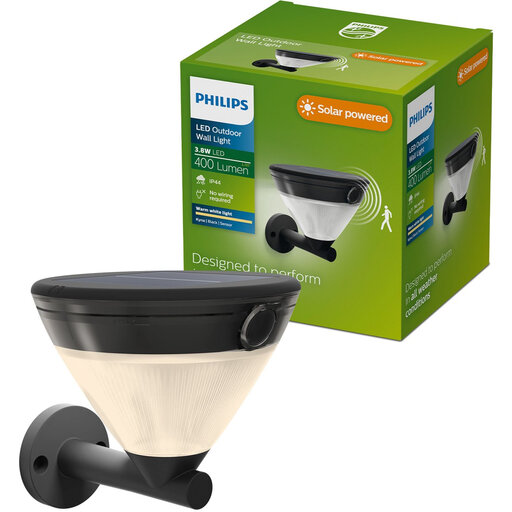
Why it suits this type of buyer: A good choice if you’re looking for a smart exterior or garden light with automatic operation and a warm colour temperature.
The product information lists two modes, a motion sensor and IP44. Make sure the installation spot gets enough direct sunlight.
400 lumens, 2,700 K, two light modes and an integrated solar power supply.
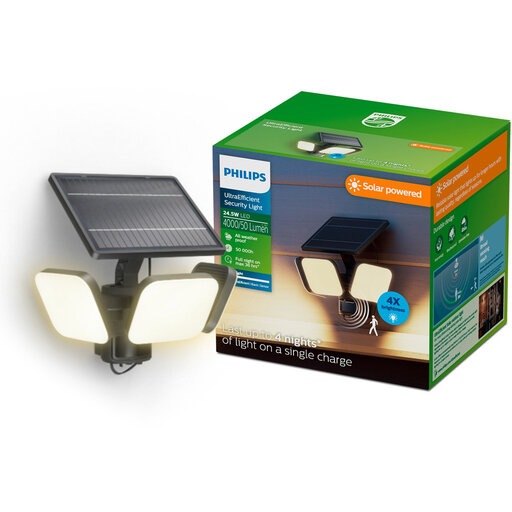
Why it suits this type of buyer: This model is designed to provide wide, powerful lighting for a driveway, garage or larger garden.
The IP65 rating is better suited to an exposed installation spot than IP44. Its high brightness does mean you’ll need to position it carefully to avoid uncomfortable glare.
According to the product description: 4,000 lumens, IP65, adjustable lamp head and a stated detection range of 8 metres when approached head-on and 16 metres when approached from the side.
We’ve put together a complete, up-to-date list of products that meet these strict selection criteria and current European safety regulations.
It depends on the amount of direct sunlight, where the light is installed, the battery capacity and how it’s used. Short days, cloudy weather and shade can reduce how long the light stays on. Position the panel in as open a spot as possible and keep it clean. For a sheltered north-facing wall, a wired outdoor LED light may be more practical.
Expected lifespan varies by model and conditions of use. Manufacturers sometimes state a number of operating hours, but this is a product specification, not a guarantee for every real-world situation. With an integrated LED, the light source often can’t be replaced by the user. So check the statutory guarantee and maintenance instructions too.
A solar outdoor light doesn’t use mains electricity during normal operation, but its performance depends on the battery and sunlight. A wired light only uses electricity when it’s on; a motion sensor can help reduce unnecessary operating time. So compare more than just the wattage: consider how long it stays lit, the light mode and how it switches on.
