
Vandaag of morgen in huis

Kwaliteit gegarandeerd

Welkomstaanbiedingen ontgrendelen: GRATIS bezorging | Tot 80% korting | Gratis 30 dagen JoyPlus-proefperiode
Download de app
A few outdoor lights can instantly make a patio or balcony more inviting. Yet many shoppers fall into the same traps: a light doesn’t stay on as long as expected, a solar panel doesn’t get enough sun, or a high IP rating is mistaken for complete waterproofing. Check the specifications carefully to avoid a disappointing purchase and choose lighting that suits your outdoor space.
An IP44 outdoor light is protected against splashing water and small solid objects. That doesn’t mean it can withstand prolonged rain, a direct jet of water or immersion. It’s best to place an IP44 light under a canopy, on a sheltered balcony or on a patio where water won’t collect.
For fully exposed areas, a higher protection rating, such as IP65, is often more practical. Always check the full product description and installation instructions.
Solar outdoor lights work consistently only when the panel receives enough daylight. Shade from a wall, tree or parasol reduces the amount of charge it can gather. Runtime can also be shorter in winter and cloudy weather.
According to Aigostar product information, some solar string lights can provide around 8 to 12 hours of light after approximately 4 to 6 hours of charging. This depends on sunlight, temperature, battery condition and the selected light setting. Treat these times as product specifications for certain conditions, not as a fixed guarantee for every evening.
An outdoor string light with eight flashing settings can create a lovely atmosphere, but the number of modes tells you little about brightness. For practical lighting, look at the lumens. An outdoor table lamp with 170 lumens is suitable for soft accent lighting, while 300 lumens provides more useful light around a table.
Colour temperature also matters if you want warm mood lighting. Around 2700 to 3000 kelvin usually gives a warmer look than 4000 kelvin or above.
Lumens indicate how much light a lamp emits. A lower light output is often enough for a decorative lamp on a side table or balcony. If you also want to read a book or light a table practically, choose a model with a higher light output.
An LED outdoor light has an integrated light source and generally uses little energy. Check whether the LED can be replaced, though. Several models in this selection have an integrated light source that can’t be replaced by the user.
A rechargeable outdoor light with USB is useful if you want control over when it’s charged. You can charge it indoors, then use it outside without a cable. Check the connection: some models use USB-A and come with a cable.
Solar outdoor lights don’t need a socket, but the panel needs a sunny spot. A combination of solar and USB offers more flexibility in the Netherlands’ changeable weather.
Check the height and diameter before ordering a light. A 37 cm-high lamp will work differently on a dining table from a compact model measuring around 8.5 cm. Check the weight and base, too. A lightweight, cordless outdoor light is easy to move, but may be more susceptible to wind or knocks.
A freestanding light should be placed on a flat, stable surface. Choose a light with a handle if you want to move it regularly between your balcony, kitchen and patio.
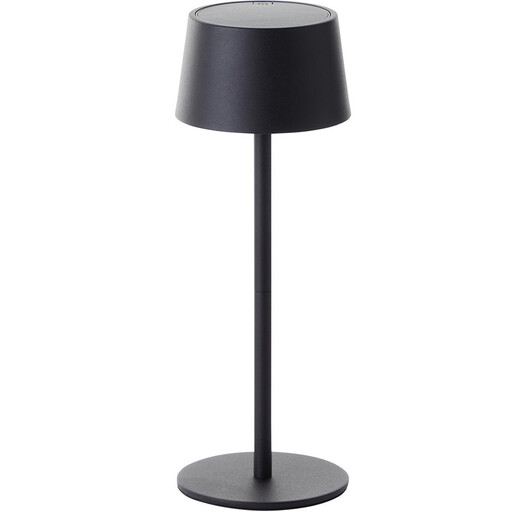
Why it suits this profile: This compact lamp combines USB charging with solar power, making it suitable for a balcony, small garden or patio without a fixed power connection.
The dual charging options mean you don’t have to rely on sunlight alone. IP44 is clearly specified as splash protection, not complete waterproofing.
170 lumens, warm white light at 3000 K, three dimming settings and two possible mounting heights.

Why it suits this profile: The metal housing, 37 cm height and copper-coloured finish make it a good fit for a smart dining table, veranda or covered patio.
The product details specify 300 lumens, dimmability and IP44. This lets you check the light output and protection rating rather than judging by appearance alone.
Integrated 4W LED, adjustable colour temperature from 3000 to 6500 K, touch dimmer and USB-A connection.
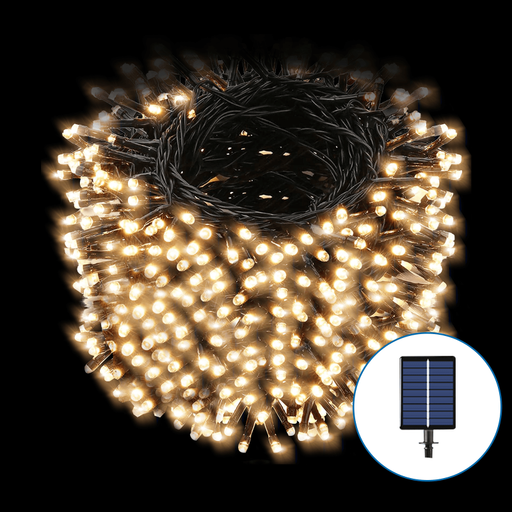
Why it suits this profile: These string lights are ideal if you want to illuminate a longer stretch along a fence, pergola, balcony or planter without running a cable to a socket.
The IP65 rating offers greater protection against dust and water than IP44. The panel still needs to be placed in an open, sunny spot to charge sufficiently.
10 metres long, 100 LEDs, eight light settings and an approximate runtime of 8 to 12 hours, according to the product information.
We’ve put together a full, up-to-date list of products that meet these strict selection criteria and the applicable European safety regulations.
For warm accent lighting, around 100 to 200 lumens per light is often enough. Around a dining table or work area, 300 lumens may be more practical. Several soft lights create a more even effect than one very bright light source.
IP44 protects against splashing water, but a light with this rating isn’t designed to be immersed or exposed to direct water jets. Place it somewhere sheltered and follow the manufacturer’s safety warnings.
Consumption depends on the wattage and the number of hours it’s on. A 4-watt light that’s on for 5 hours each evening uses around 0.02 kWh per evening. Solar lighting doesn’t use electricity from a socket while switched on, but its performance depends on how much solar energy has been stored.
