
Vandaag of morgen in huis

Kwaliteit gegarandeerd

Welkomstaanbiedingen ontgrendelen: GRATIS bezorging | Tot 80% korting | Gratis 30 dagen JoyPlus-proefperiode
Download de app
An outdoor light needs to do more than look good. In the Netherlands, outdoor lighting has to cope with rain, wind, damp and changing temperatures. Yet many shoppers focus mainly on the design or the number of lumens. This can lead to disappointment: the light may be too dim, the battery may run out quickly or the housing may not be suitable for the chosen location.
Use this buying guide to compare outdoor lights by protection, power supply, light output and installation. That way, you can make a more informed choice between a garden light, outdoor wall light, solar outdoor light or cordless outdoor light.
An IP44 outdoor light is protected against splashes from different directions. That doesn’t mean it’s suitable for a spot exposed to direct jets of water, prolonged heavy rain or immersion. IP44 is usually suitable for a sheltered wall, covered area, balcony or patio.
For an in-ground spotlight or a light positioned low in the garden, a higher level of protection may make more sense. An IP65 in-ground spotlight offers better protection against dust and water jets, but always check the full product description and installation instructions.
A solar-powered outdoor light needs enough daylight to charge its battery. In a covered area, on the north side of a house or among tall trees, it may not stay lit for as long. Any claims made by a brand about running time or energy efficiency are product claims, so check the stated charging time, battery type and operating mode.
A model that can be charged by USB as well as solar power offers more flexibility on darker days.
Some fittings are supplied without a light source. If they have an E27 or GU10 socket, you’ll need to choose a bulb yourself. Check the maximum wattage, fitting, light colour and whether dimming is actually possible. For example, a fitting may only be dimmable when used with a compatible dimmable light source and dimmer.
Use the IP rating as your first filter:
An outdoor wall light should be securely fixed to a suitable surface. Fixed 230V installations should be connected by a qualified electrician.
Lumens indicate light output. A lower lumen count is often enough for atmospheric patio lighting. You may want brighter, more practical light by an entrance or path. Colour temperature affects the look and feel of the light:
An LED outdoor light with an integrated light source is compact and ready to use. With a replaceable E27 or GU10 bulb, you can choose the light colour and energy consumption yourself.
Choose between:
For sensor lights, check the detection range and whether the sensor can be adjusted. A motion sensor is particularly useful by an entrance, shed or garden path.
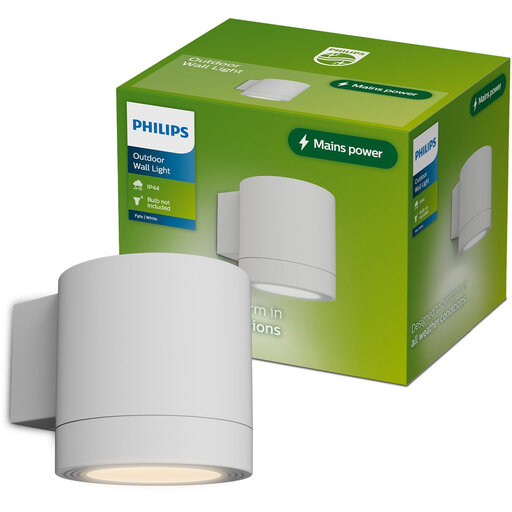
Why it suits this profile: This compact outdoor wall light is suitable for a balcony, wall or entrance where you want to choose your own GU10 light source.
The specifications clearly state that the GU10 bulb isn’t included. This avoids any surprises about the light source and lets you choose your preferred light colour.
IP44 protection, an aluminium housing and one GU10 socket with a stated power rating of 5 W.

Why it suits this profile: For an entrance or wall where you want bright light and a wire-free installation.
The light has an integrated LED, so you don’t need to buy a separate fitting or compatible light source. Bear in mind, though, that it relies on sunlight.
1000 lumens, warm white light at 3000 K, two lighting modes, a dusk sensor and a motion sensor. The product specifications state IP44.
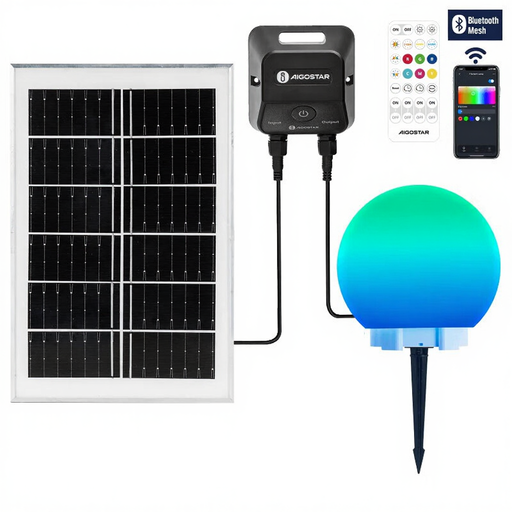
Why it suits this profile: For garden enthusiasts who want to add in-ground lighting and control multiple lights via Bluetooth Mesh.
Its IP65 rating is higher than IP44, making it better suited to an in-ground position in the garden. Make sure the solar panel is positioned to receive daylight.
RGB and adjustable white light, 200 lumens, a 4–6 hour charging time according to the product specifications, and control for more than 200 Bluetooth Mesh devices.
We’ve put together a complete, up-to-date list of products that meet these strict selection criteria and the applicable European safety regulations.
Before buying, check where the light will go and how it will be powered. A fixed 230-volt outdoor light must be connected in accordance with local regulations. For a solar outdoor light, the panel’s position is particularly important. A cordless outdoor light with a battery will need recharging from time to time.
Clean the housing with a soft, dry cloth if the manufacturer recommends it. Don’t use harsh cleaning products or direct a pressure washer or garden hose jet straight at an IP44 light. Also check the fixings, cables, glass and seals at the start of the outdoor season.
IP44 is often suitable for a sheltered wall, balcony or patio. IP65 may offer more protection in a more exposed location or for in-ground lighting. Always check the recommended installation location for the specific product.
A solar outdoor light doesn’t use mains electricity during normal operation. Its performance does depend on sunlight, charging time, battery capacity and the selected lighting mode. In winter or in shady locations, charging via USB or using another type of outdoor light may be more practical.
Lifespan varies by product and conditions of use. With an integrated LED, the light source usually isn’t designed to be replaced by the user. A fitting with an E27 or GU10 socket offers more flexibility, as you can replace the light source separately.
