
Vandaag of morgen in huis

Kwaliteit gegarandeerd

Welkomstaanbiedingen ontgrendelen: GRATIS bezorging | Tot 80% korting | Gratis 30 dagen JoyPlus-proefperiode
Download de app
A good outdoor light makes a garden path visible, creates a more inviting atmosphere on a patio or lights up a driveway when someone approaches. Yet many people choose outdoor lighting based on appearance or a high lumen figure. This can result in a light that quickly becomes dimmer, cannot cope well with rain or barely works in winter.
With these points in mind, you can compare outdoor lighting more effectively. You will also see which solar outdoor lighting, wall light or LED outdoor lighting suits your situation.
An outdoor light with a high lumen output may be suitable for a driveway, but too bright beside a front door or on a small balcony. As well as the number of lumens, pay attention to the light colour. A value of around 2700–3000K usually produces warm white light for patio lighting and ambience. Around 4000K is more neutral, while 5000K and above looks cooler and brighter.
Also check the light distribution. An outdoor light with a motion sensor may have a narrow beam, while a light with several adjustable heads illuminates a larger area.
The IP rating provides more specific information:
An IP44 light is therefore not automatically suitable for a location where it is constantly exposed to direct rain or powerful water jets.
Solar-powered garden lighting is easy to install because it does not require mains electricity or cables. However, its performance depends on the amount of direct sunlight available. Shade from a wall, tree or fence limits charging. In winter, the days are shorter and cloudy weather can reduce the operating time.
Pay attention to the difference between a solar garden light for decoration and a solar outdoor light for functional illumination. A lantern with a single warm yellow LED mainly provides a soft glow. A security light with a motion sensor uses a larger battery and more LEDs, but also requires a sunny installation location.
An integrated LED light is ready to use straight away and generally does not require a separate bulb. However, check whether the light source can be replaced. With a GU10 outdoor light or E27 outdoor light, you can choose the light colour, brightness and, where applicable, dimming function yourself. The fitting is sometimes supplied without a light source, though.
A GU10 fitting uses a spotlight bulb with two pins. An E27 fitting is the familiar large screw fitting. Always check the maximum wattage and the dimensions of the fitting before buying a light.
An outdoor light with a motion sensor is practical for a driveway, garage or back door. Look at:
A wide detection range is not always desirable. In a narrow passage, an overly sensitive sensor may be triggered by people walking past or moving branches.
Aluminium, ABS, plastic and glass are commonly used for outdoor lighting. More important than the material name are the IP rating, finish and method of installation. A light fitted to a wall must be suitable for the type of surface and securely attached.
Solar ground spotlights and garden path lights are easy to install, but check that the supplied ground stakes remain stable in your soil. For a wired wall light, installation by a qualified electrician is advisable.
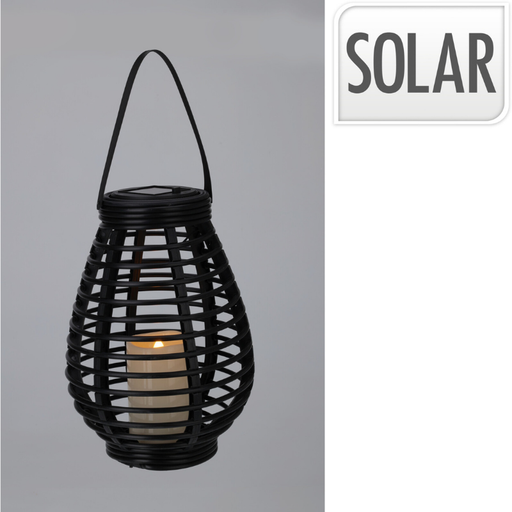
Why it suits this profile: This solar lantern is designed for anyone who wants to add a soft glow to a patio, balcony or garden path without using cables. Its compact shape and integrated switch make installation simple.
The description makes it clear that this is ambient lighting with one warm yellow LED, rather than powerful security lighting.
Solar panel, 1.2V Ni-MH battery, on/off switch and dimensions of 18 × 18 × 26 cm.

Why it suits this profile: Ideal for a large driveway, garage or spacious garden where focused, powerful lighting is needed. The adjustable head helps direct the light towards the desired area.
The specifications state 4000 lumens, IP65, a PIR sensor and a range of up to 8 metres for direct approach and 16 metres sideways.
Integrated LED, 5000K, IP65, two lighting modes and an adjustable light head.

Why it suits this profile: This solar outdoor light is designed to illuminate a garden, driveway, patio or garage over a wide area. The three light heads are adjustable for broader coverage.
The stated IP65 rating and wall-mounted design make it suitable for a more exposed location. The sensor and lighting modes are clearly specified in advance.
302 LEDs, stated light output of 3000 lumens, detection up to 60 feet, 180° sensor angle and three modes.
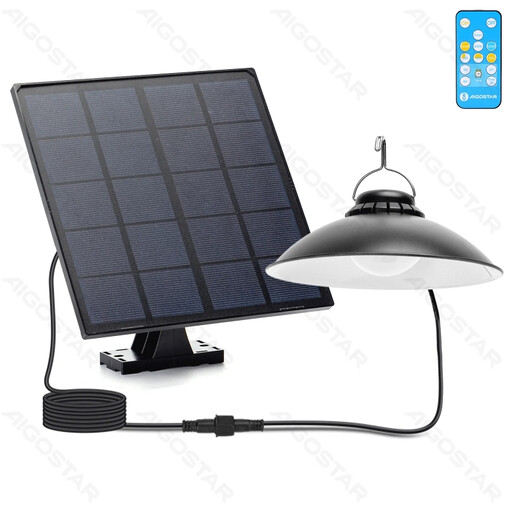
Why it suits this profile: A pendant light is ideal for a covered area, veranda or patio where you want to adjust the light colour to suit the occasion.
The stated IP65 rating makes this light more suitable for outdoor use than a model without a clear IP rating. Positioning it in direct sunlight is still essential.
Choice of 3000K, 4000K and 6500K, 120° beam angle, 5000mAh battery and a stated charging time of 4–6 hours.
We have put together a complete, up-to-date list of products that fully meet these strict selection criteria and the applicable European safety regulations.
Position a solar outdoor light where the panel receives as much direct sunlight as possible during the day. Clean the panel and sensor window occasionally with a soft, slightly damp cloth. Do not use water or harsh cleaning products on wired models.
Regularly check garden path lights and ground spotlights to make sure the housing, ground stake and cable are still secure. Take care around trip hazards near paths. With a GU10 outdoor light or E27 outdoor light, switch off the power before replacing a light source. If you are unsure, have a qualified electrician carry out any electrical connection to 230 volts.
It can be, but the operating time may decrease because of shorter days, cloudy weather and the lower position of the sun. Choose a sunny installation location and keep the panel clean. For consistent lighting throughout the night, mains electricity is often more predictable.
A low to medium light output is often sufficient for subtle garden path lighting. More light is practical for a driveway or security light. As well as lumens, consider the beam angle, sensor angle and distance between the lights.
IP44 protects against splashing water and is mainly suitable for sheltered locations. IP65 also provides dust-tight protection and offers better resistance to water jets. The exact installation location and correct installation remain important.
