
Vandaag of morgen in huis

Kwaliteit gegarandeerd

Welkomstaanbiedingen ontgrendelen: GRATIS bezorging | Tot 80% korting | Gratis 30 dagen JoyPlus-proefperiode
Download de app
Good outdoor lighting needs to suit the location, how you’ll use it and the British weather. A light for a balcony has different requirements from a path light beside a driveway or a string of lights for a party. Yet many shoppers focus mainly on appearance or the number of lighting modes. This can sometimes lead to a disappointing purchase: not enough light, a battery that won’t charge properly or a product that can only withstand light splashes of rain.
Joybuy Product Recommendation Officer helps you turn the most important product specifications into practical choices. This makes it easier to compare garden lighting based on verifiable details rather than marketing claims.
The IP code indicates what a product is protected against. In practice, IP44 means protection against splashes, but not immersion or direct jets of water. IP54 offers protection against dust particles and splashes from different directions. IP65 provides greater protection against dust and jets of water, but connections and plugs must still be installed according to the instructions.
An IP44 light may be suitable for a sheltered patio, balcony or garden table. For an exposed spot in the garden, waterproof garden lighting with a higher IP rating is often a better choice. Always check the IP rating for the complete product, not just the light itself.
A solar-powered outdoor light only works well if its panel receives enough direct sunlight during the day. Shade from a fence, tree or covered area reduces charging time. In winter and on cloudy days, the operating time may also be shorter.
According to the product information for various solar products, charging times and operating hours are measured in favourable conditions. For example, some solar string lights are specified as taking 6 to 8 hours to charge and providing 8 to 14 hours of light. These figures may differ in your garden. If your outdoor space gets little sunlight, choose a model with USB charging or a plug-in light.
A string of lights or portable LED lamp is mainly for creating atmosphere. For a garden path, outdoor steps or entrance, light output, distribution and positioning are more important. Look at lumens rather than wattage alone. Watts indicate energy consumption; lumens indicate how much light the lamp emits according to its product specifications.
A compact table lamp of 140 to 170 lumens, for example, is suitable for a dining table or balcony. A 550-lumen path light is better for marking a larger section of a walkway. That doesn’t automatically mean it will light the entire route evenly: mounting height and the distance between lights still matter.
For garden mood lighting, patio lighting and balcony lighting, warm white light of around 2700 to 3000 K usually creates a relaxed feel. Neutral or cool white light can be more practical for a shed, workspace or functional outdoor light. Some models offer several colour temperatures. The Aigostar solar hanging lamp, for example, lists 3000 K, 4000 K and 6500 K as adjustable options.
A dimmable outdoor light is useful if you want to use one lamp in different situations. Check how it’s operated: a built-in dimmer, remote control, app or simple switch will each work differently. With RGB lighting, “multiple colours” doesn’t automatically mean you can adjust every shade individually, so check the product description.
A solar string light is practical for decorating a balcony railing or flower bed. A plug-in string light is a better choice for an event where you want consistent brightness for longer.
Check that the dimensions suit the space available. An 80 cm-high path light needs a firm surface and enough room around the path. A table lamp about 11.5 cm wide is designed for a table, windowsill or small patio.
Materials such as metal, aluminium, copper and ABS plastic each have different properties. According to the product information, some string lights have copper wire and ABS housings. This makes the wire flexible, but also check the protection provided for the plug, solar panel and connections. Don’t place electrical connections in standing water, and clean lights according to the manufacturer’s instructions.
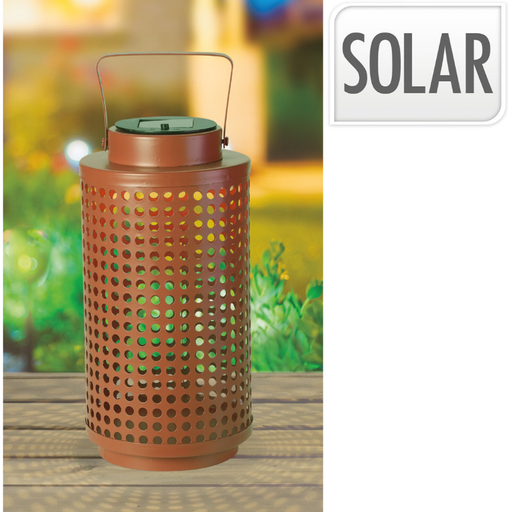
Why it suits this type of user: This solar lantern needs no wiring or tools, and is suitable for a table, balcony or sheltered spot in the garden.
The stated operating time is 6 hours after a full charge. This makes it clear that the light needs enough sunlight; don’t expect it to work consistently without taking the weather into account.
Metal housing, 28 cm high, with a warm look for decorative garden lighting.
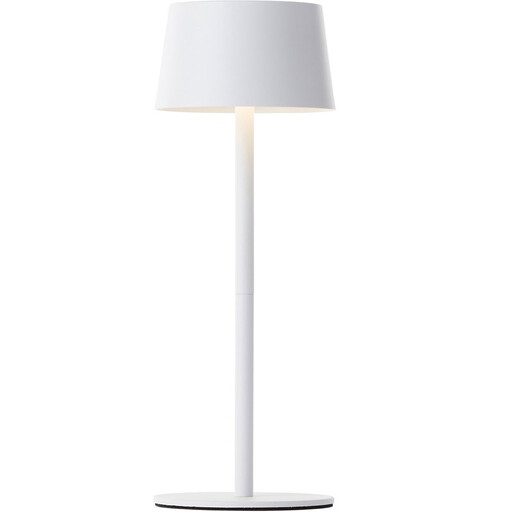
Why it suits this type of user: The combination of solar and USB charging gives you an extra way to charge it for evenings on the patio or balcony.
USB charging is listed alongside solar power. This reduces reliance on short or cloudy days, but IP44 still means splash protection, not protection against immersion.
170 lumens, warm white light at 3000 K, three dimming settings and a built-in battery.
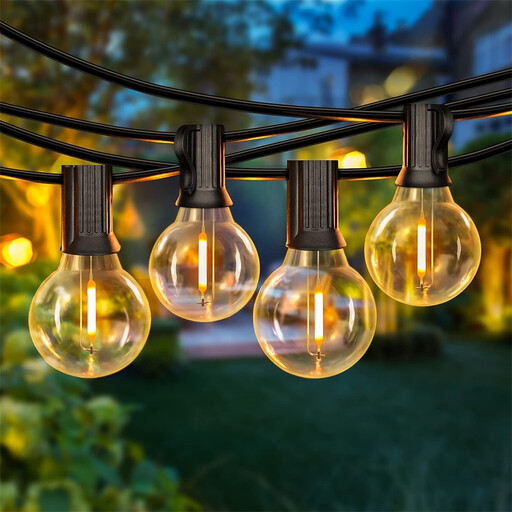
Why it suits this type of user: At 30 metres long, it’s suitable for larger patios, party venues, gardens and events where a socket is available.
The product information lists replaceable bulbs and a plug. This makes maintenance and long-term use more straightforward than with a fully sealed string light.
Dimmable, with multiple lighting modes, a timer function and 50+2 G40 LEDs emitting warm white light.
Position a solar panel somewhere free from shade and clean it occasionally with a soft, dry cloth. With string lights, check that you don’t exceed the maximum number of connectable lights. For models rated IP44, protect plugs and adaptors from direct rain. An LED light with a low wattage generally uses little electricity, but the exact consumption depends on the number of hours it’s on and the lighting mode selected.
For a path or entrance, you can combine a fixed LED outdoor light with mood lighting. According to its product specifications, the vidaXL oval path light has 9 W, 550 lumens, a height of 80 cm and an IP54 rating. These are useful details for checking whether the light is right for your route and ground surface.
We’ve put together a complete, up-to-date list of products that meet these strict selection criteria and the applicable European safety regulations.
For decorative lighting, anything from a few dozen to a few hundred lumens is often enough. A compact lamp of around 140 to 170 lumens is often suitable as mood lighting for a table or balcony. A path or entrance needs more light, for example a model with 500 lumens or more. The right choice also depends on the height, beam and distance between lights.
That depends on the IP rating and the manufacturer’s instructions. IP44 is suitable for splashes, but not immersion or direct jets of water. Position the solar panel somewhere unobstructed and protect connections from standing water. In frosty weather, prolonged rain or storms, bringing the light indoors temporarily can help extend its useful life.
Energy consumption depends on the wattage and the number of hours the light is on. A 1 W lamp that’s on for 5 hours a day theoretically uses 5 Wh per day. Solar garden lights don’t use electricity from a socket while they’re on, but they do depend on sunlight and battery capacity. So, as well as the purchase price, consider the charging method, operating time and maintenance.
