
Vandaag of morgen in huis

Kwaliteit gegarandeerd

Welkomstaanbiedingen ontgrendelen: GRATIS bezorging | Tot 80% korting | Gratis 30 dagen JoyPlus-proefperiode
Download de app
The right outdoor lighting makes a driveway, garden, balcony or terrace more usable once it gets dark. Yet many people choose a light mainly for its appearance or claims such as “waterproof” and “extra energy-efficient”. As a result, an outdoor light can disappoint in practice: the light may be too bright, the battery may run out quickly or the light may turn out to be suitable only for a sheltered location.
When choosing, pay particular attention to three common pitfalls:
The IP code indicates how well a product is protected against dust and water. Examples in the range include IP44 and IP54.
When fitting an outdoor wall light, also check whether the installation location is suitable. A light beneath an overhang is subjected to less severe conditions than a fitting on a completely exposed façade.
Lumens indicate the amount of visible light. A light with 170 lumens is mainly suitable as atmospheric terrace or balcony lighting. An entrance, path or driveway may benefit from more light. For example, the selected models range from 170 to 800 lumens.
Colour temperature is measured in kelvin:
A warm white outdoor light of around 2700–3000 K often works well with wooden terraces, plants and façades. For an in-ground spotlight, adjustability is also important, so that you are not looking directly into the light.
Decide in advance whether you want a fixed connection, USB charging, batteries or a solar panel.
Also check whether the LED is integrated. On several models, the light source cannot be replaced by the user. For long-term use, this means you should carefully review the product information and warranty terms.
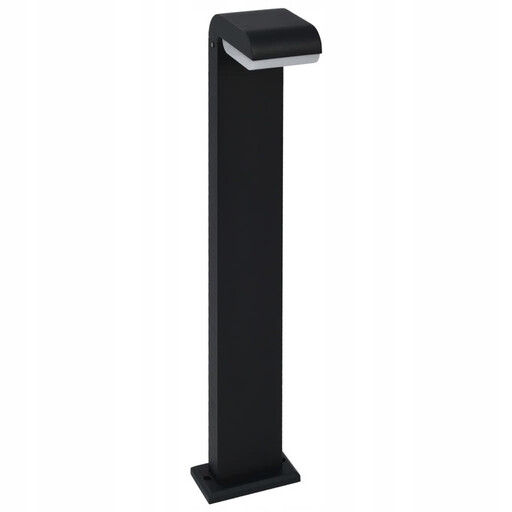
Why it suits this profile: This path light is suitable for anyone looking for a fixed lighting solution without a complicated design. Its height of 800 mm works well along garden paths, borders and entrances.
The product description clearly states IP54, 9 W and 550 lumens. This allows you to compare the light using verifiable specifications rather than looking at design alone.
Integrated LED, aluminium housing, opal PC diffuser and 550 lumens.
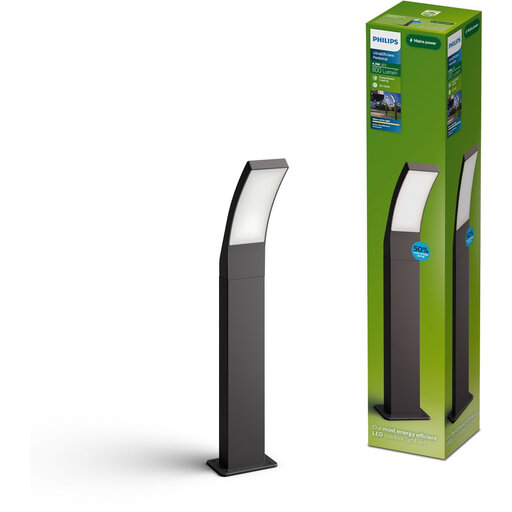
Why it suits this profile: This anthracite-coloured freestanding light is ideal for buyers who value the materials, colour temperature and stated longer service life for paths, borders or terraces.
The specifications state 4.3 W, warm white light at 2700 K and IP44. The stated service life of 50,000 hours is a manufacturer’s product specification, not a guarantee for every usage situation.
Aluminium and plastic construction, integrated LED and a height of 60 cm.

Why it suits this profile: This wireless outdoor wall light is useful by a shed, balcony, veranda or entrance where a fixed connection is not wanted. According to the product description, the built-in motion sensor switches the light on automatically when movement is detected.
The light runs on an integrated battery and is charged via USB. IP44 means splash-water protection, so do not expose it to direct water jets.
300 lumens, 3000 K, magnetic mounting and USB-rechargeable battery.
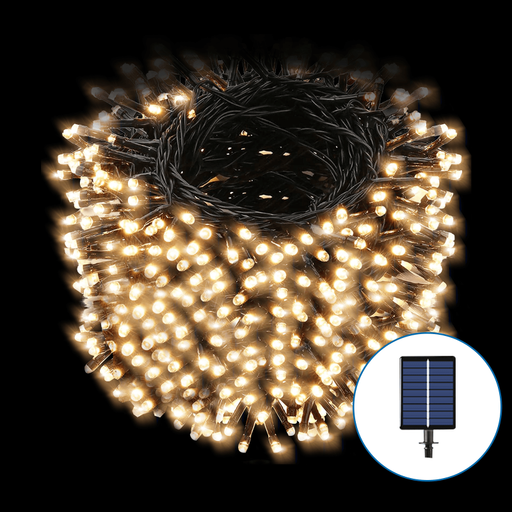
Why it suits this profile: This solar string light is designed for decorative garden, balcony and terrace lighting. You do not need a socket along the edge of the terrace.
The product information states a cable length of 10 metres, IP65 and eight lighting modes. Make sure you place the solar panel somewhere with enough direct sunlight.
100 LEDs, warm light, stated charging time of 4–6 hours and stated autonomy of 8–12 hours.
We have put together a complete, up-to-date list of products that fully meet these strict selection criteria and the applicable European safety regulations.
A lower lumen output may be sufficient for subtle orientation lighting. An entrance, staircase or driveway is likely to benefit from more light. In addition to lumens, consider the positioning and spread of the light: a well-directed in-ground spotlight can be more effective than several lights shining in every direction.
Solar outdoor lighting can be used outside all year round if the IP rating and product instructions allow it. In winter and on cloudy days, the battery may charge less effectively. Therefore, position the panel in direct sunlight as much as possible and keep its surface free from dirt.
Consumption depends on the wattage, the number of hours the light is on and the energy price. A 4 W light that operates for 1,000 hours uses approximately 4 kWh. Motion sensors and timers can limit the number of operating hours. With solar outdoor lighting, energy is supplied by the solar panel, but bear the charging performance and any battery replacement in mind.
