
Vandaag of morgen in huis

Kwaliteit gegarandeerd

Welkomstaanbiedingen ontgrendelen: GRATIS bezorging | Tot 80% korting | Gratis 30 dagen JoyPlus-proefperiode
Download de app
Good outdoor lighting needs to do more than look attractive in a product photo. In the Netherlands, a lamp has to cope with rain, wind, limited hours of sunshine and changing temperatures. You also want to avoid an outdoor light that is too bright, runs out of power quickly or is complicated to connect.
The following pitfalls are common:
The IP rating indicates how well a product is protected against solid particles and moisture. For many sheltered entrances, balconies and covered patios, an IP44 outdoor light is a practical choice. IP44 means that the light is protected against splashing water.
Ideally, do not place an IP44 light somewhere that is constantly exposed to jets of water, such as directly beneath a downpipe. For an open driveway or a façade exposed to a lot of rain, IP65 outdoor lighting may be more suitable. Always check the complete product description and installation instructions.
First decide where the light will be placed and how often you will use it:
The stated operating time depends on the selected light setting, battery capacity and conditions. Do not use the maximum operating time as your only purchase criterion.
Lumens indicate the amount of light produced. For atmospheric patio lighting, a lower lumen output is often sufficient. A driveway, garden path or entrance will usually need more functional lighting. Colour temperature can also help you make the right choice:
An integrated LED is compact and low-maintenance, but the light source cannot be replaced on some models. A GU10 or E27 fitting gives you more flexibility to install a different LED bulb later. Also consider the controls: manual operation, dusk sensor, motion sensor or remote control.
For balcony lighting, compact wireless models are often convenient. They take up very little space, and you do not need to run a permanent cable along the façade. For an entrance, an outdoor wall light with a motion sensor is practical, as it only switches on when needed.
In a garden, you can combine different types of garden lighting:
When choosing string lights, check the length, the number of hanging points and the distance to the socket. An IP44 string light is splash-proof, but must be used and stored in accordance with the product instructions.
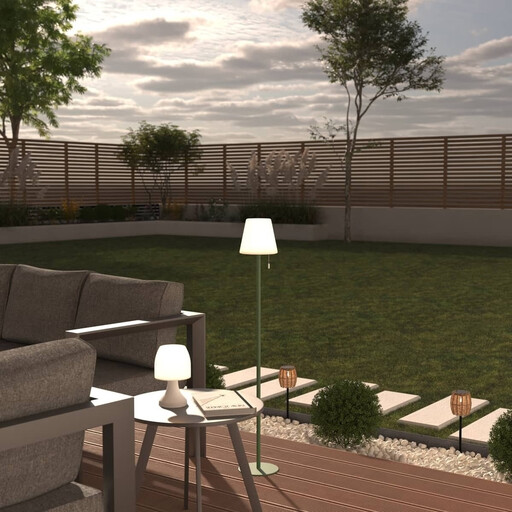
Why it suits this profile: This wireless standing lamp is easy to move around on a balcony or patio and does not require permanent installation.
The product description states that it is battery-powered, offers up to ten hours of operation and has three manually selected light settings. Check the selected setting and charge level before use.
108 cm high, IP44 rating, plastic shade and a choice of multicolour, flame effect and white light.
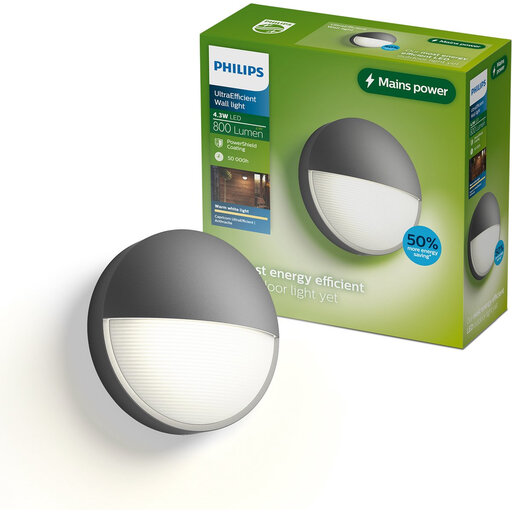
Why it suits this profile: A fixed outdoor wall light for anyone looking for a calm, consistent lighting solution by a façade or entrance.
The specifications state IP44, 800 lumens and warm white light at 2700K. The lamp does not depend on daily sunlight and is permanently connected.
Aluminium and plastic construction, integrated LED, 4.3 W power and a stated lifespan of up to 50,000 operating hours.

Why it suits this profile: Designed for driveways, garages, gardens and larger areas where motion-activated lighting is preferred.
The product details state IP65, a sensor range of 60 feet and a detection angle of 180 degrees. Check that the stated distances suit your property.
302 LEDs, a stated light output of 3000 lumens, three light settings and three adjustable light heads.
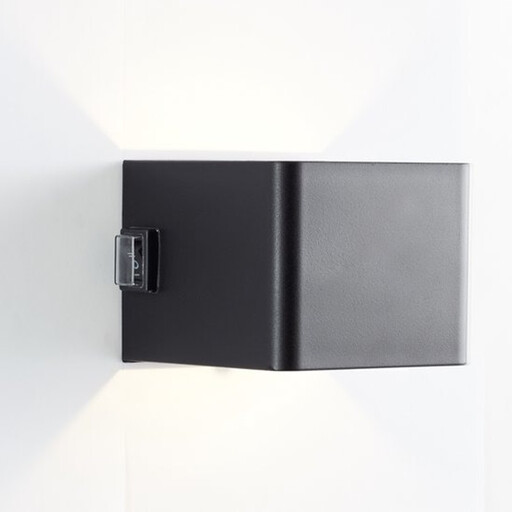
Why it suits this profile: The magnetic mounting and rechargeable battery are useful for tenants or anyone who regularly changes their layout.
No permanent wiring is required. The product description states that it has a USB-C connection, motion sensor and IP44 splash protection.
300 lumens, 3000K warm white light, integrated LED and magnetic mounting.
We have compiled a complete, up-to-date list of products that fully meet these strict selection criteria and the applicable European safety regulations.
For atmospheric balcony or patio lighting, a modest light output is often sufficient. An entrance, garden path or driveway will benefit from more light. As well as lumens, consider the beam direction and colour temperature. For example, a 400-lumen light may be suitable for a wall beside the front door, while a wide floodlight will illuminate a larger area.
IP44 is suitable for splash protection and is often used in sheltered outdoor locations. It is not the same as being completely waterproof. Do not place an IP44 outdoor light under direct jets of water, and follow the installation instructions. A higher IP rating may be more suitable for exposed locations.
A solar light does not use electricity from the mains during normal operation. Its battery is charged by the solar panel during the day. The actual operating time depends on sunlight, the season, temperature, battery status and light setting. Check that the panel receives enough direct light and keep its surface clean.
