
Vandaag of morgen in huis

Kwaliteit gegarandeerd

Welkomstaanbiedingen ontgrendelen: GRATIS bezorging | Tot 80% korting | Gratis 30 dagen JoyPlus-proefperiode
Download de app
Buying new outdoor lighting sounds simple, until you have to choose between an outdoor wall light, solar outdoor lighting, an LED outdoor lamp or decorative terrace lighting. A lamp may look sturdy in the product photo, yet still be unsuitable for the place where you want to install it.
So don’t just focus on the design or a high light output. Above all, check the protection rating, power supply, installation requirements and intended use. This helps you avoid a poor purchase and choose garden lighting that suits your home, balcony, driveway or terrace.
A designation such as IP44 does not mean that a lamp is completely waterproof. The first digit refers to protection against solid objects, while the second refers to protection against water. IP44 is suitable for splashing water, but not for submersion or direct water jets.
For a sheltered outdoor wall, veranda or covered terrace, IP44 outdoor lighting may be suitable. On an exposed façade or in a location where there is a lot of rain and dust, IP65 outdoor lighting is more appropriate. Always check the manufacturer’s specific safety instructions too.
A lamp with a high light output is not automatically pleasant for an entrance or terrace. Lumens (lm) indicate how much light the lamp produces, but the light distribution determines where that light falls.
For example, a path light with downward-facing light helps make a route clearly visible. A wall light with diffuse light is more suitable for creating atmospheric lighting for a garden or façade. On a balcony, a softer light level may be more pleasant than a powerful floodlight.
An outdoor lamp connected to the mains must be wired safely and may require installation by a qualified electrician. A solar garden light or rechargeable outdoor lamp offers more flexibility, but only works well when the solar panel receives sufficient daylight or the battery is recharged regularly.
Also pay attention to the included components. Some outdoor wall lights are supplied without a light source, while other models have integrated LED lighting. With an E27 or GU10 fitting, you may therefore still need to purchase a suitable bulb.
Choose the IP rating based on the location:
An IP rating does not mean that you can place a product under water. Install a lamp according to the instructions and prevent connections from lying in puddles or wet soil for prolonged periods.
Colour temperature is expressed in kelvin (K). Warm white light around 2700–3000 K creates a softer look for a terrace, balcony or entrance. Cooler light may be more functional for a driveway or larger grounds.
As well as lumens, consider the beam angle. An outdoor wall light that shines downwards can highlight a façade without making the surrounding area unnecessarily bright. For a decorative string light or LED ball, the atmosphere is often more important than maximum light output.
Solar outdoor lighting uses a solar panel and battery. Positioning is important: shade from a fence, tree or covered terrace can limit charging capacity. A motion sensor can reduce energy consumption because the lamp only switches on when movement is detected.
For a mains-powered model, check the cable, adapter, timer and position of the socket. A timer function, such as six hours on and eighteen hours off, can be useful for decorative garden lighting.
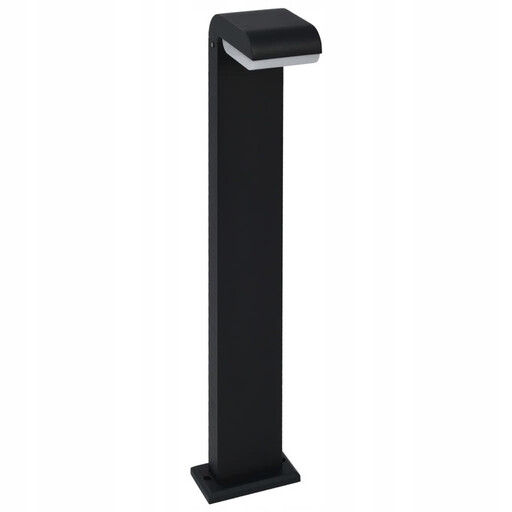
Why it suits this profile: This path light is a practical choice for anyone looking for a fixed garden light without a separate bulb. According to the product details, the integrated LED delivers 550 lm at 9 W.
The specifications clearly state the power, light output and IP54 protection rating. This means you can assess in advance whether the lamp is suitable for your outdoor location.
Cast aluminium, 800 mm high, integrated LED and downward-facing light. The stated IP54 rating is suitable for many normal outdoor conditions.

Why it suits this profile: If you’re looking for a smart outdoor wall light with a sensor and no fixed wiring, this compact model offers warm white light and two lighting modes.
The product information specifies IP44 and warns that the lamp must not be submerged. This prevents confusion between splash resistance and waterproofing.
Solar power, integrated LED, motion sensor and a stated light output of 400 lm per light point.

Why it suits this profile: For a driveway, garage, back garden or larger grounds, a wide lighting range with motion detection can be useful.
The specifications state three lighting modes, a sensor range of 60 feet and IP65 protection. However, position the solar panel where it will receive sufficient direct sunlight.
302 LEDs, a stated 3000 lm, three adjustable heads and a stated IP65 rating for a more exposed outdoor environment.
We’ve put together a complete, up-to-date list of products that fully meet these strict selection criteria and the applicable European safety regulations.
Use this quick checklist:
Solar outdoor lighting is practical when you don’t want to run a cable. A solar-powered garden light does, however, need sufficient daylight. For heavily shaded locations, a rechargeable or wired outdoor lamp may be more suitable.
Consumption depends on the wattage and the number of hours the lamp is switched on. A 9 W lamp that is on for five hours a day uses less energy than a comparable 60 W model. Solar outdoor lighting does not use mains electricity, but its performance depends on sunlight and battery capacity.
Lifespan varies depending on the light source, battery, housing and usage conditions. Integrated LEDs are not always replaceable. Before buying, therefore, check whether the light source can be replaced and whether the manufacturer provides maintenance instructions or warranty information.
