
Vandaag of morgen in huis

Kwaliteit gegarandeerd

Welkomstaanbiedingen ontgrendelen: GRATIS bezorging | Tot 80% korting | Gratis 30 dagen JoyPlus-proefperiode
Download de app
Outdoor lighting needs to do more than look attractive. A light by the front door needs to switch on reliably, pathway lighting must withstand rain, and a solar outdoor light needs enough daylight to work in the evening. Even so, there are several common purchasing mistakes that can quickly make a light less suitable than expected.
An LED outdoor light with a high lumen output is not automatically suitable for every location. 3000 lumens can be practical for a driveway or large grounds, but is often too bright for a small balcony. For patio lighting or a dining table, 140 to 400 lumens may be more comfortable. Also consider the colour temperature: around 2700–3000 K generally produces warm white light, while higher values look cooler and brighter.
IP44 outdoor lighting is protected against splashing water and solid objects larger than 1 millimetre. This does not mean the light is waterproof or can withstand direct water jets. An IP44 outdoor wall light is therefore best suited to a covered area, a sheltered façade or a balcony.
For a more exposed location, IP65 outdoor lighting is the more logical choice. This classification provides protection against dust and water jets from various directions. Also always check the installation instructions: an IP rating does not make incorrect wiring or poor sealing safe.
A solar outdoor wall light may seem easy to install, but its solar panel needs direct daylight. Shade from a roof edge, tree or neighbouring property can limit charging time. A fixed outdoor wall light with a GU10 or E27 fitting will usually need to be connected to the mains. This requires installation by a qualified electrician.
Lumens indicate how much light a lamp produces according to its product specification. Use this as a point of comparison, not as a guarantee of perceived brightness. The beam angle, installation height and colour of the surroundings all affect the result.
Choose an aluminium, plastic or metal housing that suits the location. Check whether the light is suitable for permanent outdoor installation or only for sheltered areas. With IP44, direct contact with heavy rain, a garden hose or pressure washer should be avoided. With IP65, correct installation is still essential.
A rechargeable outdoor light can be positioned flexibly, but needs to be charged via USB at regular intervals. A solar outdoor light depends on sunlight and the season. A light with a motion sensor can save energy because it does not stay on continuously, but pay attention to the detection range and adjustment options.
With integrated LED lighting, the light source is often not replaceable. With GU10 or E27 lamps, you can choose and replace a suitable LED bulb yourself. Check the maximum wattage and whether a light source is included.
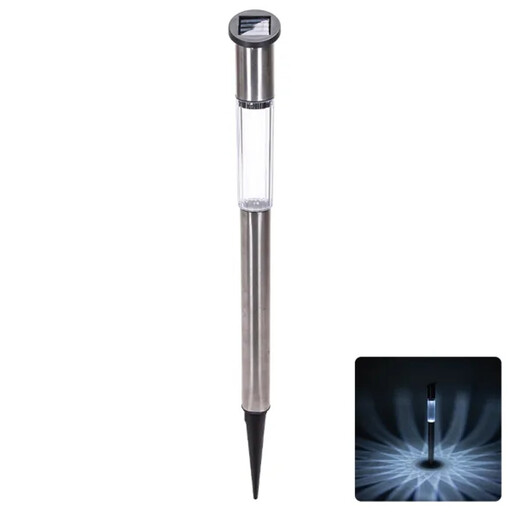
Why it suits this profile: This spike light is easy to place in the ground and does not require a mains connection. That makes it suitable for a first lighting set-up along a garden path or flower bed.
The specifications state a charging time of 4–6 hours and a runtime of 8–12 hours. Make sure you place the light somewhere with sufficient sunlight.
Stainless steel housing, solar power, IP44 protection and a height of 55 cm.
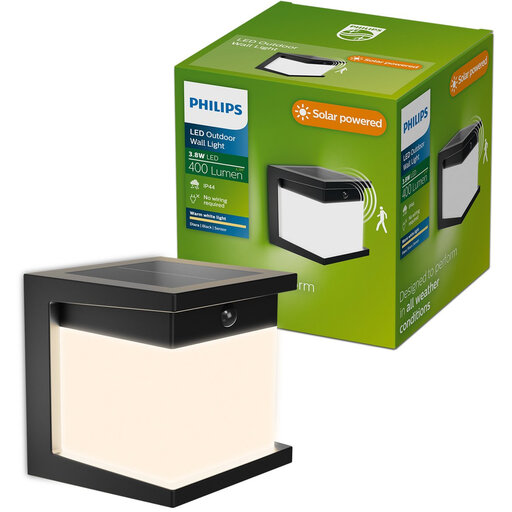
Why it suits this profile: This solar outdoor wall light combines an integrated LED, motion sensor and two lighting modes for an entrance, balcony or sheltered façade.
The product information clearly states IP44, 400 lumens and 2700 K. This allows you to assess the light based on specific figures rather than atmospheric product photos alone.
Solar power, integrated LED, warm white light at 2700 K and a minimum statutory warranty of two years.

Why it suits this profile: This solar outdoor lighting is designed for a driveway, garage, grounds or larger patio where wide detection and powerful illumination are required.
The listing mentions three modes, three adjustable heads, a 180° detection angle and IP65. Check beforehand that the 3000-lumen output is suitable for your surroundings.
IP65 rating, 270° adjustable coverage, motion detection up to 60 feet according to the product specification, and installation without fixed wiring.
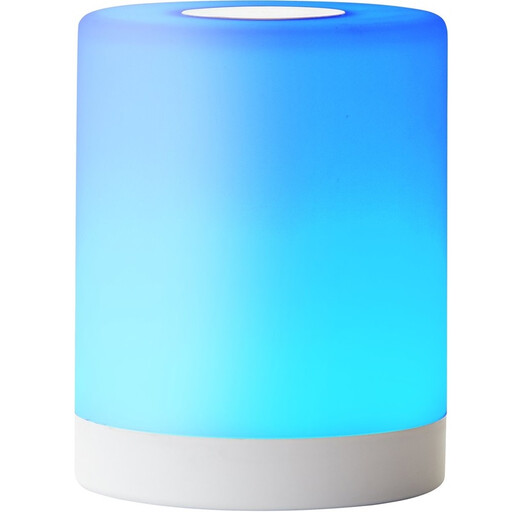
Why it suits this profile: Thanks to its rechargeable battery and magnetic mounting, this light can be used without a fixed connection, for example on a balcony, veranda or in a rented property.
The light does not require fixed wiring. However, make sure you use a flat, clean surface and charge the battery in good time; IP44 means protection against splashing water, not immersion.
300 lumens, 3000 K, integrated motion sensor, magnetic attachment and USB-C charging according to the product information.
We have put together a complete, up-to-date list of products that fully meet these strict selection criteria and the applicable European safety regulations.
That depends on the IP rating, the positioning and the amount of daylight. Place the panel away from shade and clean it regularly. An IP44 light is suitable for splashing water, but not for direct water jets. For a more exposed location, choose a model with a higher level of protection, such as IP65, if the manufacturer states that this applies to the product.
For atmospheric patio lighting, a lower lumen figure may be sufficient. For an entrance or balcony, 300–400 lumens is often more appropriate. A driveway or large grounds may need more light, for example a model with several LED heads. Always consider the beam angle, colour temperature and installation height as well.
A solar or rechargeable outdoor light does not use electricity from the mains while switched on, but it does need to be charged sufficiently. With fixed lighting, the wattage combined with the operating time determines energy consumption. An LED outdoor light generally uses less energy than a comparable traditional light source. A motion sensor can reduce the operating time further, depending on the settings and how the light is used.
