
Vandaag of morgen in huis

Kwaliteit gegarandeerd

Welkomstaanbiedingen ontgrendelen: GRATIS bezorging | Tot 80% korting | Gratis 30 dagen JoyPlus-proefperiode
Download de app
Good outdoor lighting should be more than just attractive. In a British garden, on a balcony or by an entrance, a light has to cope with rain, wind, damp and limited sunlight in winter. Yet many products are mainly promoted with words such as “waterproof”, “durable” or “solar”. These terms only mean something once you have checked the technical specifications.
An IP44 outdoor light is protected against splashing water, but not against direct jets of water or immersion. This makes IP44 suitable for a sheltered balcony, veranda or covered area, but less appropriate for a completely exposed location.
For heavier exposure to rain, you can look for an IP54 outdoor light or a product with IP65 solar light listed in the specifications. Always check the full product description, though. A higher IP rating does not automatically mean that every component, such as a solar panel or connection, is fully protected against water.
A solar garden lighting product needs direct sunlight to charge its battery. Under dense foliage, against a north-facing wall or on a balcony with little light, the operating time can be noticeably shorter. Cloudy weather, dirt on the panel and short winter days also have an effect.
So pay attention to:
For example, the VIVREAL solar string lights are stated to have a charging time of 6 to 8 hours and an operating time of 8 to 14 hours. The description also explains that performance depends on weather conditions.
An LED outdoor light can provide bright, practical illumination, but it may also be intended mainly as atmospheric outdoor lighting. So look at the lumen output and colour temperature. A 170-lumen light, for example, is suitable for a table, while a path light with 550 lumens spreads more light across a walkway.
A warm colour temperature of around 2700 to 3000 K generally feels softer. For practical lighting by a shed, back door or garden path, a higher light output may be more important than a decorative design.
The IP code consists of two digits. The first refers to protection against solid particles and the second to protection against water. For this product category, they mean:
So ideally place an IP44 outdoor wall light under an overhang. The Brilliant Newport outdoor wall light has an IP44 rating and, according to the product description, is intended for sheltered outdoor locations. Connection to 230 volts must be carried out by a qualified electrician.
A mains-powered fixed light is suitable for long-lasting, predictable illumination. A solar light is cordless and convenient in places without a socket, but it depends on sunlight. A rechargeable outdoor light with USB gives you more control: you can charge the battery in advance when the weather is poor.
Also consider the type of controls. A dimmable outdoor light is practical above a garden table, because you need less light while eating than when reading. According to the product specifications, the Brilliant Viani has three dimming settings, an integrated battery, solar charging and a USB connection.
Measure the space before ordering. A tall garden light can dominate a narrow path, while a small outdoor table lamp may not provide enough light for a large table. For freestanding models, also check the weight and stability. Place a freestanding light on a level surface, not on the edge of a table or planter.
For wall lights, it is important to check whether a bulb is included. The Newport light uses an E27 fitting and is supplied without a bulb. The compact Keola uses a GU10 fitting and, according to the product information, is suitable for an LED bulb of up to 10 W.
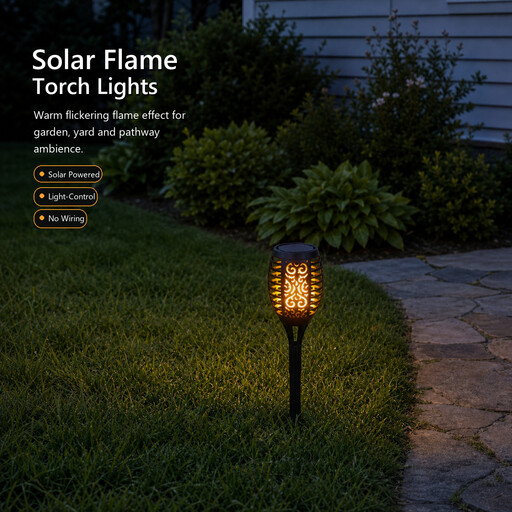
Why it suits this profile: Four solar torches offer an easy way to mark out a garden path, border or patio without cables.
The product specification states IP65 and automatic switching on and off. However, place the panels in a sunny spot to give them the best chance of charging.
Set of four, 12 LEDs per torch and a stated height of 51 cm.
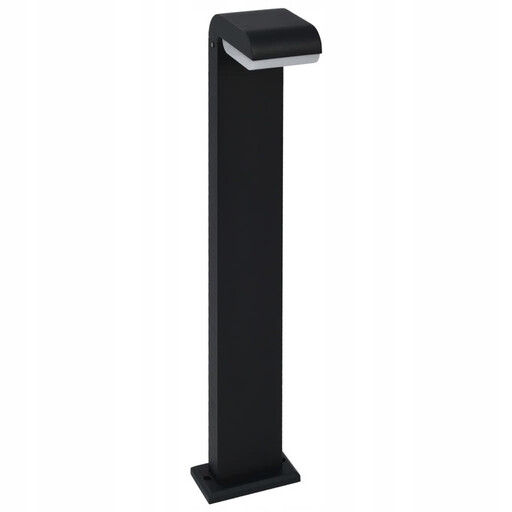
Why it suits this profile: This fixed garden light is ideal for anyone looking to install a cleanly designed light point along a path or border.
The specifications state IP54, 9 W and an integrated LED. This makes the protection rating clearer than with products that only claim to be “weather-resistant”.
550 lumens, aluminium housing, height of 800 mm and downward-facing light.
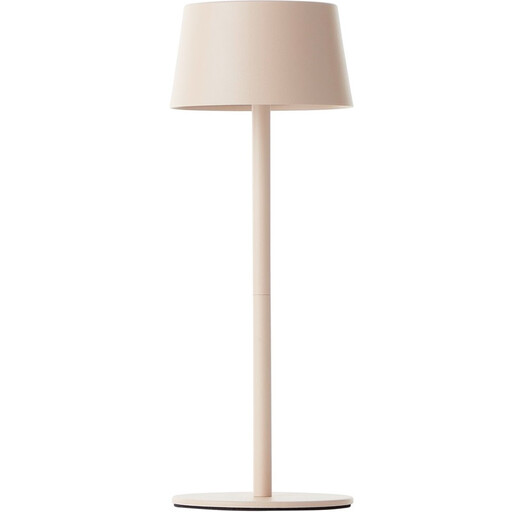
Why it suits this profile: A cordless outdoor table lamp is handy for anyone who regularly moves their lighting between the balcony, patio and garden table.
The description explicitly states IP44 and warns that the lamp is not waterproof. This makes placing it under a covered area the wiser choice.
170 lumens, warm white light at 3000 K, three dimming settings, solar and USB charging.
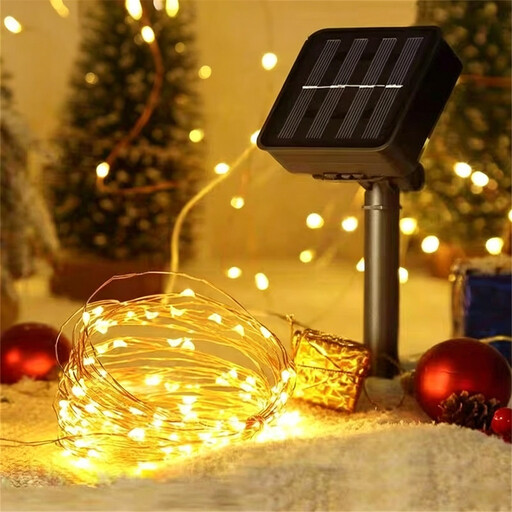
Why it suits this profile: The flexible wire is suitable for balcony railings, trees, planters and pergolas where decorative light is more important than illuminating a walkway.
The product information lists two 49 ft light strings, eight lighting modes and a memory function. The solar panel must be placed in direct sunlight without obstruction.
Two strings with 75 LEDs each, warm white light and automatic operation.
Outdoor LED candles are useful when you do not want to use a naked flame. The Brilliant Bougie set has IP44, a timer and a flickering LED effect. The two AA batteries required for each light are not included. Use these candles on a sheltered table and do not treat IP44 as protection against prolonged rain.
A wax melt lamp is another type of product. Before using one outdoors, always check whether the manufacturer specifies outdoor use, an IP rating and weather resistance. Without this information, a wax melt lamp is not automatically suitable for a patio or balcony.
We have put together a complete, up-to-date list of products that fully meet these strict selection criteria and the applicable European safety regulations.
For a sheltered veranda, balcony or covered area, IP44 may be suitable. For a light exposed to more rain and dust, look for IP54 or higher. Always also check the installation instructions and placement restrictions for the specific product.
The operating time depends on sunlight, battery capacity, temperature, dirt on the panel and the selected lighting mode. A stated operating time is therefore a guideline, not a fixed guarantee. Clean the solar panel regularly and do not place it under a covered area or tree when charging via sunlight is required.
LED lights generally use little power compared with traditional light sources. For fixed lighting, look at the wattage and the number of hours of use. Solar and rechargeable models do not use mains electricity directly while lit, but their performance depends on the available sunlight or the battery’s charge level.
