
Vandaag of morgen in huis

Kwaliteit gegarandeerd

Welkomstaanbiedingen ontgrendelen: GRATIS bezorging | Tot 80% korting | Gratis 30 dagen JoyPlus-proefperiode
Download de app
Good outdoor lighting needs to do more than look attractive. A light by the front door should switch on reliably, garden path lighting should provide a safe view, and patio lighting should mainly create a welcoming atmosphere. Yet many buyers focus primarily on design and price. As a result, they sometimes arrive home with a light that is not bright enough, runs out of charge quickly or turns out to be unsuitable for the place where it needs to be installed.
An LED outdoor light with a high lumen output may seem powerful, but the light distribution determines where that light actually falls. A narrow beam, for example, works well as an accent on an exterior wall, but less well for a broad garden path. So, as well as the light output, check the direction of the light, beam angle and installation height.
An IP44 outdoor light is protected against splashing water, but not against immersion or powerful water jets. This makes IP44 suitable for a sheltered exterior wall, veranda or entrance, but less obviously suitable for a location where rain falls directly onto the light.
An IP54 outdoor light offers additional protection against dust and splashing water. For more exposed locations, IP65 outdoor lighting may be the more logical choice. In practice, IP65 means a higher level of protection against dust and water jets, but the light must still be installed according to the instructions.
A solar-powered outdoor light is easy to install because no power cable is required. However, performance depends on the amount of direct sunlight, the panel’s orientation and the season. Under a canopy or on a north-facing wall, the battery may not charge as effectively. Also consider the difference between mood lighting and a light used for security purposes.
Lumens (lm) indicate how much visible light a lamp produces. Watts mainly indicate energy consumption and are less suitable for comparing brightness. For an entrance or wall light, 180 to 400 lumens is often aimed at functional or atmospheric lighting. A driveway or large grounds may require more light.
Colour temperature is expressed in kelvin. Around 2700K to 3000K produces warm white light that works well on a patio, balcony or veranda. At around 7000K, the light appears much cooler and brighter. So, check that the product description clearly states the colour temperature.
Pay attention to the complete IP code, not just the words “for outdoor use”.
The IP rating does not automatically say anything about impact resistance, lifespan or installation quality. A sturdy aluminium housing may also age differently from a plastic housing. So, look at the material, fixings and maintenance requirements too.
An integrated LED outdoor light is usually easy to use and does not require a separate bulb fitting. With a GU10 outdoor light or E27 outdoor light, you can choose the light source yourself, although the light is sometimes supplied without one. A wired outdoor wall light operating at 220-240V must be connected by a qualified installer in accordance with the product information.
A wall light with a motion sensor is useful by a front door, shed or driveway. Check the detection range and activation time. With a solar wall light, the panel needs an unobstructed view of the sky. Clean the panel and sensor regularly with a soft cloth.
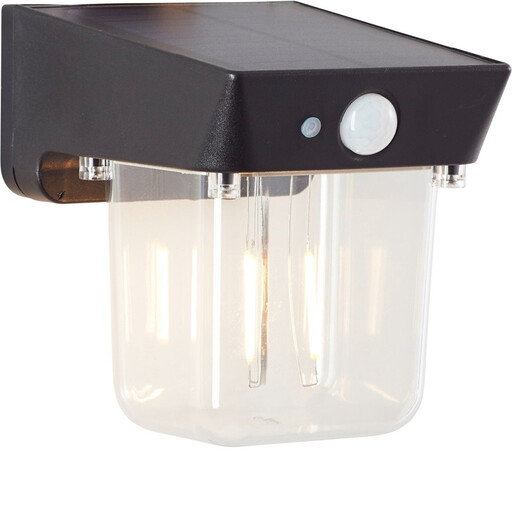
Why it suits this profile: This compact solar wall light is designed for an entrance, balcony, patio or small garden area without an available power connection.
The product description lists an integrated battery, solar panel, motion sensor and IP44 rating. This means the power source and protection rating are clear from the outset.
According to the product details: 180 lm, 2700K warm white light, solar power, dimming function and motion sensor.
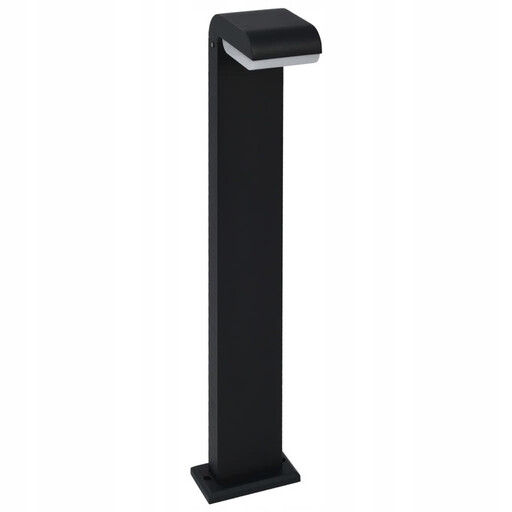
Why it suits this profile: This fixed LED garden light is suitable for buyers looking for a neat, permanent solution for a garden path or border.
The specifications clearly state 550 lm, 9 W, IP54 and a die-cast aluminium housing. This means you do not have to rely solely on a general marketing term.
According to the product description: integrated LED, downward-facing light, black die-cast aluminium and dimensions of 160 × 100 × 800 mm.

Why it suits this profile: This solar security light is designed for driveways, garages, gardens and larger outdoor spaces where broad light coverage is desired.
According to the product description, there are three lighting modes, three adjustable heads, a 180° detection angle and IP65 protection. However, check that the installation location receives enough sunlight.
According to the brand’s own information: 302 LEDs, 3000 lm, an 1800 mAh battery and a stated detection range of 60 feet.
We have put together a complete, up-to-date list of products that fully meet these strict selection criteria and the applicable European safety regulations.
For a sheltered wall or veranda, IP44 may be suitable. For a more exposed location, IP54 offers additional protection against dust and splashing water. IP65 outdoor lighting is more suitable when the light is likely to come into contact with dust or water jets more frequently. Always check the installation instructions and do not place the light under water.
Lifespan varies depending on the model, usage time, temperature and power supply quality. With an integrated LED, the light source is often not designed to be replaced. With a GU10 or E27 lamp, you can replace the light source separately. So, check in advance whether maintenance and replacement are important to you.
A solar outdoor light does not use electricity from the mains while charging. Its practical performance depends on sunlight, battery capacity and the selected lighting programme. In winter or in a shady location, the operating time may be shorter. For constant lighting in a fixed location, a wired outdoor light may be more predictable.
