
Vandaag of morgen in huis

Kwaliteit gegarandeerd

Welkomstaanbiedingen ontgrendelen: GRATIS bezorging | Tot 80% korting | Gratis 30 dagen JoyPlus-proefperiode
Download de app
Good outdoor lighting makes an entrance easier to see, creates a welcoming atmosphere on the patio and helps illuminate pathways practically. However, not every outdoor light is suitable for every location. A lamp that works perfectly well under a canopy may be more vulnerable to rain when installed on an exposed façade. And solar outdoor lighting that performs well in summer may provide light for less time in winter.
So don’t just consider the design or the number of LEDs. Above all, check the intended use, the protection rating and how the light needs to be installed.
The number of lumens indicates how much light a lamp produces according to its product specifications. More lumens are not automatically better for every application. For an atmospheric outdoor wall light, 180 to 400 lumens may be sufficient. For a driveway or large grounds, a more powerful fitting may be more practical.
Also consider the light colour. 2700K to 3000K produces warm white light, while a higher colour temperature can look cooler. Check whether the light shines downwards, all around or forwards in a focused beam.
An IP44 outdoor light is splash-proof and designed for many sheltered outdoor applications. This does not mean that the light is waterproof or able to withstand direct jets of water. For a location with greater exposure to rain and dust, IP54 or IP65 may be more suitable.
Therefore, don’t simply install an IP44 light in a completely exposed location. Always follow the manufacturer’s installation instructions.
A fixed wall light running on 220-240 volts will generally need to be connected by a qualified electrician. This applies, for example, to models with a GU10 or E27 fitting. A solar outdoor light or portable outdoor light works without fixed wiring, but it does need a suitable location with sufficient daylight or regular USB charging.
Also check whether a light source is included. Some fittings are supplied without a GU10 or E27 bulb. This gives you more freedom of choice, but it does mean that you need to purchase the light source separately.
Look at lumens, not just wattage. Watts mainly indicate energy consumption, while lumens tell you more about the amount of light produced. Integrated LED outdoor lighting, for example, may deliver 550 lumens at 9 watts. For a path light, a downward light distribution is often more useful than a broad, bright beam.
For a cosy garden, balcony or patio, warm white values of around 2700K or 3000K are common. If you mainly want to illuminate a driveway, garage or back door, also consider the positioning and detection angle of a sensor.
The IP code must match the location. Aluminium can be a robust choice for fixed fittings, while plastic can be useful for lightweight solar outdoor lighting or portable models. Pay attention to the mounting method: a lightweight light with magnetic mounting must be installed on a flat, clean and sufficiently magnetic surface.
A black outdoor light often complements modern façades and fences, but check that its dimensions suit the available space. A freestanding garden light measuring 80 cm, for example, requires more clearance than a compact wall light.
An outdoor light with a sensor switches on when movement is detected. Check the detection distance and angle, as well as whether the light has different modes. With a solar-powered outdoor light, the position of the panel, direct sunlight and the season all affect how long it can operate.
According to the product descriptions of some brands, a solar lamp may offer several lighting modes. Treat this information as a product specification provided by the brand; actual operating time depends on sunlight, temperature, charge level and the selected mode.
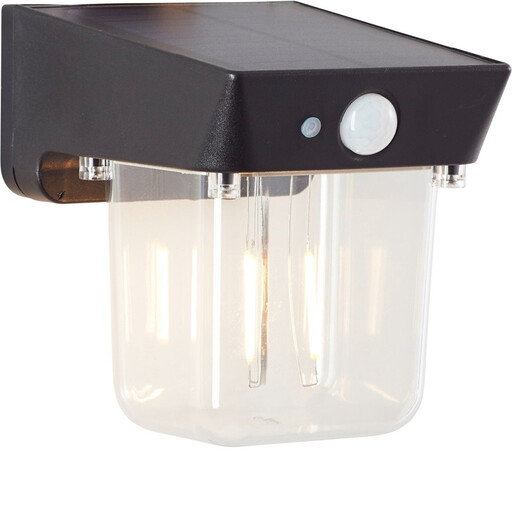
Why it suits this profile: This compact solar wall light has an integrated LED, motion sensor and IP44 rating. This means no fixed wiring is needed at an entrance, on a balcony or on a sheltered façade.
The product specifications clearly state the power source, IP44 protection and sensor function. However, bear in mind that it depends on sunlight.
180 lumens, warm white 2700K light, an integrated battery and two lighting functions according to the product description.
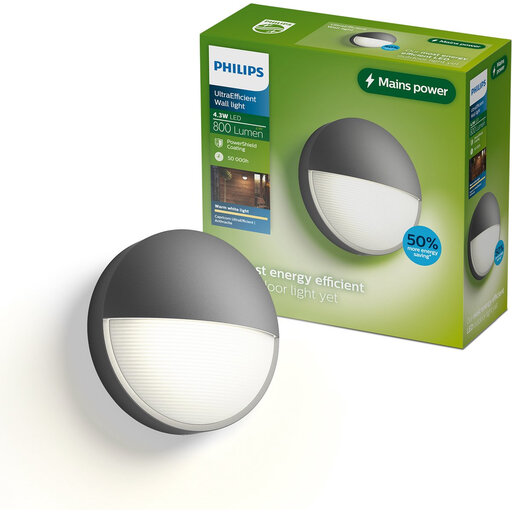
Why it suits this profile: This fixed fitting is ideal if you are looking for a robust outdoor wall light with warm illumination for a façade, garden or balcony, and can arrange professional installation.
The information states the IP44 rating, integrated LED and requirement for professional connection. You therefore know in advance that this is not a wireless model.
800 lumens, 2700K, aluminium and plastic, plus a stated lifespan of up to 50,000 hours according to the product information.

Why it suits this profile: This model is designed for larger areas such as driveways, garages, grounds or patios. Its three adjustable light heads and motion sensor offer more flexibility than a simple decorative lamp.
The IP65 rating and solar power supply are clearly stated. However, position the panel where it receives sufficient direct sunlight for regular charging.
302 LEDs, a stated light output of 3000 lumens, three modes, a detection angle of 180 degrees and three light heads according to the product description.
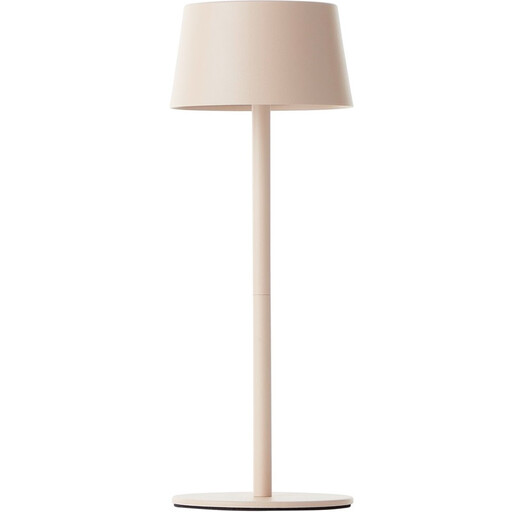
Why it suits this profile: This portable outdoor light is ideal for a table on a balcony, patio or veranda. You can charge it using solar power or USB, and adjust the brightness in three steps.
The USB option reduces reliance on changing levels of sunlight. IP44 still only means splash protection, so don’t place the lamp in a puddle or under a direct jet of water.
170 lumens, 3000K, an integrated battery, USB A charging and three dimming modes according to the product information.
We’ve put together a complete, up-to-date list of products that fully meet these strict selection criteria and the applicable European safety regulations.
Check the following before buying and installing:
For a sheltered entrance or covered area, IP44 may be suitable, provided the light is not exposed to direct jets of water. For a more open location, models with IP54 or IP65 are worth considering. Always check the installation instructions and the precise product description.
That depends on the amount of direct sunlight, battery capacity, temperature and selected lighting mode. During dark or overcast periods, operating time may be shorter. A model with USB charging can provide a practical alternative.
For decorative path lighting or a table lamp, a modest light output may be suitable. An entrance or driveway will often benefit from more light. Alongside lumens, consider the light distribution, mounting height and whether the lamp stays on continuously or only switches on via a motion sensor.
