
Vandaag of morgen in huis

Kwaliteit gegarandeerd

Welkomstaanbiedingen ontgrendelen: GRATIS bezorging | Tot 80% korting | Gratis 30 dagen JoyPlus-proefperiode
Download de app
A dark driveway, a poorly lit entrance or a patio without mood lighting calls for the right solution. Outdoor lighting comes in many forms, from solar garden lights and path lights to outdoor wall lights, LED outdoor lights and outdoor string lights.
But choosing the right light isn’t always straightforward. Some lights provide less illumination in practice than you might expect, while others aren’t suitable for the place where you want to install them. Use these checks to avoid a disappointing purchase.
A high lumen rating tells you something about light output, but not about how widely the light spreads or how long it lasts. A bright light with a narrow beam may illuminate a path less evenly than a dimmer light with a wider spread. So check the beam angle, the number of light heads and the mounting height too.
With a solar outdoor light, actual run time also depends on sunlight, the season, shade and battery capacity. So a stated run time isn’t a guarantee that it will last the same amount of time every evening.
The IP code indicates how well a product is protected against solid particles and water.
Solar garden lights don’t need fixed wiring, but the panel needs direct sunlight. A light under dense foliage or on the north-facing side of a property may therefore stay lit for less time.
A wired outdoor wall light provides a more consistent power supply, but needs to be connected to the mains. Have a fixed 230V connection installed by a qualified electrician. With a rechargeable LED outdoor light, check the charging port, battery type and mounting method instead.
Light colour is measured in Kelvin. Around 2700K to 3000K usually gives a warm white light for a patio, balcony or entrance. Around 4000K looks more neutral and can be practical for a driveway. A higher colour temperature, such as 6500K to 7000K, gives a cooler, brighter-looking light. This can be useful for a large area, but may not create the most relaxing atmosphere.
For garden paths, soft garden lights or low path lights are often more pleasant than a powerful floodlight. For a garage, shed or wide driveway, an outdoor light with a sensor may be more practical.
When choosing an outdoor light with a sensor, three points matter:
According to the product description, the UME light in this selection has a detection distance of 60 feet, a sensor angle of 180 degrees and three adjustable light heads. When installing it, check that branches, fences or passing vehicles won’t trigger it unnecessarily.
ABS and polycarbonate are lightweight materials often used for solar lights. Aluminium, glass and metal are common materials for fixed wall lights. As well as checking the material, look for:
A solar panel that regularly collects dust, leaves or bird droppings may charge less efficiently. Clean it carefully with a soft, damp cloth and follow the manufacturer’s instructions.
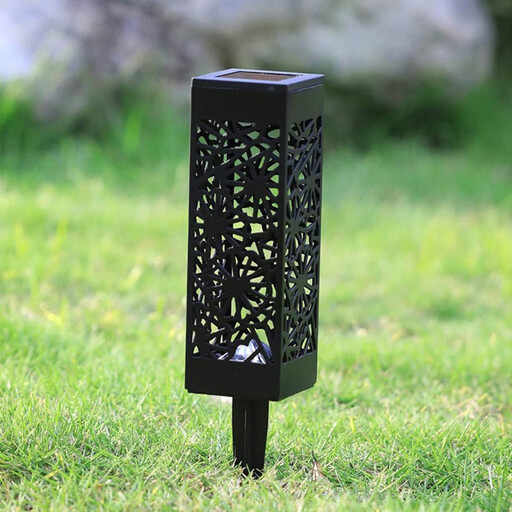
Why it suits this need: A set of six lights makes it easy to mark out a path, border or flower bed without wiring.
The specifications list an IP65 rating and an estimated charging and run time. Actual performance still depends on direct sunlight.
Six lights per set, warm white LEDs and installation without tools or mains power.

Why it suits this need: This solar outdoor light is a good fit for an entrance or exterior wall where you want neat wall mounting and automatic operation.
The product description lists a daylight sensor, motion sensor, two settings and an IP44 rating. So install the light in a sheltered spot, not somewhere water can collect.
Integrated LED, warm white light at 2700K and a stated light output of 400 lumens per light.

Why it suits this need: For a wide driveway, garage or large garden area, an adjustable solar floodlight with a sensor is more practical than several small garden lights.
The product listing specifies three light settings, three light heads and an IP65 rating. Check in advance that the installation spot gets enough sun and that 7000K is suitable for your needs.
According to the product details, it has 302 LEDs, 3000 lumens, a sensor angle of 180 degrees and an 1800 mAh lithium-ion battery.
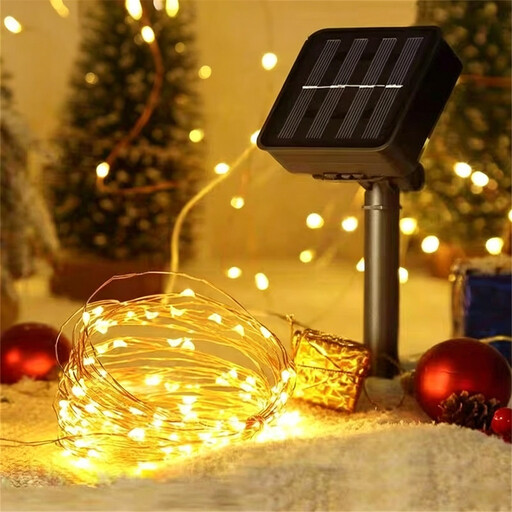
Why it suits this need: These outdoor string lights are designed to decorate a balcony, pergola, tree or patio, rather than provide practical area lighting.
The description says the solar panel should be placed outdoors in direct sunlight. The string lights themselves must not be immersed in water.
Two 49-foot strings, each with 75 warm white LEDs and eight settings with a memory function.
We’ve put together a full, up-to-date list of products that meet these strict selection criteria and the applicable European safety regulations.
Solar outdoor lights and rechargeable LED lights work without a fixed cable to the mains. Solar lights do need direct sunlight to charge the battery. For a shaded wall, a wired outdoor wall light or USB-rechargeable light may be more practical.
Run time each evening depends on the battery, amount of sunlight, temperature and selected light setting. Check the stated charging and run times before buying, but treat them as a guide based on certain conditions. Clean the panel regularly and replace the light when the battery can no longer hold enough charge.
It depends on where you install it. An IP44 outdoor light is suitable for splashes and sheltered spots, such as a covered balcony or a wall beneath the eaves. For an open driveway, garden path or exposed wall, IP65 outdoor lighting may be a more suitable choice. Always check the installation instructions for the specific product too.
