
Vandaag of morgen in huis

Kwaliteit gegarandeerd

Welkomstaanbiedingen ontgrendelen: GRATIS bezorging | Tot 80% korting | Gratis 30 dagen JoyPlus-proefperiode
Download de app
A dark driveway, a poorly lit entrance or a patio lacking atmosphere doesn't automatically call for the most expensive light. When it comes to outdoor lighting, it's all about the right combination of light output, placement, power source and protection against moisture. An LED outdoor light can be energy-efficient, while a solar outdoor light is particularly handy in spots without a mains connection.
However, there are a few common pitfalls to watch out for. A high lumen count doesn't mean a light is suitable everywhere, for example. Nor does an IP rating guarantee that a fitting is completely waterproof. With the checklist below, you can make a more informed choice for your garden, balcony, wall, patio or driveway.
A black outdoor light or a modern outdoor wall light might look great on your wall, but you should also check the dimensions and the method of mounting. A wall light nearly 21 cm high needs more space than a compact model of around 10 cm. For a narrow wall, balcony wall or fence, a large fitting can be impractical.
Also pay attention to the light distribution. Some lights shine mainly downwards, while other models have a wider beam pattern or an adjustable head. For a path, even illumination is often more practical than a single bright spotlight.
The designation IP44, IP54 or IP65 describes the protection against solid particles and water. It is not a general guarantee that a light will remain waterproof under all conditions.
An IP44 outdoor light is best placed under an overhang or in a spot where rain and direct water jets are limited. Also check that cables, plugs and junction boxes are suitable for outdoor use.
A solar outdoor light works during the day using energy from sunlight. In the shade of a tall fence, tree or canopy, the charging result can be more limited. In winter and during prolonged cloudy weather, the burn time can also vary.
According to Brilliant's own product information, their solar wall lights are intended for installation in a location with sufficient sunlight. So don't place the solar panel based on looks alone; also consider the orientation and any shade throughout the day.
Lumens (lm) indicate the total light output. A low value can be suitable for atmospheric garden lighting, while a higher value is better suited to a driveway, entrance or large area of the garden.
As a practical guide:
The final impression also depends on the beam angle, mounting height and colour of the surroundings. More lumens are not automatically more pleasant.
The colour temperature is expressed in Kelvin (K).
A warmer light colour usually fits better with decorative garden lighting. For orientation near a gate or driveway, neutral or cool white light can be more practical.
An outdoor light with a sensor switches on when movement is detected. Check the detection angle and the desired range. According to the product information, the Brilliant Magua has a motion detection of 120°. That can be handy for an entrance or garden path, but the precise operation depends on the mounting height and direction of movement.
Also pay attention to the power supply:
With a GU10 or E27 fitting, you need to check whether the light source is included. The Brilliant Jelani, for example, has a GU10 fitting, but according to the product description it is supplied without a light source. The Philips Nayl has an E27 fitting and is described as coming with an LED bulb.
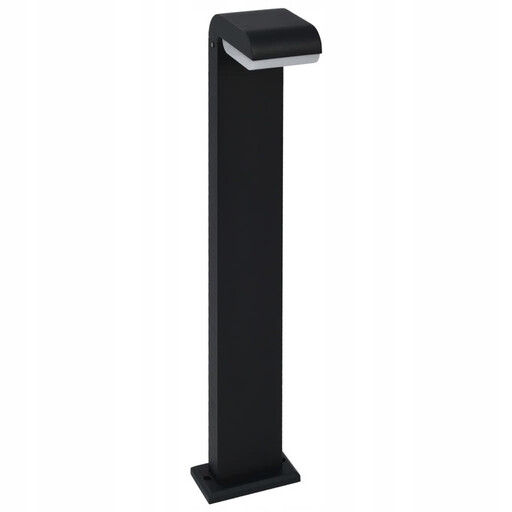
Why this fits the profile: This path light is a straightforward choice for anyone looking for a fixed LED outdoor light without a separate bulb. With a height of 800 mm, the model suits a garden path or border.
The integrated LED and specified consumption of 9 W make it clear what you're buying. The IP54 rating is verifiable, but do not place the light in an environment with direct water jets.
550 lm, 9 W, integrated LED, cast aluminium and IP54 protection.

Why this fits the profile: This model is aimed at buyers looking for a broad, powerful beam and higher moisture protection for a wall, driveway or large outdoor area.
The specifications state 4,000 lm and IP65. According to Philips' own research, the battery can provide up to four nights of lighting; the actual duration depends on charging conditions and usage.
4,000 lm, IP65, motion sensor, dusk sensor and adjustable lamp head.
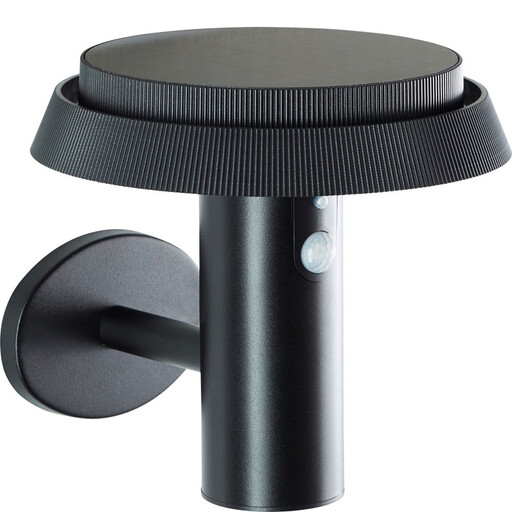
Why this fits the profile: This solar outdoor light suits an entrance, patio or garden path without an available mains connection. The sensor only switches the light on when movement is detected.
The product information mentions both the solar power supply and the IP44 rating. This makes it immediately clear that sufficient daylight is needed and that the light is protected against splashing water, but not against immersion.
500 lm, 3,000 K, motion sensor, solar power supply and three adjustable modes.
Choose a stable surface and use the fixing materials that come with the light. For magnetic models, such as the Brilliant Iseo, the mounting plate must be firmly attached to a flat, clean and suitable surface. Check regularly that the light is still securely fixed.
Clean fittings and solar panels with a soft, dry cloth. Do not use aggressive cleaning agents and do not spray water directly onto the housing. For wired outdoor lighting, the power must be switched off during maintenance. A light with an integrated LED has no separate bulb to replace; therefore check beforehand whether the expected lifespan and warranty suit your usage.
For a fixed outdoor wall light on 230 volts, such as a GU10 model, professional installation is important. The Brilliant Jelani is supplied without a light source and is intended for a suitable LED bulb of a maximum of 10 W. This makes it possible to choose the light colour yourself, but it does bring additional purchasing and installation decisions.
We've put together a full, up-to-date list of products that fully meet these strict selection criteria and comply with current European safety regulations.
For a sheltered spot, IP44 can be sufficient. If the light is more exposed to dust and rain, look at IP54 or IP65. Always check the installation manual and avoid direct water jets or immersion, unless the manufacturer expressly permits it.
For atmospheric lighting, around 300 to 350 lm is often enough. For path lighting or an entrance, 500 to 550 lm is a good starting point. A wide driveway may need more light. Alongside lumens, also consider the beam angle and the distance you want to illuminate.
A solar outdoor light uses no mains electricity during normal use, but performance depends on sunlight, season, placement and battery capacity. For a reliable result, place the panel in a spot with as much direct daylight as possible and keep the panel free of dirt.
