
Vandaag of morgen in huis

Kwaliteit gegarandeerd

Welkomstaanbiedingen ontgrendelen: GRATIS bezorging | Tot 80% korting | Gratis 30 dagen JoyPlus-proefperiode
Download de app
An outdoor light needs to do more than just look good in a product photo. In a British garden, lighting has to contend with rain, wind, damp and very little sunlight in winter. At the same time, you don’t want to pay for features you’ll hardly ever use.
The most common mistakes come down to three pitfalls:
With the right checks beforehand, you’ll find outdoor lighting that suits how you’ll use it: functional lighting for a driveway, path lighting for the garden, or decorative outdoor lighting for long evenings on the patio.
The IP rating tells you how well a light is protected against solid particles and moisture. For example:
A waterproof outdoor light is sometimes used as a general term in adverts. So look at the actual IP rating rather than just the title.
Lumens tell you how much light a lamp produces. A path light with 550 lm can clearly illuminate a route, while 170 lm on a table lamp is mainly for ambience. For a patio, warm white light around 2700 to 3000 K is often less harsh and more relaxing than cool white light.
The direction of the light also matters. A lamp that shines downwards reduces visibility from outside and annoying glare. A wall light with a diffused shade spreads the light more widely. For a driveway or large garden, a motion sensor with multiple light heads can be more practical than several small lights.
A solar-powered outdoor light works without fixed wiring, but it needs a spot where the solar panel receives direct light during the day. Shade from a fence, tree or canopy reduces its charging ability.
A solar wall light with a sensor only switches on when it’s dark or movement is detected. That can save energy, but how long the light lasts depends on the charge level and the conditions. With a mains-powered light, the lighting is more consistent, but installation by a qualified electrician may be necessary.
Also check:
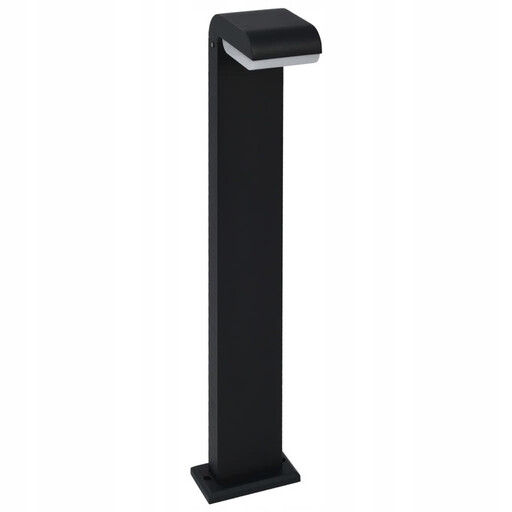
Why this fits the profile: This freestanding LED path light offers a straightforward solution for a garden path, border or entrance without needing a separate lamp holder.
The product information clearly states 9 W, 550 lm and IP54. This means you can compare brightness and moisture protection without relying solely on a marketing term.
Integrated LED, a height of 800 mm, die-cast aluminium housing and downward-facing light.
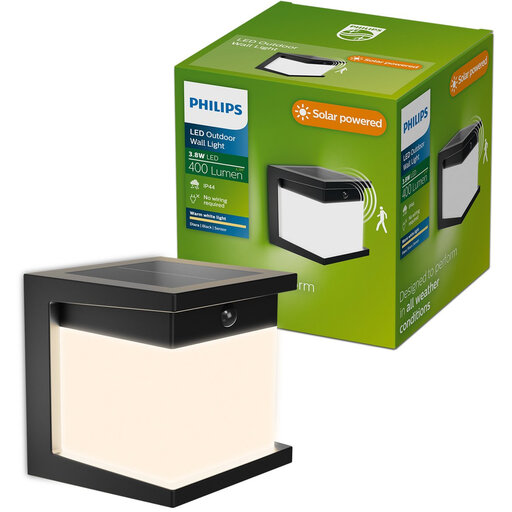
Why this fits the profile: A practical solar wall light for a façade, balcony or entrance where you don’t want to run a power cable.
The light runs on solar power and has a built-in motion sensor. The product details also explicitly mention IP44, 400 lm and 2700 K.
Two light modes, integrated LED, a stated 25,000-hour lifespan for the light source, and installation without mains wiring.

Why this fits the profile: This solar outdoor light is aimed at a driveway, garage, yard or larger patio where a wide beam and sensor are desirable.
The specifications mention 302 LEDs, three lighting modes, a 180° detection angle and IP65. Do check whether the stated brightness suits your needs.
Three adjustable light heads, solar power, motion detection and a stated light output of 3000 lm according to the product data.
For a softer look, there are other choices besides a functional outdoor light. An outdoor light string can evenly dress a balcony, pergola or patio. Pay attention to the length, the number of light points, the power supply and the IP rating of the adapter and connections.
The VIVREAL G40 string, for example, is 30 metres long, has 50 + 2 LED light points and works via a plug. The bulbs are replaceable, and the string has multiple light modes and a dimming function. Keep connections away from standing water and follow the maximum connection length stated in the product information.
For a decorative accent, the Koopman LED Ball with 300 warm white micro-LEDs and the M.TK Meteor Shower Lights with 192 coloured LEDs are also options. Both products state IP44, so use them according to the intended application and do not expose them to direct water jets.
If you prefer to install fixed ambient lighting, you could look at a wall light with a GU10 or E27 fitting. The Philips Fylx is supplied without a GU10 bulb. The Brilliant Newport uses an E27 fitting and is also supplied without a bulb. That gives you freedom of choice in light colour and dimmability, but the connection to 230 V must be carried out by a qualified electrician.
We’ve put together a full, up-to-date list of products that fully meet these strict selection criteria and comply with current European safety regulations.
That depends on the location. For ambient lighting on a table or balcony, a lower number of lumens may be sufficient. For path lighting, a driveway or an entrance, more light is needed. Always compare lumens with the light distribution and check whether the lamp shines downwards, all around or in multiple directions.
Yes, as long as the solar panel gets enough direct daylight. Don’t place a solar outdoor light under a solid canopy or on a permanently shaded wall. Clean the panel regularly and bear in mind a shorter charging time during darker days.
The consumption depends on the wattage, the hours of use and the number of lights. LED generally uses very little power; a solar outdoor light doesn’t draw any electricity from the mains while charging. For mains-powered lighting, you can easily estimate the usage with this formula: wattage × hours of use ÷ 1000 = kilowatt-hours. Also check whether a sensor or timer prevents unnecessary burning.
