
Vandaag of morgen in huis

Kwaliteit gegarandeerd

Welkomstaanbiedingen ontgrendelen: GRATIS bezorging | Tot 80% korting | Gratis 30 dagen JoyPlus-proefperiode
Download de app
Choosing a new outdoor lamp seems straightforward, until you discover how many differences there are. A lamp that looks suitable for the garden in the product photo may provide too little light in practice, be difficult to install or fail to withstand the conditions where you want to hang it.
Pay particular attention to these three common pitfalls:
The IP code consists of two digits. The first digit relates to protection against solid particles, while the second refers to water.
A higher IP rating does not automatically make a lamp suitable for every situation. Also consider the cable, connection, mounting and exposure to wind and rain.
Light output is measured in lumens. As a general guide, consider:
An LED outdoor lamp generally uses little electricity in relation to its light output. Also consider the colour temperature. Warm white at around 2700 to 3000 K creates a softer effect; 4000 K and above looks whiter and is often more practical for functional lighting.
For a façade, an outdoor wall lamp or compact downlight is suitable. For borders and paths, a freestanding outdoor lamp or spike spotlight often works better, as the light is positioned lower down.
An outdoor lamp powered by batteries, USB or solar energy can usually be positioned flexibly. With solar outdoor lighting, direct sunlight is important; a shady north-facing wall can limit the operating time.
A fixed 230-volt lamp provides a constant power supply, but requires more preparation. With models such as a GU10 or E27 wall lamp, the light source is sometimes not included. Therefore, check:
An outdoor lamp with a motion sensor is particularly useful by an entrance, garage or driveway. For mood lighting, a timer, remote control or smart garden lighting is often more practical. With smart models, check which app, connection and account are required.
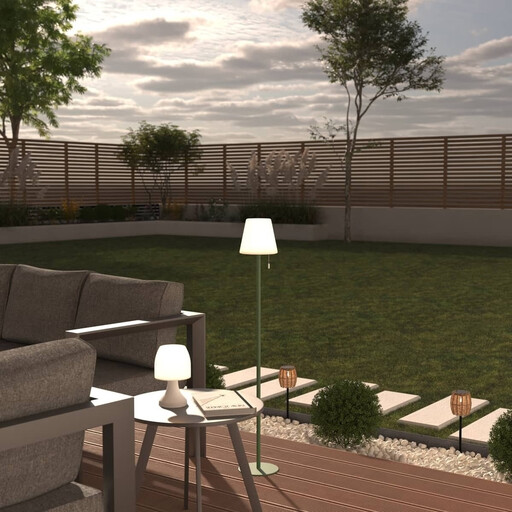
Why it suits this profile: This cordless freestanding outdoor lamp is easy to move around a patio, balcony or garden. According to the product description, the lamp runs on batteries and has a runtime of up to ten hours.
There is no need to install fixed wiring. The IP44 rating makes it clear that the lamp is designed for splashing water, not direct water jets.
108 cm tall, with three lighting modes and a weather-resistant plastic cover according to the product information.
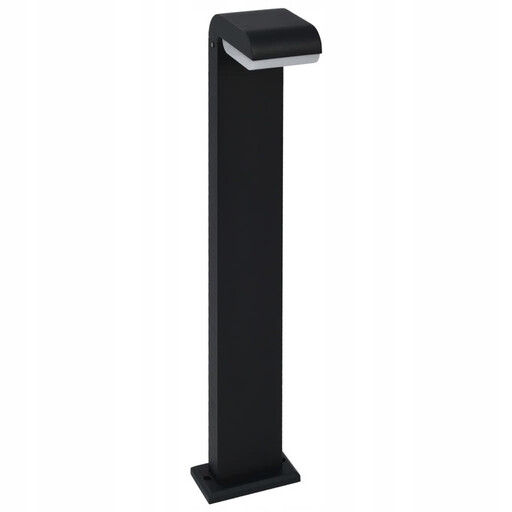
Why it suits this profile: This fixed path light is designed for anyone looking for a neat, functional solution for a garden path or border. The fitting uses cast aluminium and an integrated LED light source.
The specifications state both the light output and the IP rating. This makes it easier to compare the lamp than by appearance alone.
9 W power, 550 lumens and IP54 protection according to the product details.

Why it suits this profile: This solar outdoor lighting is designed for a driveway, garage, garden or larger outdoor area where the lighting needs to respond to movement. The three adjustable heads provide a wide spread of light.
The IP65 rating and outdoor mounting are clearly stated. However, check that the solar panel receives enough direct light.
According to the product details, 302 LEDs, 3000 lumens, a motion sensor and three lighting modes.
We have put together a complete, up-to-date list of products that fully meet these strict selection criteria and the applicable European safety regulations.
That depends on the wattage, the number of hours it is switched on and the electricity price. An LED outdoor lamp with a low wattage generally uses less electricity than a halogen lamp with a similar light output. Solar outdoor lighting does not require a fixed power connection, but its performance depends on sunlight and battery capacity.
Sometimes, but the location is important. IP44 protects against splashing water and is not the same as being fully waterproof. Preferably place an IP44 outdoor lamp in a sheltered location and follow the manufacturer’s instructions. For an exposed façade or an unprotected driveway, a model with a higher level of protection may be more suitable.
Mount the lamp securely in a location with an unobstructed view of the desired detection area. With a solar model, the panel should receive as much direct daylight as possible. Check the settings for sensitivity, lighting duration and light level. A fixed 230V lamp must be connected by a qualified electrician in accordance with the product information.
