
Vandaag of morgen in huis

Kwaliteit gegarandeerd

Welkomstaanbiedingen ontgrendelen: GRATIS bezorging | Tot 80% korting | Gratis 30 dagen JoyPlus-proefperiode
Download de app
Good outdoor lighting needs to suit the location, its use and the British weather. A light for a covered balcony has different requirements to lighting along an open garden path or a driveway. Yet many products are mainly promoted with terms like “waterproof”, “extra bright” or “energy-efficient”, without it being clear what these actually mean in practice.
So watch out for these common pitfalls:
Light output is expressed in lumens (lm). As a practical guide:
Light colour is given in Kelvin (K). Warm white around 2700 to 3000 K creates a relaxing atmosphere for a patio, facade or garden. Cooler light can be helpful when visibility matters more than decoration.
An integrated LED outdoor light typically uses little energy and doesn’t need a separate bulb. However, check whether the LED source is replaceable. On some models it is integrated, meaning the entire light must be replaced if the light source fails.
The IP code consists of two digits. The first digit refers to protection against solid particles and the second against moisture.
A product with IP44 is therefore not automatically suitable for a spot where it is constantly exposed to heavy rain. Also check the fitting, cable entry and position of the light. A waterproof outdoor light must not only have a suitable IP rating; the entire installation must be carried out correctly.
An outdoor light with motion sensor switches on when movement is detected. This is practical by a front door, garage or shed. Pay attention to the sensor’s range and detection angle. A sensor aimed at a busy pavement can trigger more often than desired.
Solar models have a built-in battery and charge during the day. Place solar garden lighting and solar outdoor lights in a spot that gets as much direct sunlight as possible. According to the manufacturer’s product description, the Huacan lights charge in around 4 to 6 hours with sufficient sun and then burn for approximately 5 to 8 hours. This is a product specification from the supplier and not a guarantee for every garden or weather condition.
With fixed lighting, you need to check whether a light is supplied without a bulb. The Brilliant Jelani, for example, has a GU10 fitting and is supplied without a bulb according to the product information. The maximum load is 10 watts. Connection to the mains requires installation by a qualified electrician.
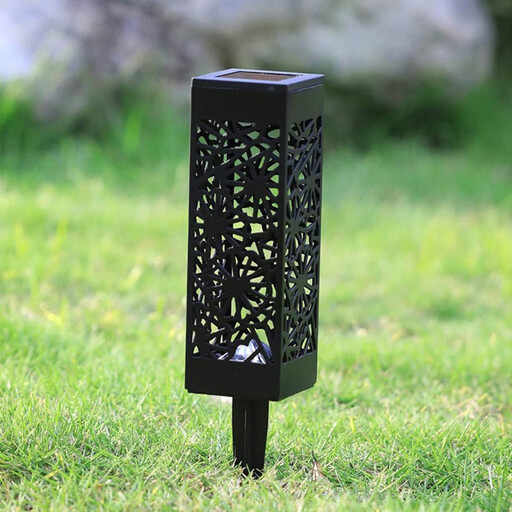
Why this fits the profile: This set is ideal for anyone who wants to accent several spots in the garden without wiring, such as a border, garden path or flower bed.
The stated IP65 rating and cable-free placement make it clear what the lights are intended for. They are not a replacement for powerful security lighting.
Six lights per set, warm white LED, automatic on/off and a ground spike that requires no tools.
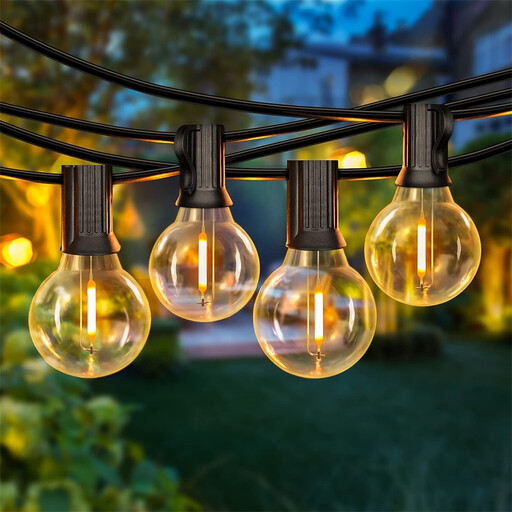
Why this fits the profile: For a patio, veranda, balcony or event, 30 metres gives you plenty of room to light up a larger area decoratively.
The product information clearly states that the lights must not be submerged. Keep connections away from standing water and follow the safety instructions.
30 metre length, dimming function, multiple light modes and replaceable G40 LED bulbs according to the product description.

Why this fits the profile: This model is aimed at a driveway, garage, garden or other spot where wide light distribution and motion detection are desired.
The stated detection angle, three light modes and IP65 rating make the application more concrete than just the claim “extra bright”. Check beforehand whether the spot gets enough sun.
Three adjustable light heads, a stated detection angle of 180 degrees and installation without fixed wiring.
We’ve put together a full, up-to-date list of products that fully meet these strict selection criteria and comply with current European safety regulations.
For a sheltered spot, an IP44 outdoor light is often suitable, for example under a canopy. For a more exposed location, IP65 outdoor lighting can be more practical. Always check the installation instructions and avoid immersion, even when a product is described as water-resistant.
Solar garden lighting uses no mains electricity while it is on. However, its performance depends on sunlight, battery capacity and the season. Don’t place the panels under trees, a balcony edge or other shady spots. For consistent lighting in winter, LED lighting with a fixed or rechargeable power supply can be more predictable.
The lifespan varies per product, hours of use, battery and weather conditions. An integrated LED source can last a long time, but on some lights it is not replaceable. With a string light that has replaceable bulbs, you can swap out an individual bulb. Clean solar panels and light openings regularly, and switch off the power before cleaning or maintaining any product.
