
Vandaag of morgen in huis

Kwaliteit gegarandeerd

Welkomstaanbiedingen ontgrendelen: GRATIS bezorging | Tot 80% korting | Gratis 30 dagen JoyPlus-proefperiode
Download de app
Good outdoor lighting should do more than look attractive. The light needs to suit its location, provide enough illumination and withstand the conditions in which it is used. A lamp for a covered balcony needs different features from a wall light beside an open driveway.
Many poor purchases result from three common pitfalls:
Start by considering the purpose. Do you want to mark out a path, illuminate a façade, create a pleasant atmosphere around a table or detect movement near the entrance?
The IP code consists of two digits. The first refers to protection against solid particles; the second indicates protection against water.
Always install a weather-resistant outdoor lamp in accordance with the installation instructions. Even a high IP rating does not make a product suitable for placing underwater.
Light output is measured in lumens (lm). Here are a few practical guidelines:
Also consider the colour temperature:
A wide beam spreads light across a larger area. A ground spotlight or adjustable lamp is particularly effective for highlighting a tree, border or architectural feature.
A mains-powered lamp generally provides a consistent power supply, but it requires a suitable connection point and may need to be installed by a qualified electrician. This applies, for example, to a fixed wall light with a GU10 fitting.
Solar and USB lamps offer greater flexibility. When choosing solar lighting, check:
For an outdoor lamp with a motion sensor, the detection range, switch-on duration and direction of the sensor are important considerations. Position the lamp so that passing people or pets do not unintentionally trigger it repeatedly.
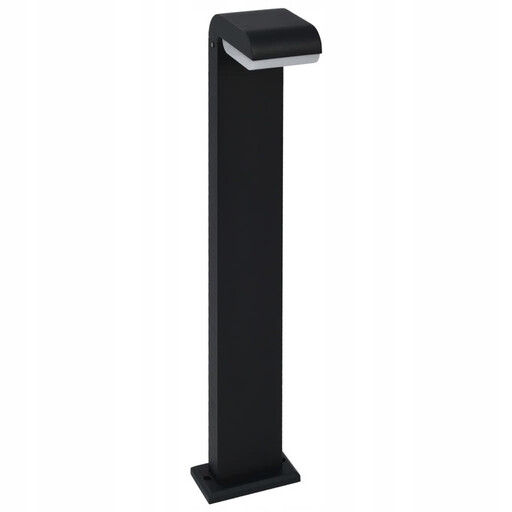
Why it suits this profile: This freestanding outdoor lamp has clear specifications and is suitable for a garden path, border or entrance where fixed LED lighting is preferred.
The product information states 550 lm, 9 W and IP54. This means you can compare light output and protection in advance rather than judging the lamp by its appearance alone.
Integrated LED, aluminium housing, a height of 800 mm and an opal diffuser that directs the light downwards.

Why it suits this profile: This solar outdoor light is suitable for a driveway, back door or exposed façade where wide-ranging illumination is important without fixed wiring.
The specifications list IP65, a dusk sensor and motion detection. However, make sure the solar panel receives direct sunlight.
According to the product information: 4000 lm, 5000 K, an adjustable lamp head and a PIR detection range of up to 16 metres when approached from the side.
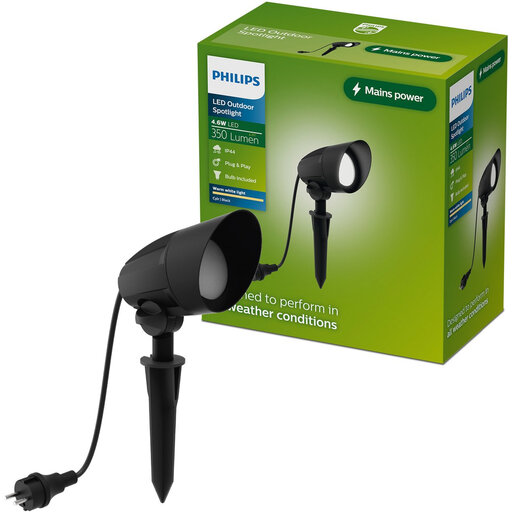
Why it suits this profile: This outdoor ground spotlight is suitable for anyone who wants to highlight a tree, border, driveway or façade with a mains-powered lamp.
The lamp has an IP44 rating and must be connected to a suitable outdoor socket. This makes it clear from the outset that it is not a wireless solution.
350 lm, warm white light at 2700 K, an adjustable spotlight and a GU10 LED bulb included, with a stated power consumption of 4.6 W.
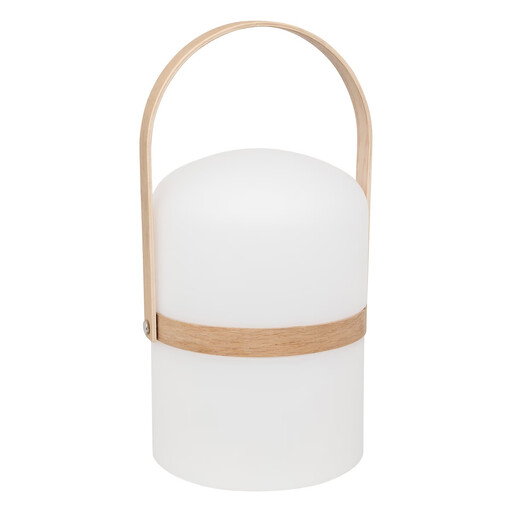
Why it suits this profile: This portable outdoor lamp is ideal for tenants, balconies and tables where you do not want any installation or fixed connection.
The IP44 classification makes it clear that the lamp is protected against splashing water. Do not use it in standing water or where it is exposed to direct water jets.
270 lm, three light levels, a handle and a stated operating time of four hours at full power and nine hours at medium power.
We have put together a complete, up-to-date list of products that fully meet these strict selection criteria and the applicable European safety regulations.
For a small garden path or balcony, around 100 to 300 lumens may be sufficient. An entrance, driveway or larger façade will often require more. As well as lumens, consider the beam, mounting height and colour temperature. A wide beam distributes light more evenly across a patio, while a focused spotlight is ideal for a tree or architectural detail.
IP44 protects against splashing water and is often suitable for sheltered outdoor locations. The lamp must not be submerged and should not be exposed to powerful water jets. For an exposed location, a product with a higher IP rating, such as IP65, may be more suitable. Always check the installation manual.
Energy consumption depends on the wattage and the number of hours the lamp is switched on. A 9 W lamp that operates for five hours a day uses approximately 0.045 kWh per day. With solar outdoor lighting, the lamp is charged by a battery during the day, but performance depends on sunlight, the season and its position. A motion sensor can reduce the number of hours the lamp is on when continuous lighting is not required.
