
Vandaag of morgen in huis

Kwaliteit gegarandeerd

Welkomstaanbiedingen ontgrendelen: GRATIS bezorging | Tot 80% korting | Gratis 30 dagen JoyPlus-proefperiode
Download de app
Good outdoor lighting needs to do more than look attractive. In the Netherlands, lights have to withstand rain, wind, moisture and limited sunlight during winter. As a result, a product that appears suitable for every situation on the packaging may still disappoint in practice.
Pay particular attention to these three common pitfalls:
By checking brightness, protection and installation requirements carefully, you can make a more informed choice from LED outdoor lights, pathway lighting, outdoor wall lights and lights with motion sensors.
Light output is measured in lumens (lm). Watts primarily indicate energy consumption and do not directly show how much light a lamp produces.
As a practical guideline:
Also consider the colour temperature:
An LED outdoor light with an integrated light source requires little maintenance, but check whether the LED can be replaced. With many models, the light source is integrated and cannot be replaced by the user.
The IP rating indicates how effectively the housing protects against solid particles and water. The first digit refers to solid objects; the second refers to water.
An IP44 outdoor wall light is therefore better suited to a location beneath a canopy than to a completely exposed façade. The product description and manual remain the deciding references. A manufacturer's weather-resistance claim should not be confused with a guarantee that the light will remain waterproof under all conditions.
There are three common options:
Clean solar panels and sensors regularly with a soft, slightly damp cloth. For ground lights, also check that the stake remains firmly in place and that no water collects around the connection.
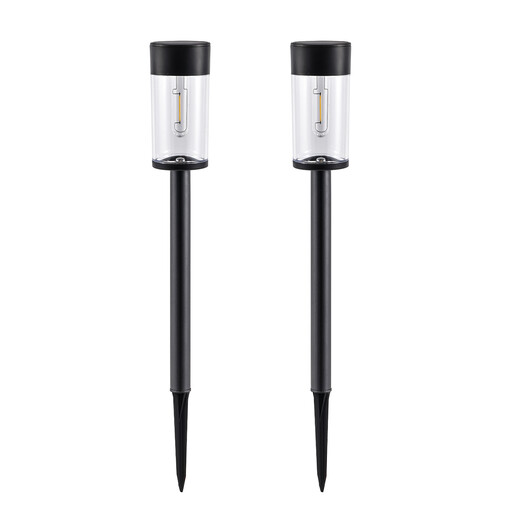
Why it suits this profile: This two-piece set of solar garden lights is designed for paths, lawn edges, flower beds and driveways. Installation with ground stakes requires no permanent wiring.
The stated IP65 rating offers greater protection than IP44 according to the product specifications. However, install the lights in a location with sufficient direct sunlight.
According to the product information: 10 lumens per light, 3000 K warm white light, automatic dusk activation and a stated operating time of 8–12 hours.
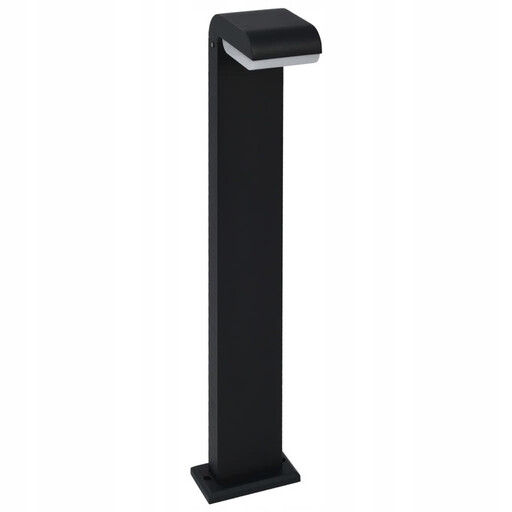
Why it suits this profile: This permanent LED pathway light is well suited to a contemporary garden or driveway where an even, downward-facing light distribution is preferred.
The specifications list 550 lumens and IP54. This makes it easier to distinguish functional pathway lighting from purely decorative illumination.
Cast aluminium, an integrated 9 W LED and a height of 800 mm. According to the product description, the opal PC diffuser directs the light downwards.

Why it suits this profile: This solar outdoor light with motion sensor is designed for larger areas such as a garage, driveway, back garden or entrance where a high level of light is needed temporarily.
The stated IP65 rating and three adjustable light heads make its outdoor application clear. Before installation, check that the solar panel receives sufficient sunlight.
The product information lists 3,000 lumens, a 180-degree detection angle and three lighting modes. The light runs on solar power and does not need to be connected to the mains.
We have compiled a complete, up-to-date selection of products that fully meet these strict selection criteria and the applicable European safety requirements.
It can be, but performance depends on the amount of direct sunlight available. Shorter days, cloudy weather and shade reduce charging capacity. Do not install the panel beneath a canopy or close to a tall fence. Clean the panel regularly and check that the switch is set to “on” before first use.
For subtle pathway lighting, approximately 10 to 100 lumens per light is often sufficient. Position several lights at intervals to make obstacles visible without creating a single harsh point of light. For a driveway or larger area, a light with higher output, potentially combined with a motion sensor, is more practical.
An integrated LED outdoor light generally uses little electricity compared with traditional light sources, but actual consumption depends on the wattage and number of operating hours. A solar outdoor light uses no mains electricity while illuminated. With a rechargeable outdoor light, energy consumption is shifted to charging via USB. Always check the stated wattage, operating time and intended frequency of use.
