
Vandaag of morgen in huis

Kwaliteit gegarandeerd

Welkomstaanbiedingen ontgrendelen: GRATIS bezorging | Tot 80% korting | Gratis 30 dagen JoyPlus-proefperiode
Download de app
Buying a new light for the garden, façade or balcony seems straightforward. Yet many consumers fall into the same traps. A light may look bright in the product photo, for example, but provide too little light for an entrance in practice. IP65 waterproof outdoor lighting is also often used as a general search term, even though the product may actually only be splash-proof. With solar lighting, meanwhile, performance depends heavily on where you position the light.
With this buying guide, you can compare outdoor lighting based on verifiable specifications. That makes it easier to choose the right LED outdoor light, outdoor wall light, solar garden lighting, light with a motion sensor or portable lighting.
The number of lumens indicates how much light a lamp produces in total. The way that light is distributed is just as important. An outdoor wall light that shines mainly downwards is suitable for a path or highlighting a façade, but it will not automatically illuminate an entire garden.
So pay attention to:
The IP code consists of two digits. The first indicates protection against solid particles, while the second refers to moisture. IP44 means protection against splashing water from different directions. This is not the same as protection against powerful water jets or immersion.
An IP65 light is generally better suited to an exposed outdoor location than an IP44 light, but always check the official product specifications and installation instructions. An IP44 outdoor light is mainly suitable for a covered entrance, balcony or sheltered terrace wall.
Solar-powered garden lights are convenient because you do not need to run a cable to a socket. However, the battery must be able to charge sufficiently during the day. Do not place a solar panel under dense foliage, beneath a balcony edge or against a wall that is constantly in shade.
In winter and on cloudy days, the operating time may be shorter. If you need long-lasting, consistent lighting every evening, a USB-rechargeable wall light or fixed connection may be a better option.
A cordless outdoor light is useful beside a shed, on a balcony or in a temporary seating area. Check whether the battery is built in, which type is used and how the light is charged. A USB or USB-C connection makes recharging easier, but you will need a suitable power source.
With a rechargeable wall light, mounting is also important. A magnetic system is flexible, but the surface must be flat, clean and sufficiently magnetic. For a heavier light, use a securely attached mounting plate and do not position the light above an area where falling could cause damage or injury.
A fixed outdoor wall light with a GU10 fitting will usually need to be connected to the mains. Have this done by a qualified installer. Check beforehand:
A GU10 outdoor light gives you flexibility in terms of colour temperature and brightness, but it is not always supplied complete with a bulb.
Aluminium, plastic and glass are commonly used for outdoor lighting. Do not just consider the appearance; think about where the light will be mounted too. A light on an exposed façade is subjected to more rain and wind than one installed beneath a veranda.
For a garden path, low solar spotlights or solar garden torches are practical. For an entrance, an outdoor wall light with a sensor is often more convenient. For camping, hiking or outdoor DIY, a camping head torch is more suitable than fixed garden lighting.
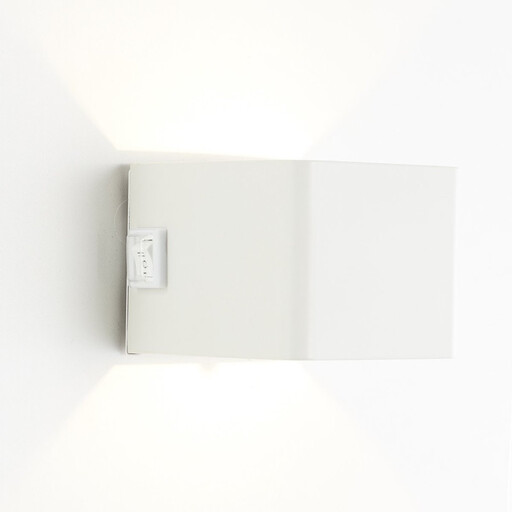
Why it suits this profile: This compact light works wirelessly and can be mounted using its built-in magnets or used freestanding beside a balcony, hallway, shed or covered entrance.
The specifications state 300 lumens, 3000 K, an integrated 4W LED and IP44. This makes it clear that it is not an IP65 light, so you can choose its position accordingly.
300 lumens, motion sensor, two 18650 batteries and charging via USB-A cable.

Why it suits this profile: The black finish complements modern façades, terraces and balconies where a consistent look and flexible positioning are important.
The product information states IP44 rather than IP65. This makes it clear that the light should not be exposed to powerful water jets or prolonged exposure to moisture.
300 lumens, warm white 3000 K light, magnetic mounting and an integrated motion sensor.
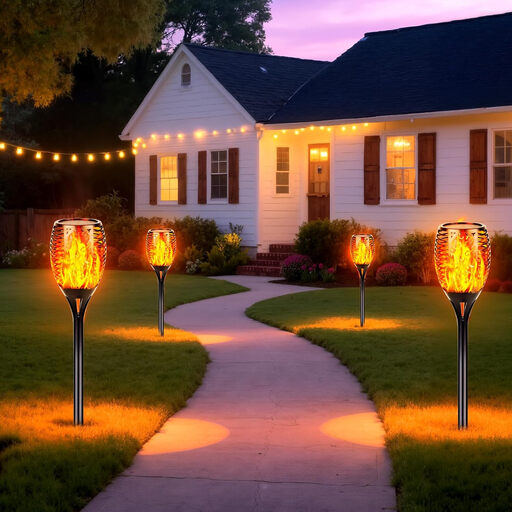
Why it suits this profile: These solar garden torches are designed for paths, borders and terraces, helping you create an atmospheric garden layout without fixed cables.
The product name states 96 LEDs, automatic on/off switching and IP65. Check the current technical details before buying and position the lights where they receive sufficient direct daylight.
Solar power, automatic operation and a set of two lights for a balanced arrangement.
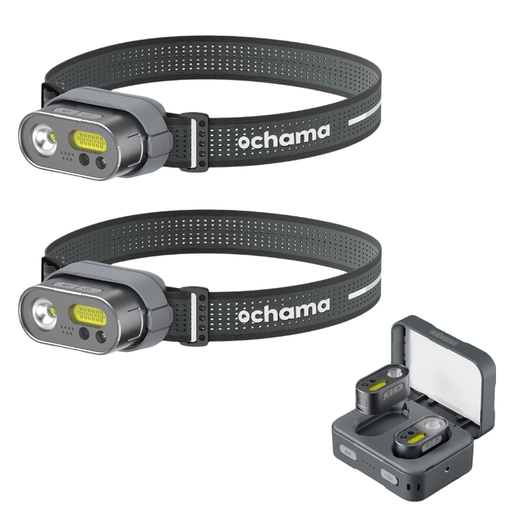
Why it suits this profile: A camping head torch keeps both hands free while hiking, cooking at the campsite, carrying out repairs or putting up a tent.
You can direct the light at the task in hand rather than buying a wide-beam garden light for mobile use. The set contains two head torches, a charging case and a Type-C cable.
Hands-free use, gesture control, dimmable lighting and a charging case.
We have put together a complete, up-to-date list of products that fully meet these strict selection criteria and the applicable European safety regulations.
For a subtle garden accent, just a few lumens are often enough. For an entrance, staircase or shed door, a higher light output is more practical. Alongside lumens, consider the light direction, mounting height and distance to the area being illuminated. A 300-lumen light may be suitable for a small entrance, but not necessarily for a large terrace.
IP44 outdoor lighting is splash-proof and may be suitable for a sheltered location, such as beneath a canopy or on a covered balcony. For a completely exposed façade or a location that receives a lot of rain, a higher IP rating may be worth considering. Always follow the manufacturer’s installation and safety information.
Solar garden lighting does not use electricity from a socket while it is switched on. The main practical factors are the amount of sunlight, battery capacity and number of operating hours. Light output may vary depending on the season and weather conditions. For consistent lighting throughout the evening, mains electricity or a regularly charged battery-powered product is more predictable.
