
Vandaag of morgen in huis

Kwaliteit gegarandeerd

Welkomstaanbiedingen ontgrendelen: GRATIS bezorging | Tot 80% korting | Gratis 30 dagen JoyPlus-proefperiode
Download de app
A new outdoor lamp may seem easy to choose, but the details determine whether it works well in practice. A cheap outdoor lamp may not provide enough light, for example, while a lamp with a sensor may switch on unnecessarily often. IP44 outdoor lighting is also sometimes presented as fully waterproof, even though this protection rating mainly indicates protection against splashing water.
For a garden, patio, balcony, façade or entrance, three pitfalls are particularly important:
Light output is measured in lumens (lm). For a decorative outdoor table lamp, 170 lumens may be sufficient. For an entrance, garden path or driveway, more light is often more practical. A sensor lamp producing 300 to 500 lumens may be suitable for short periods of functional lighting. Models with a higher light output are available for larger areas.
Also pay attention to the colour temperature:
An LED outdoor lamp uses either an integrated light source or a separate bulb. With integrated LED, you do not need to choose a fitting or bulb, but the light source is usually not replaceable. With an outdoor wall light featuring an E27 or GU10 fitting, you can adjust the colour temperature and light output yourself later.
The IP code indicates how well a product is protected against solid particles and moisture. Many outdoor lamps have an IP44 rating. The first digit refers to protection against solid objects; the second digit refers to protection against splashing water.
IP44 outdoor lighting is generally suitable for a sheltered façade, balcony, patio or garden. Install the lamp according to the mounting instructions and avoid direct jets of water. For a location that receives a lot of rain or where the lamp is exposed to more moisture, a higher IP rating, such as IP65, may be more practical.
Decide in advance whether you want a fixed connection or would prefer a cordless solution.
Also check the mounting surface. A magnetic lamp needs a sturdy, flat surface for secure attachment. Clean solar panels and fittings with a soft, dry cloth. Do not use harsh cleaning products.
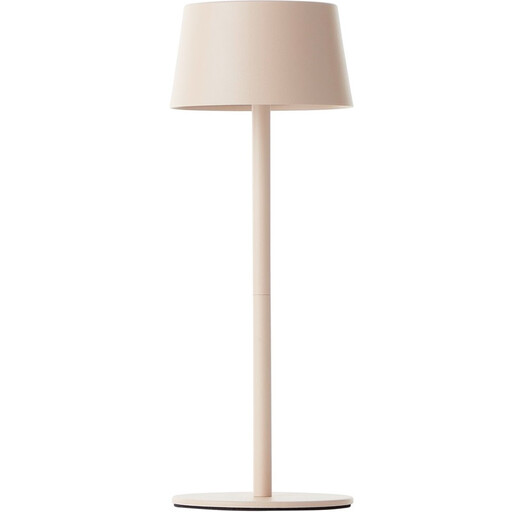
Why it suits this profile: This compact outdoor lamp is easy to place on a garden table, balcony or patio. The combination of a solar panel and USB connection offers extra flexibility when there is little sunlight.
The USB charging option reduces reliance on changing levels of sunlight. The IP44 rating is not used to suggest waterproofing: position the lamp securely and away from direct running water.
170 lumens, warm white light at 3000 K, three dimming levels and an integrated lithium-ion battery.
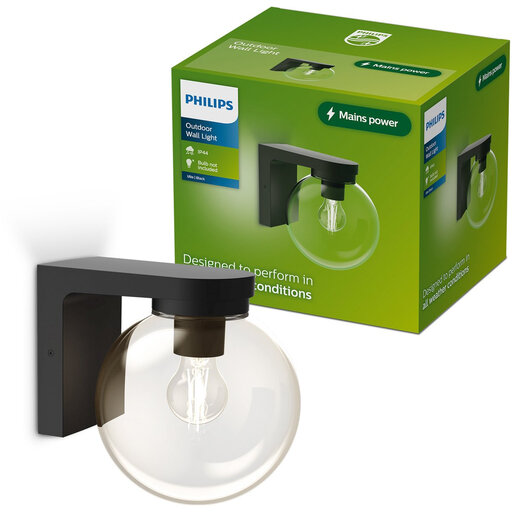
Why it suits this profile: This fixed outdoor wall light is ideal for an entrance or façade where you want to choose the light source yourself. Its aluminium and glass construction is suited to a simple, permanent installation.
The E27 fitting means you are not tied to a single integrated light source. Please note: the lamp is supplied without a light source and must be installed correctly in accordance with local regulations.
E27 fitting, aluminium and glass, IP44 and diffuse light all around.

Why it suits this profile: This solar outdoor light is designed for a driveway, larger façade or another location where short bursts of powerful lighting are required. The adjustable lamp head helps direct the light.
According to the product specifications, the IP65 rating provides greater protection against dust and water than IP44. However, position the solar panel away from shade to give it the best chance of charging effectively.
4000 lumens, motion sensor, dusk sensor, two lighting modes and IP65.
We have put together a complete, up-to-date list of products that fully meet these strict selection criteria and the applicable European safety regulations.
For atmospheric patio lighting, a lamp providing approximately 100 to 250 lumens per light point may be suitable. For an entrance, shed or path, 300 lumens or more is often more practical. Do not look only at the total light output. Also consider the direction of the beam and the distance you want to illuminate.
IP44 is suitable for many sheltered outdoor locations and means protection against splashing water. It does not guarantee that the lamp can withstand submersion or direct jets of water. Always check the installation instructions and choose IP65 when the location is more exposed to dust or water.
During normal use, a solar outdoor lamp does not draw power from the mains. The battery is charged via the solar panel during the day. The actual operating time depends on the amount of sunlight, the charge level, the selected lighting mode and the weather. A model with a USB charging function can be useful when the sun does not provide enough energy.
