
Vandaag of morgen in huis

Kwaliteit gegarandeerd

Welkomstaanbiedingen ontgrendelen: GRATIS bezorging | Tot 80% korting | Gratis 30 dagen JoyPlus-proefperiode
Download de app
Good outdoor lighting should suit the location, the weather and how you intend to use the lamp. A lamp for a covered balcony has different requirements from lighting for an open driveway or dark garden path. Yet many buyers focus mainly on design and price. This can lead to predictable problems: insufficient light, a battery that runs out quickly or a lamp that is not suitable for prolonged exposure to rain.
Use this practical checklist to compare garden lighting, solar outdoor lighting and electric outdoor lamps based on the features that really matter.
A high lumen count does not automatically mean that a lamp will work well in the right location. Light distribution, colour temperature and mounting height also affect the result. For example, a powerful lamp with cool white light may be unnecessarily bright on a patio, while a modest lamp may provide enough light for an entrance.
Use this approximate guide:
An IP44 outdoor lamp is protected against splashing water and solid objects of a certain size. This makes IP44 suitable for many sheltered façades, patios and balconies, but not for immersion or powerful jets of water. Do not place an IP44 lamp where rainwater collects or where a garden hose can spray directly onto the housing.
For an open, heavily exposed location, a higher rating such as IP65 may be more practical. Always check the installation instructions as well.
A solar-powered outdoor lamp only works reliably when the solar panel receives enough direct daylight. Under a balcony, next to a tall fence or beneath dense foliage, charging can take considerably longer. According to the product descriptions from various brands, stated operating times depend on the weather conditions and the amount of sunlight.
Also pay attention to the difference between:
Do not look only for “suitable for outdoor use”; check the specific IP rating. IP44 is often suitable for sheltered outdoor areas. According to the product specification for the UME model, IP65 offers protection against dust and water jets, making it intended for more exposed applications. This still does not mean that you can place the lamp underwater.
An LED outdoor lamp generally uses little power and often has an integrated light source. This is convenient to use, but on some models the LED cannot be replaced. With a lamp featuring a GU10 or E27 fitting, you can choose a suitable LED bulb yourself and replace it later.
For example, the product description for Philips Capricorn states that it has integrated LED, 800 lumens and 2700 K. Philips Fylx, on the other hand, is supplied without a GU10 light source, allowing you to choose the light source yourself.
An outdoor lamp with a sensor can be useful by a front door, garage or side entrance. Check whether the sensor only detects movement or also works with a dusk sensor. Also consider the installation method:
An outdoor wall lamp with a fixed connection is suitable for permanent installation on a façade. A portable lamp is more practical for rented homes, balconies or patios where you regularly change the layout.
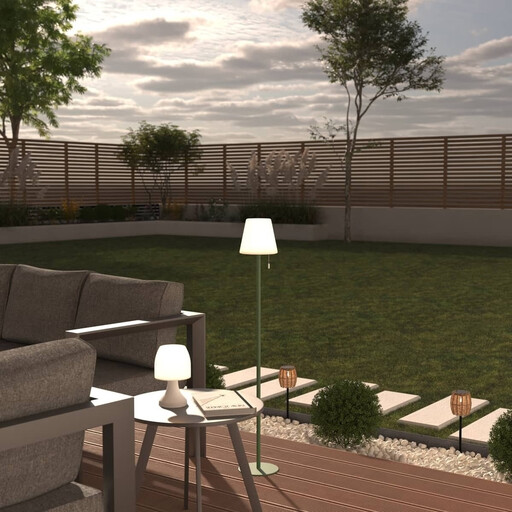
Why it suits this profile: This portable outdoor floor lamp runs on batteries and does not need to be connected to the mains. This makes it suitable for a balcony, patio or rented home.
The product information states IP44, a weather-resistant plastic shade and up to ten hours of operating time. Place the lamp in a sheltered spot and check the battery level.
108 cm tall, manual operation and three light modes: multicolour, flame effect and white light.
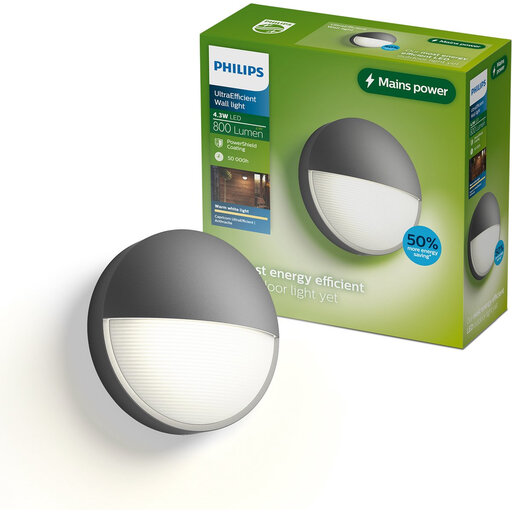
Why it suits this profile: For a permanent façade, entrance or balcony, a fixed LED wall lamp is a good choice when you do not want to recharge a separate battery.
The specifications state IP44, 2700 K and 800 lumens. The fixed installation avoids dependence on sunlight, but requires professional installation.
Integrated LED, aluminium housing and warm white light. The light source cannot be replaced by the user.

Why it suits this profile: This model is designed to provide broad lighting for a driveway, garage, grounds or large garden area where motion detection is useful.
According to the product information, this lamp has IP65 and the panel must receive direct sunlight. This makes the placement requirements clearer than with unspecified solar lighting.
302 LEDs, 3000 lumens according to the product specification, three adjustable heads and a 180-degree motion detection range.
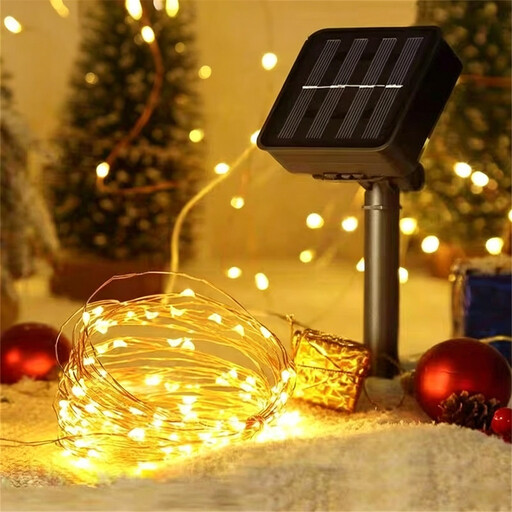
Why it suits this profile: The two strings of lights are designed for decoration around a balcony, pergola, tree or patio, without a fixed connection.
The product description states eight light modes, a memory function and a charging time of approximately 6–8 hours in direct sunlight. Performance remains dependent on the weather.
49 ft per string and 75 warm white LEDs. The solar panel must be installed outdoors and free from obstructions.
We have compiled a complete, up-to-date list of products that fully meet these strict selection criteria and the applicable European safety regulations.
For a sheltered façade, balcony or patio, IP44 is often suitable. For an open location exposed to more rain, dust and water jets, a higher rating such as IP65 may be more appropriate. Always check the installation instructions and never place a lamp underwater.
Solar lighting does not use mains electricity, but operating time depends on sunlight, the season and battery capacity. An electric LED lamp generally provides more consistent performance, but requires a suitable connection and installation. Therefore, compare not only energy consumption, but also placement options and maintenance.
The expected lifespan varies from product to product. With integrated LED, the light source is often not replaceable. With GU10 or E27 fittings, you can replace the bulb when it fails. Before buying, check the fitting, wattage, warranty and IP rating.
