
Vandaag of morgen in huis

Kwaliteit gegarandeerd

Welkomstaanbiedingen ontgrendelen: GRATIS bezorging | Tot 80% korting | Gratis 30 dagen JoyPlus-proefperiode
Download de app
Good outdoor lighting should suit its location, how you plan to use it and the British weather. A light for a sheltered balcony needs different features from an outdoor light for a driveway or exterior wall. Yet many buyers focus mainly on appearance or the number of LEDs. This can lead to a product that doesn’t provide enough light, gets damaged more quickly or is difficult to install.
A rating such as IP44 outdoor lighting doesn’t mean the light is completely waterproof. IP44 protects against solid objects and splashing water from different directions. An outdoor light with this rating is usually suitable for a balcony, covered area or sheltered wall, but not for immersion or direct jets of water.
An IP54 outdoor light also offers limited protection against dust. IP65 provides better protection against dust and powerful jets of water. Always check where the light will be installed and follow the manufacturer’s safety information.
Solar outdoor lighting uses a solar panel and a built-in battery. In a shady corner, under a balcony or on a north-facing wall, the battery may not charge as well. This can affect how long the light stays on. Position the panel where it will receive as much direct daylight as possible, and keep its surface clean.
Claims about energy output or improved conversion come from the manufacturer. According to UME’s product description, the model in question has an improved solar panel, but its actual performance depends on its location, the season and the amount of sunlight it receives.
More LEDs don’t automatically mean the light will be more pleasant or suitable. For a path light, direction, light distribution and glare all matter. For patio lighting, a lower light output may be more comfortable. So, as well as lumens, consider the colour temperature, beam and run time.
Use these guidelines as a practical starting point:
An IP44 outdoor wall light may be suitable for an entrance beneath an overhang. For an exposed location, a higher level of protection may be a better choice.
There are several options:
Also consider the light source. Some models have integrated LEDs that can’t be replaced by the user. Other lights use a GU10 or E27 fitting, so you can choose a suitable LED bulb yourself.
Warm white light of around 2700 to 3000 K often works well on a patio or balcony, or by an entrance. Cooler light can be more practical for a driveway or shed. An outdoor light with a sensor switches on automatically when it detects movement, but the detection angle and range vary by model.
A timer can be useful for garden lighting. The Koopman LED Ball, for example, has a schedule of 6 hours on and 18 hours off. If you’re choosing a sensor light, also check whether you can adjust its sensitivity and how long it stays on.
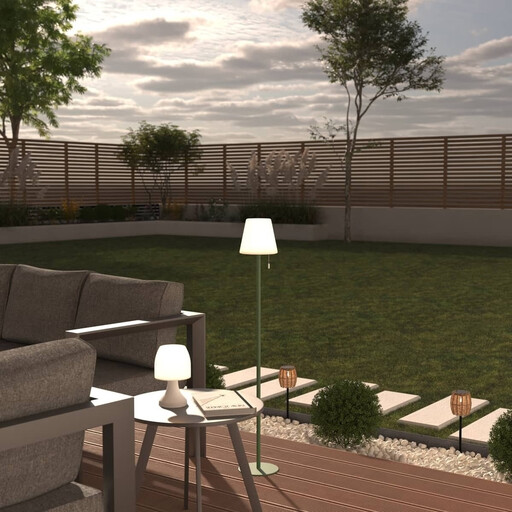
Why it suits this profile: This freestanding light is designed for a balcony or patio and doesn’t need to be permanently connected. According to the product description, the battery lasts for up to ten hours and offers three light modes.
The specifications state that it has manual controls, a battery and an IP44 rating. This makes clear that it’s a portable mood light, not a permanently installed, fully waterproof fitting.
108 cm tall, with three light modes and a weather-resistant plastic shade with a steel base.
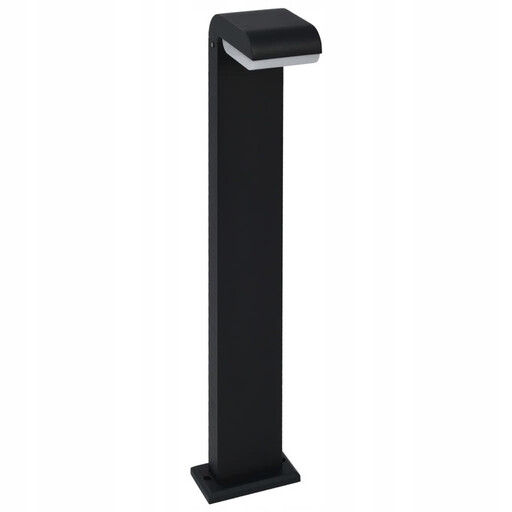
Why it suits this profile: This fixed path light combines an aluminium housing with integrated LED lighting. With 550 lumens and a height of 80 cm, it’s designed to provide practical lighting along a path or driveway.
The light output, power and IP54 rating are all clearly stated. This makes it easier to compare the light without relying on the number of LEDs alone.
9 W power, 550 lm, integrated LEDs and a die-cast aluminium housing.

Why it suits this profile: This solar outdoor light is designed for driveways, garages, gardens and larger outdoor spaces. Its three adjustable light heads and motion sensor are designed to illuminate a wide area.
The product information lists an IP65 rating, three modes, a detection range of 60 feet and a detection angle of 180 degrees. Make sure you position the panel in a sunny spot.
302 LEDs, a stated light output of 3000 lm, three light modes and installation without a mains cable.
Why it suits this profile: This solar outdoor wall light has two modes, a motion sensor and a stated colour temperature of 2700 K. It’s a good fit for an entrance, balcony or sheltered patio where there’s no wiring available.
The description clearly states that it has an IP44 rating and recommends placing the panel in direct sunlight. According to Philips’ product information, the light is splash-resistant but isn’t designed for immersion.
400 lm per light point according to the product specifications, two modes, an integrated LED and no need for fixed wiring.
We’ve put together a complete, up-to-date list of products that meet these strict selection criteria and the applicable European safety regulations.
Fit your outdoor light securely and make sure cables aren’t left in puddles or under tension. A fixed 230-volt outdoor wall light must be installed by a professional. A GU10 or E27 bulb supplied without a light source gives you more choice, but check the maximum wattage.
Clean solar panels, sensors and fittings regularly with a soft, slightly damp cloth. Don’t use harsh cleaning products, and don’t clean IP44 lights with a pressure washer. If you have a rechargeable outdoor light, regular charging helps prevent the battery from staying flat for long periods. According to the product information, the products listed come with a minimum two-year statutory warranty; additional rights may apply under the relevant national law.
IP44 is often a suitable choice for a sheltered exterior wall, balcony or covered area. IP54 or IP65 may be more suitable for a more exposed location. Don’t look at the rating alone: consider the installation location and the manufacturer’s instructions too.
A solar outdoor light doesn’t use electricity from the mains. This means its running costs are limited to maintenance and any replacement parts. However, how long it stays lit depends on sunlight, temperature, battery capacity and the selected light mode.
Lifespan varies by model, LED module and conditions of use. An integrated LED can’t always be replaced by the user. Before buying, check whether the light source is replaceable, what power rating is stated and which warranty terms apply.
