
Vandaag of morgen in huis

Kwaliteit gegarandeerd

Welkomstaanbiedingen ontgrendelen: GRATIS bezorging | Tot 80% korting | Gratis 30 dagen JoyPlus-proefperiode
Download de app
Good outdoor lighting needs to do more than look attractive. The lamp must suit its location, provide enough light and withstand outdoor conditions. Yet many buyers focus mainly on colour and design. This can lead to problems: a solar outdoor lamp may not get enough sunlight, an IP44 outdoor lamp may be left exposed to rain, or an integrated LED outdoor lamp may not be easy to replace.
Use these practical selection tips to avoid unsuitable purchases and compare products more effectively. Whether you are looking for an outdoor wall light, garden lantern, outdoor table lamp or outdoor lamp with a motion sensor, start with how you will use it, then check the specifications.
An IP44 outdoor lamp is protected against solid objects larger than 1 millimetre and splashing water from various directions. This does not mean that the lamp can withstand a direct jet of water or prolonged immersion. IP44 is therefore mainly suitable for a sheltered façade, balcony, covered area or patio.
An IP54 outdoor lamp also offers greater protection against dust. However, it is still not designed for immersion or direct high-pressure water jets. Always check where the water will come from before installing a lamp.
A solar-powered outdoor lamp is convenient because you do not need a permanent cable. Its performance depends on the amount of direct daylight, the position of the panel, the season and dirt on the panel. Under a solid canopy or on a north-facing wall, a solar outdoor lamp may shine for less time or with lower brightness.
A motion sensor can reduce energy consumption because the lamp only switches on when movement is detected. Pay attention to the detection range and the intended mounting height. A sensor with a 120-degree angle is practical by an entrance or garden path, but it is not automatically suitable for every layout.
With an integrated LED outdoor lamp, the light source is built in. This makes the design compact, but check whether the LED can be replaced according to the product information. With a GU10 outdoor lamp or E27 outdoor lamp, you can choose a suitable LED bulb yourself. Check the maximum wattage, the fitting and the desired colour temperature.
An E27 bulb is often suitable for a classic outdoor lamp or garden lantern. GU10 is widely used in compact spotlights and modern outdoor wall lights. A fitting supplied without a light source may sometimes seem cheaper, but remember to include the cost of the correct bulb and any dimmer.
Lumens (lm) indicate how much light a lamp produces. Watts mainly indicate electrical consumption. A path light with 550 lumens, such as the vidaXL LED Outdoor Lamp, is intended for a different purpose than a decorative outdoor table lamp with 170 lumens.
Use the following as a practical guide:
The right amount depends on the distance, light distribution and surroundings. A high lumen output is not always comfortable if the light shines directly into your eyes.
Colour temperature is expressed in kelvins. Around 2700 to 3000 K, the light looks warm and is suitable for a patio, veranda or atmospheric façade. Around 4000 K, the light is more neutral and clearer, making it suitable for a garden path or entrance.
Also check whether the lamp is dimmable. With a fitting that uses a separate GU10 or E27 bulb, both the light source and the dimmer must be suitable for dimming. With integrated models, the dimming function is usually listed in the product details.
Measure the space beforehand. A path light measuring 800 mm high requires a different position from a compact wall light measuring less than 15 cm. For a freestanding lamp, make sure the surface is stable; for a wall light, check how it needs to be mounted.
Aluminium is relatively lightweight and is often used for façade and garden lighting. Metal with plastic components can be practical for solar products. Do not look only at the material name: also check the IP rating and installation instructions. A lamp with a fixed 230-volt connection must be installed by a qualified electrician according to the product information.
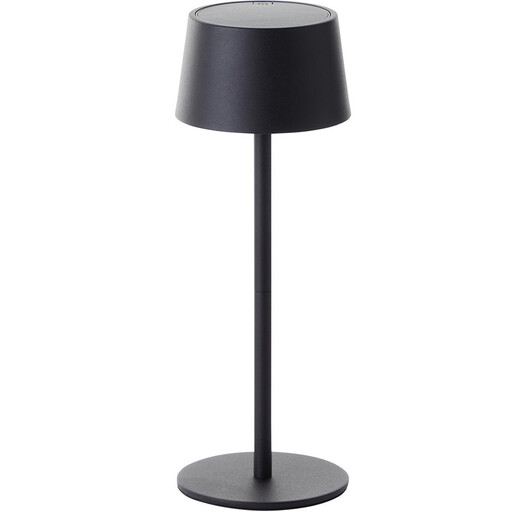
Why it suits this profile: This freestanding lamp is suitable for a balcony, garden table or patio where you do not want a permanent connection. It can be charged using solar power or USB.
The USB charging option reduces reliance on limited sunlight. IP44 indicates that the lamp is splashproof, not suitable for immersion.
170 lumens, integrated LED, three dimming settings, solar and USB charging, and two possible mounting heights.

Why it suits this profile: This solar outdoor lamp is designed for an entrance, garage or façade where functional light and motion detection are important.
The specifications state 1000 lumens, a motion sensor and two lighting modes. This means your choice is based on more than just design.
1000 lumens, 3000 K warm white light, integrated LED, solar power, motion sensor and IP44.
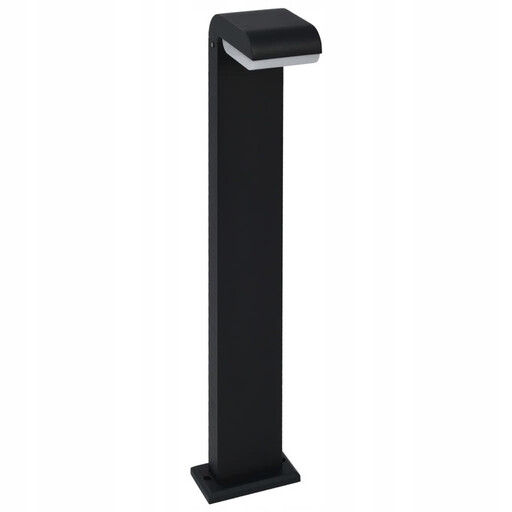
Why it suits this profile: This tall garden lamp is designed to provide permanent lighting along a path, driveway or border, and complements a modern outdoor space.
The height of 800 mm, downward-facing light and IP54 rating are clearly stated. This makes it easier to match the lamp to the path, surface and level of exposure.
Integrated 9 W LED, 550 lumens, cast aluminium, opal PC diffuser and IP54 protection.
Use this quick checklist before ordering:
A black outdoor lamp often complements modern façades and garden furniture, but colour is ultimately a matter of style. The technical specifications determine whether the lamp is suitable for your situation.
We have put together a complete, up-to-date list of products that fully meet these strict selection criteria and the applicable European safety regulations.
This depends on its purpose and the wall. At an entrance, an outdoor wall light is usually positioned so that the light reaches the path and lock clearly without shining directly into your eyes. Also check whether the sensor can detect the desired area.
Lifespan varies by model and operating conditions. Some products state an estimated figure, such as 25,000 hours for certain Philips models. This is a product specification, not a guarantee of the actual service life. Protection against moisture, heat and dirt, as well as correct installation, all play a part.
No. A solar outdoor lamp uses a built-in battery that is charged by the solar panel during the day. A model with a USB charging function can also be charged manually. The amount of sunlight and the selected lighting mode affect how long the lamp stays lit in the evening.
