
Vandaag of morgen in huis

Kwaliteit gegarandeerd

Welkomstaanbiedingen ontgrendelen: GRATIS bezorging | Tot 80% korting | Gratis 30 dagen JoyPlus-proefperiode
Download de app
Good outdoor lighting should suit the location, the light you want and how you plan to use the lamp. A solar garden light for ambience needs different features from an outdoor light with a motion sensor by the driveway. Yet many products are promoted mainly by highlighting high LED counts, impressive lumen figures or terms such as “waterproof”.
There are three common pitfalls to watch out for:
Light output is measured in lumens. A modest light output is usually enough for a solar lantern or decorative garden lighting. More light can be useful for a driveway or entrance.
Also check the colour temperature:
A product with adjustable colour temperature gives you more flexibility, but check whether you control this feature via an app, switch or remote control.
The IP code consists of two digits. The first indicates protection against solid particles, while the second indicates protection against water.
An IP rating is no substitute for correct installation. Make sure cables, connections and the solar panel are installed according to the instructions.
Solar garden lights need direct sunlight. Don’t place the panel behind glass or somewhere that trees, walls or a covered area will leave it in shade for long periods. Clean the panel regularly with a soft, slightly damp cloth.
For an outdoor light with a motion sensor, the detection range, detection angle and lighting mode are particularly important. For example, the UME light in our selection lists a range of 60 feet, a 180-degree angle and three modes. Before buying, check that the units and settings suit your driveway or garden.
Professional installation is recommended for fixed 230-volt lighting. A light with a plug, ground stake, USB or solar power supply is generally easier to install yourself.
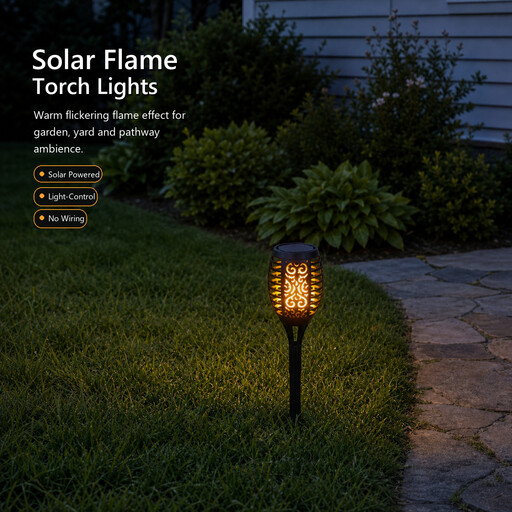
Why it suits this type of buyer: Four solar lights are a handy choice if you want to illuminate a garden path, border or patio without wiring. At 51 cm tall, they stand out among low-growing plants.
The product description lists 12 LEDs per light, IP65 and automatic switching on and off. Just make sure your chosen spot gets enough sunlight.
A set of four, solar power, automatic operation and an IP65 rating.

Why it suits this type of buyer: This solar wall light is a good fit for an entrance, shed or exterior wall where you want lighting without mains power.
The listed specifications include 1000 lumens, 3000 K, a motion sensor and IP44. This makes its limitations clear: it is splash-resistant, but not designed for water jets.
1000 lumens, two lighting modes, solar power and automatic activation at dusk, according to the product information.

Why it suits this type of buyer: For a driveway, garage or large patio, broad coverage with motion detection is more practical than several small garden spotlights.
The product details list three adjustable heads, IP65, three modes and a 180-degree detection angle. Position the panel out of the shade to give it the best chance of charging.
302 LEDs, a stated light output of 3000 lumens, three light heads and installation without fixed wiring.
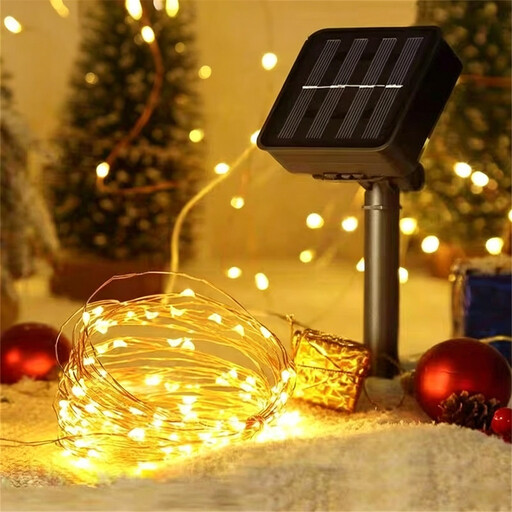
Why it suits this type of buyer: This outdoor string light is designed to decorate a balcony, pergola, tree or patio, rather than illuminate a walkway.
The specifications list two 49-foot strings, each with 75 LEDs, eight lighting modes and a memory function. The solar panel needs to be outdoors in direct sunlight.
Two long strings, warm white light, eight settings and automatic operation, according to the product description.
We’ve put together a complete, up-to-date list of products that meet these strict selection criteria and the applicable European safety regulations.
Choose a spot that gets several hours of direct sunlight. Don’t point the solar panel towards a wall or place it under a canopy. If an outdoor light has a separate panel, you can position the light itself in a more sheltered spot and place the panel somewhere sunnier. Clean the panel if dust or grime builds up on it.
How long it stays lit depends on sunlight, battery capacity, temperature and the selected brightness setting. A cloudy day can mean it takes longer to charge. So, as well as checking the stated run time, look at the battery type, how it charges and whether the battery is replaceable. With integrated LEDs and batteries, maintenance or replacement isn’t always possible for the user.
Solar outdoor lights don’t use mains electricity while they’re on, but the purchase price and any battery replacements still need to be factored in. A fixed LED outdoor light generally uses very little electricity. For a light rated at, say, 4 or 9 watts, work out its consumption based on the number of hours it’s on and your current electricity tariff. A motion sensor can reduce the number of hours the light is on, while ambient lighting often stays on for longer.
