
Vandaag of morgen in huis

Kwaliteit gegarandeerd

Welkomstaanbiedingen ontgrendelen: GRATIS bezorging | Tot 80% korting | Gratis 30 dagen JoyPlus-proefperiode
Download de app
Good outdoor lighting needs to do more than look attractive. The lamp must suit its location, provide enough light and withstand the British weather. Yet purchases often go wrong because of three recurring pitfalls: a solar outdoor lamp does not receive enough sunlight, an IP rating is misunderstood or the brightness is not suitable for its intended purpose.
With these practical selection tips, you can compare an outdoor lamp, outdoor wall light, garden lighting or an LED outdoor lamp based on verifiable specifications rather than marketing copy alone.
A solar outdoor lamp does not need a fixed power connection, but its panel must receive direct sunlight. If you place the lamp beneath a balcony, tree or canopy, the battery may not charge fully. In winter and on cloudy days, the operating time will also differ from that on a bright summer’s day.
When choosing a solar outdoor lamp, pay attention to:
A water-resistant outdoor lamp is not automatically suitable for submersion or a direct jet of water. The IP code indicates what the housing is protected against. IP44 is suitable for splashing water from different directions, but still requires a sheltered installation location. IP65 offers a higher level of protection against dust and water jets.
Also check whether the lamp points upwards or downwards. Water can collect around the fitting or seal if the lamp is installed incorrectly.
Wattage indicates how much energy a lamp uses, not how much light it produces. Pay particular attention to lumens. An integrated LED outdoor lamp producing 300 lumens is suitable for a balcony, pathway or entrance, while a powerful security lamp with thousands of lumens can illuminate a much larger area.
Colour temperature is important too:
For outdoor use, you will often see IP44 or IP65. IP44 protects against splashing water and is suitable for many sheltered façades, balconies and patios. According to the product classification, IP65 offers a higher level of protection against dust and water jets. Always install a lamp in accordance with the instructions and avoid locations where it could stand in water for long periods.
Compare lumens with the intended use. A modest light output is often sufficient for ambient lighting. For a driveway or back door, outdoor lighting with a motion sensor may be more practical. Check the sensor range, detection direction and whether the lamp stays on continuously, switches on automatically or only lights up when movement is detected.
A wide detection range is not always necessary in a small garden. An excessively bright lamp may also disturb neighbours or passers-by.
A fixed LED outdoor lamp generally requires wiring and a suitable connection. Work on the fixed electrical installation should be carried out in accordance with the applicable safety regulations. Solar and rechargeable models are easier to install, but their batteries need to be recharged regularly.
Pay attention to:
A GU10 outdoor lamp, such as the Philips Fylx, offers extra flexibility because you choose the light source yourself. The fitting is supplied without a GU10 spotlight, so remember to factor in the additional purchase.
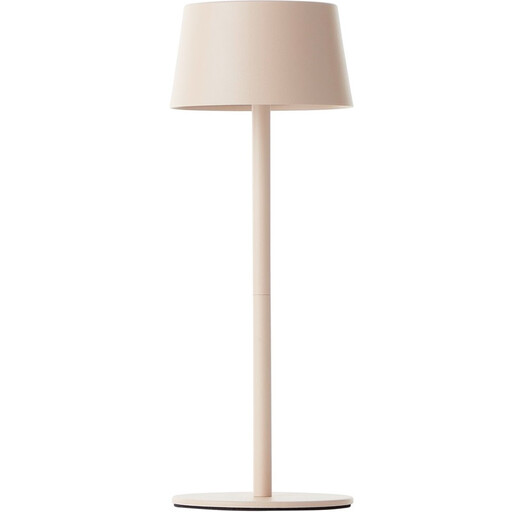
Why it suits this profile: This freestanding lamp is suitable for a patio, balcony or table where no wiring is available. You can charge it using solar power or USB.
The combination of solar and USB charging means you are not reliant on sunny days alone. IP44 makes it clear that the lamp is protected against splashing water, not submersion.
170 lumens, warm white light at 3000 K, three dimming settings and two mounting heights. The lamp has an integrated battery.
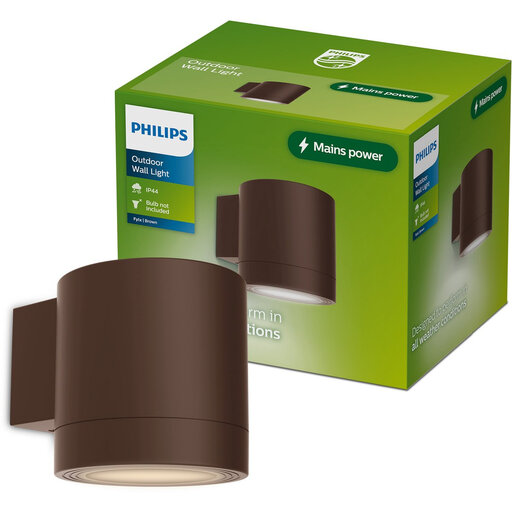
Why it suits this profile: This fixed outdoor wall light is ideal for anyone who values the appearance of the fitting and wants to choose their own GU10 LED light source.
You can see in advance that the GU10 spotlight is not included. This allows you to choose the colour temperature, dimming function and brightness to suit your needs.
Aluminium housing, GU10 fitting, one light point and IP44 protection. Available in several colour options.

Why it suits this profile: This powerful solar security spotlight is designed for driveways, side paths and larger façade areas where broad detection and bright light are required.
The specifications state 4000 lumens, IP65 and a PIR range of up to 8 metres for direct approach and 16 metres from the side. This makes it easier to assess whether it is suitable than relying on the term “security light” alone.
IP65, adjustable lamp head, dusk sensor, two lighting modes and, according to the product information, up to four nights of illumination after a full charge.
We have compiled a complete, up-to-date list of products that fully meet these strict selection criteria and the applicable European safety regulations.
Place a solar outdoor lamp where it will receive as much direct sunlight as possible. Clean the panel regularly with a soft, dry cloth. For an outdoor wall light, check that the mounting plate is securely attached and that the lamp is not positioned directly beneath a roof edge where water can run off.
When replacing the light source in a GU10 outdoor lamp, switch off the power first. A portable wall light with magnetic attachment should be placed on a clean, flat and sufficiently magnetic surface. Check the weight and the surface before mounting the lamp above a passageway.
Also pay attention to the warranty. According to the product information, the Philips and Brilliant products mentioned come with at least two years of statutory warranty within the EU. This is separate from correct installation and use in accordance with the instructions.
For ambient lighting on a table or balcony, around 100 to 300 lumens may be sufficient. An entrance, pathway or small façade generally calls for a higher light output. A wide driveway or security area may require considerably more. As well as lumens, consider the beam angle and mounting height.
IP44 protects against splashing water and is suitable for many sheltered outdoor locations. The lamp must not be submerged and is not designed to withstand direct, powerful water jets. For an exposed façade or location that receives a lot of rain, a model with a higher IP rating, such as IP65, may be more suitable.
While in use, a solar outdoor lamp does not consume electricity from the mains. However, its practical performance depends on sunlight, panel position, battery capacity, temperature and the selected lighting mode. A model with USB charging can be useful when the battery needs an extra charge after several cloudy days.
