
Vandaag of morgen in huis

Kwaliteit gegarandeerd

Welkomstaanbiedingen ontgrendelen: GRATIS bezorging | Tot 80% korting | Gratis 30 dagen JoyPlus-proefperiode
Download de app
Choosing a new light for your garden, driveway or car may seem straightforward. Yet unclear light output, an unsuitable IP rating and limited compatibility regularly lead to disappointment. A solar garden light that receives hardly any sunlight during the day will provide little light in the evening. An outdoor wall light with insufficient protection may develop problems more quickly during prolonged rain. And with LED car bulbs, a fitting will not automatically fit every vehicle.
This guide helps you compare outdoor lighting based on measurable factors: brightness, moisture protection, power supply, installation and suitability for the intended use.
Brands sometimes use claims such as “300% brighter” or quote extremely high lumen values. According to ENdureLite’s own product information, some LED bulbs deliver up to 20,000 lumens, for example. However, such a claim does not tell you everything about the light on the road. Light distribution, the position of the LED chip and headlamp alignment all help determine whether you have good visibility and whether oncoming drivers are dazzled.
The same applies to garden lighting. A 10-lumen solar pathway light is designed to subtly mark a walkway or border, not to brightly illuminate an entire driveway.
IP44, IP65 and IP68 are not general quality labels, but classifications indicating protection against solid particles and water.
You therefore cannot simply place an IP65 outdoor light underwater. Also check the plug, cable connections and solar panel: the light’s IP rating does not always apply to every component.
A solar outdoor light uses a solar panel and a built-in battery. According to the product information for the UME solar pathway lights, around 6 to 8 hours of direct sunlight are needed for a full charging cycle. Shade from a fence, tree or canopy can reduce the operating time. Output may also be lower in winter and during overcast weather.
Position the panel away from shade and clean it occasionally with a soft, damp cloth. With solar string lights, the panel must remain outdoors, even if you use part of the string indoors.
For ambience, warm light colours from 2700K to 3000K are usually suitable. The UME solar garden lights, for example, use 3000K warm white light. Philips Capricorn specifies 2700K and 800 lumens, making it suitable for a façade, balcony or patio where you want to combine practical lighting with a warm appearance.
5000K to 7000K produces cooler, whiter light. This may be suitable for a motion-activated security light or vehicle lighting, but it looks less soft. Alongside lumens, consider the beam angle and the coverage you need.
Solar lights are convenient when you do not want to run cables. Models with a dusk sensor switch on automatically, while an outdoor light with a motion sensor only comes on when movement is detected. This can help preserve battery power and is practical near a garage, front door or driveway.
A mains-powered Philips outdoor light with a GU10 or E27 fitting gives you more freedom to choose your own LED bulb. When connecting to the mains, the power must be switched off. If in doubt, have fixed wiring installed by a qualified electrician.
With LED car bulbs, the fitting must exactly match the vehicle’s existing fitting. H7 LED headlight bulbs, H1 LED bulbs, H4, 9005/HB3 and 9006/HB4 are not interchangeable. Before ordering, check the manual, the old bulb or a vehicle database.
According to the product description of some ENdureLite models, a built-in CANbus driver can help reduce error messages or flickering. This is not a guarantee for every vehicle. After installation, also check the beam pattern and the local approval requirements for use on public roads.
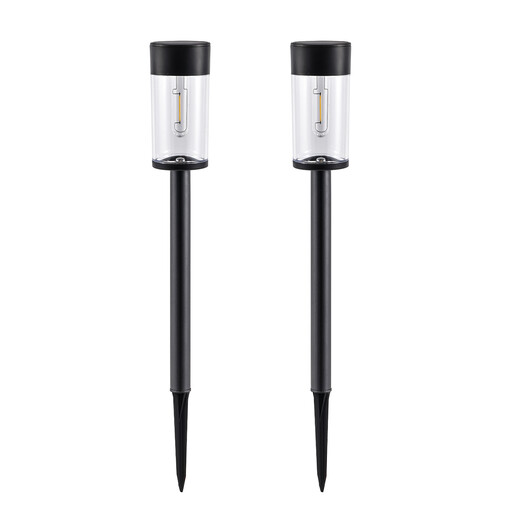
Why it suits this profile: This set is ideal for anyone who wants to mark a garden path, lawn edge or driveway without installing wiring. Each light is specified as delivering 10 lumens and 3000K warm white light.
The product information clearly states the required 6–8 hours of sunlight, automatic switching on and off, and IP65 protection.
Set of two, ground stakes for installation, lithium-ion battery and warm light for decorative use.
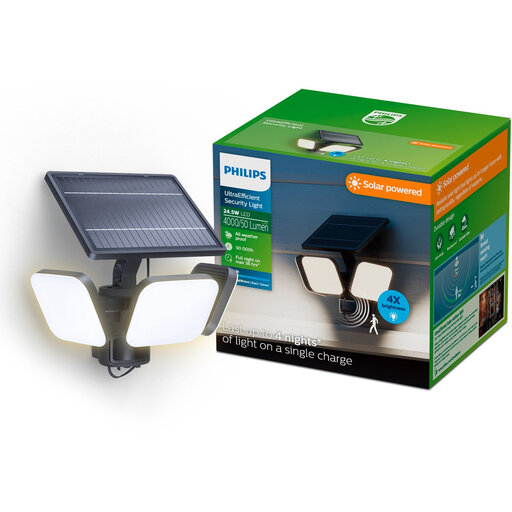
Why it suits this profile: This light is designed for façades, garages or driveways where broad light coverage and motion detection are desirable.
The specifications list IP65, an adjustable head and a sensor range of 8 metres for direct approaches and 16 metres from the side.
4000 lumens, 5000K, two lighting modes and solar power without a fixed cable to the wall.
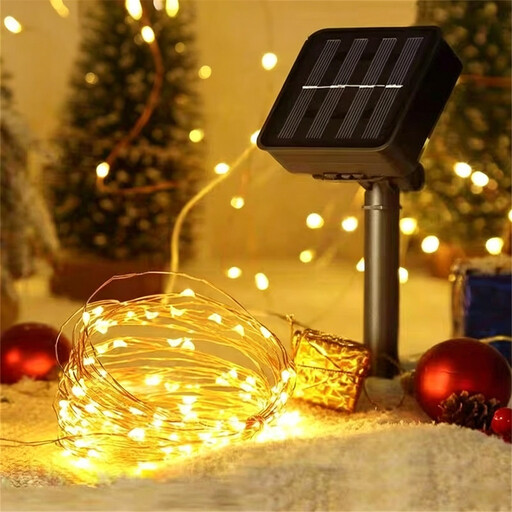
Why it suits this profile: These solar string lights are ideal for balconies, patios, trees and decorative borders where atmosphere matters more than powerful task lighting.
The product information states that the solar panel must be positioned outdoors in direct sunlight. The string lights themselves can be used decoratively indoors or outdoors.
Two 49-foot strings, each with 75 warm white LEDs, eight lighting modes and a memory function.
We have put together a complete, up-to-date list of products that fully meet these strict selection criteria and the applicable European safety regulations.
IP44 may be suitable for a sheltered façade or balcony. For a light exposed to more rain and dust, IP65 is the obvious choice. Always check the complete installation instructions and protect connections from puddles and direct water pressure.
This depends on sunlight, battery capacity, temperature and the selected lighting mode. Product information often gives a range, such as 8 to 12 hours for the UME pathway lights or 8 to 14 hours for the VIVREAL solar string lights. Treat these times as product specifications under certain conditions, not as a guaranteed fixed daily duration.
Only if the fitting and vehicle are compatible. Check the existing bulb, the space inside the headlamp housing, CANbus compatibility and the rules for use on public roads. After installation, the beam pattern must be checked correctly.
