
Vandaag of morgen in huis

Kwaliteit gegarandeerd

Welkomstaanbiedingen ontgrendelen: GRATIS bezorging | Tot 80% korting | Gratis 30 dagen JoyPlus-proefperiode
Download de app
Good outdoor lighting makes an entrance more practical, a garden path easier to navigate and a patio more enjoyable in the evening. However, choosing the right light involves more than simply picking a lamp that looks attractive. High light output, a solar panel or an IP rating only mean something if those specifications suit the location where you plan to use the lamp.
Pay particular attention to these common pitfalls:
Lumens (lm) indicate how much light a lamp produces. Watts mainly indicate energy consumption. This means an integrated LED outdoor lamp can use relatively few watts while still providing sufficient light.
As a practical guide:
The desired light colour also plays a part. 2700 to 3000 K provides warm white light for a patio or exterior wall. At around 6500 K, the light is cooler and brighter, as with some garden path lighting. Also check whether the light source is integrated or can be replaced. With a GU10 or E27 fitting, you can choose a suitable LED bulb yourself later.
The IP code consists of two digits. The first digit refers to protection against solid particles; the second refers to protection against water.
So do not look only at the IP code; consider the mounting location as well. A sheltered outdoor wall light beneath an overhang faces different conditions from a lamp fully exposed to wind and rain.
A fixed mains-powered outdoor wall light generally provides consistent operation, but requires wiring. A solar outdoor lamp works without a mains connection, but its performance depends on sunlight, battery capacity and temperature.
An outdoor lamp with a motion sensor is useful by a front door, shed or driveway. Check whether the sensor switches on automatically, how long the lamp stays lit and whether there are multiple modes. With a portable lamp featuring USB charging, it is important to consider both charging and mounting. Magnetic mounting is flexible, but requires a flat, suitable surface.
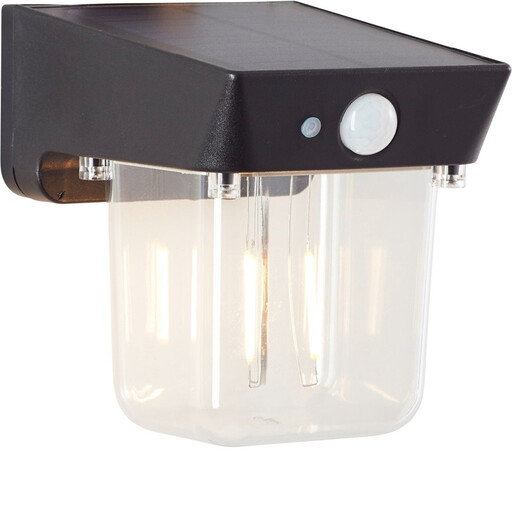
Why it suits this profile: This compact solar outdoor wall light requires no wiring and is suitable for an entrance, balcony or small garden. The motion sensor switches the lamp on when needed.
The product details specify an integrated solar panel, motion sensor and IP44 rating. Place the lamp somewhere with sufficient direct sunlight and protect it from powerful water jets.
2 W power, 180 lumens, warm 2700 K light and an integrated battery. The lamp also has two stated functions: solar power and motion detection.
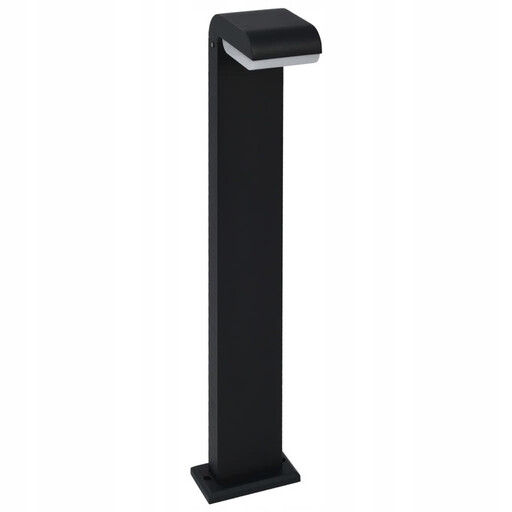
Why it suits this profile: This freestanding garden lamp is suitable for anyone looking for a permanent lighting solution along a patio, flower bed or garden path. The black cast aluminium complements a modern outdoor space.
The specifications list IP54 rather than IP44. This means greater protection against dust; the lamp is still intended for outdoor use without immersion.
Integrated LED, 9 W power, 550 lumens and a height of 800 mm. According to the product description, the light shines downwards.

Why it suits this profile: For a driveway, larger entrance or dark exterior wall, higher light output can be useful. The lamp runs on solar power and has a motion sensor.
The product information specifies 1000 lumens, a 3-metre cable for the mounting arrangement and IP44. The manufacturer describes it as weather-resistant; do not use the lamp underwater and check that it is not exposed to direct water pressure.
1000 lumens, integrated LED, warm white 3000 K light, two lighting modes and a dusk sensor plus motion sensor.
Measure the area first. Check the height of a wall light, the distance between path lights and the space around a sensor. For solar lighting, consider the direction the wall faces and any possible shade. A lamp with a high lumen output is of little use if the solar panel can barely charge.
Also read the installation instructions before ordering. A fixed lamp with an E27 or GU10 fitting is often supplied without a light source. This gives you more choice, but it does mean that you will need to purchase a suitable LED bulb separately. Check the maximum wattage and voltage.
For a rented property, wireless, magnetic or solar solutions are often simpler. In a property you own, fixed energy-efficient outdoor lighting may be the more logical choice if you want to illuminate the same area for a long time. Clean solar panels and light fittings regularly with a soft cloth, and check the fixings after storms or frost.
We have put together a complete, up-to-date list of products that fully meet these strict selection criteria and the applicable European safety regulations.
For finding your way along a short garden path, a low light output per lamp may be sufficient. For a wider or darker passageway, choose a model with more lumens, such as several hundred lumens. Also consider the spread of the light and the distance between the lamps.
IP44 is suitable for many sheltered outdoor locations and protects against splashing water. It does not indicate that the lamp is waterproof. For a completely exposed location, follow the installation instructions and the manufacturer’s specified operating environment.
A solar outdoor lamp does not use mains electricity while it is lit. The battery charges during the day via the solar panel. The actual operating time depends on sunlight, the season, battery status and use of the motion sensor.
