
Vandaag of morgen in huis

Kwaliteit gegarandeerd

Welkomstaanbiedingen ontgrendelen: GRATIS bezorging | Tot 80% korting | Gratis 30 dagen JoyPlus-proefperiode
Download de app
A dark driveway, poorly lit entrance or patio lacking atmosphere calls for a practical solution. However, choosing outdoor lighting involves more than simply selecting an attractive design. An outdoor light may not provide enough illumination, deteriorate sooner than expected or be unsuitable for the location where you want to install it.
The three most common pitfalls:
The IP rating indicates how well a product is protected against solid particles and water.
No rating means that you can place a light underwater. Also check whether water could collect around the connection. A wired outdoor wall light must be installed in accordance with local regulations. If in doubt, have work involving mains electricity carried out by a qualified electrician.
Lumens indicate the amount of visible light. For atmospheric patio lighting, a modest light output may be sufficient. For façade lighting, a driveway or a dark garden, more lumens are usually more practical.
Colour temperature is measured in kelvins:
Also consider the light spread. A light with one fixed beam illuminates a smaller area than a model with adjustable heads. According to the product specifications, the UME Solar Outdoor Lights has three light heads and coverage of up to 270 degrees. This makes this type of outdoor light interesting for a wide driveway or spacious garden, but it may be too bright for a small balcony.
A solar-powered outdoor light does not need to be connected to the mains. This simplifies installation, but performance depends on where the solar panel is positioned. Install the light where it will receive enough direct sunlight during the day and keep the panel clean.
An outdoor light with a motion sensor only switches on when movement is detected. Check the detection angle and range. An overly sensitive sensor may respond to passers-by or moving branches, while a limited range may only light the entrance when you are already almost at the door.
With LED lighting, the light source is often integrated. This means little maintenance, but it also means that you will usually need to replace the entire fitting when it reaches the end of its service life. With a GU10 or E27 fitting, you can choose and replace a suitable LED bulb yourself.
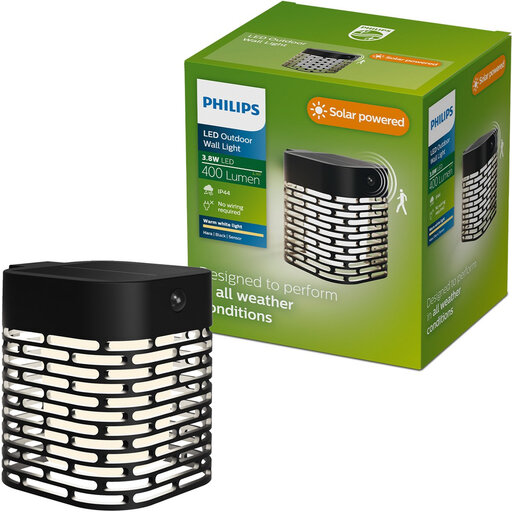
Why it suits this profile: This black solar outdoor light is designed for general lighting at an entrance, balcony or patio. Installation without wiring keeps the fitting process straightforward.
The product specifications state an IP44 rating and two lighting modes. This light is therefore best used in a sheltered location, rather than as lighting for a completely exposed driveway.
400 lumens per light point, warm white light at 2700K, integrated LED and installation without mains electricity.
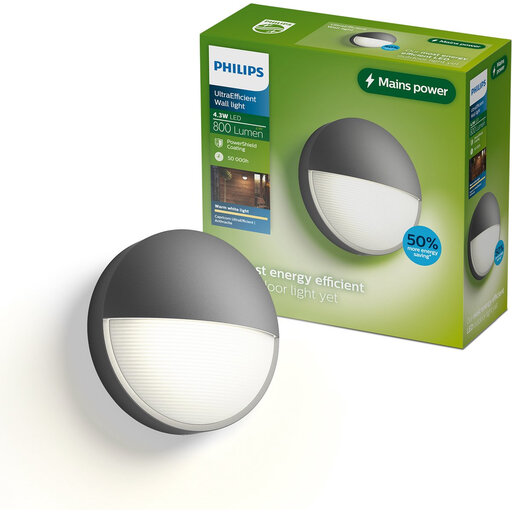
Why it suits this profile: This fixed LED outdoor light is suited to a façade or entrance where a sleek design and even, warm lighting are important.
Choosing an integrated LED means you do not need to select a separate light source. However, bear in mind that professional installation is required and that the entire fitting must be replaced when the LED stops working.
800 lumens, 2700K warm white light, aluminium and plastic construction, and a stated IP44 rating.

Why it suits this profile: The combination of three light heads, motion detection and a wide light spread is designed for larger gardens, garages, patios and driveways.
The stated IP65 rating is more suitable for an exposed location than IP44. However, position the solar panel away from shade to ensure that the battery charges properly.
According to the product information: 3000 lumens, a detection range of 60 feet, a detection angle of 180 degrees and three lighting modes.
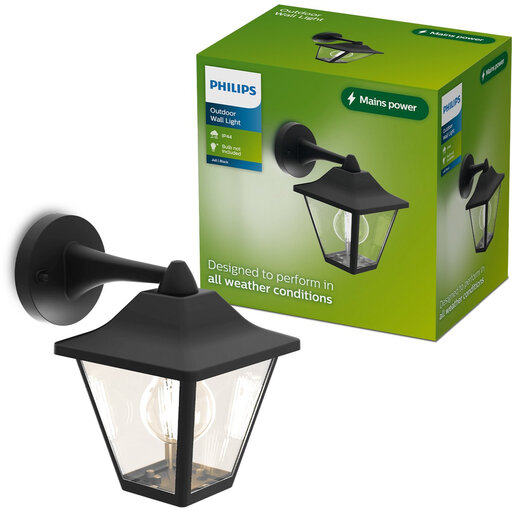
Why it suits this profile: The classic black fitting is ideal if you want to choose the E27 light source and colour temperature yourself for a patio, veranda or entrance.
As the E27 bulb is not included, you can choose the brightness and colour yourself in advance. The IP44 rating means it should be installed in a sheltered location.
E27 fitting, black aluminium housing, replaceable LED bulb of your choice and a classic design.
We have put together a complete, up-to-date list of products that fully meet these strict selection criteria and the applicable European safety regulations.
It can be, provided the solar panel receives enough direct daylight. Do not install a solar outdoor light beneath a solid canopy, behind a tall fence or under trees. Bear in mind that charging time and operating time may vary depending on cloud cover, shade and the season.
For atmospheric garden lighting or a balcony, a few hundred lumens are often sufficient. For a driveway, garage or wide façade, a higher light output may be more practical. Do not look at lumens alone: also consider the beam, mounting height and the distance you want to illuminate.
An integrated LED light generally uses little energy compared with conventional light sources. Actual consumption depends on the wattage and the number of hours the light is on. An outdoor light with a motion sensor can limit the number of operating hours, while a solar outdoor light does not use electricity from the mains. Always check the product specifications rather than relying solely on general marketing claims.
