
Vandaag of morgen in huis

Kwaliteit gegarandeerd

Welkomstaanbiedingen ontgrendelen: GRATIS bezorging | Tot 80% korting | Gratis 30 dagen JoyPlus-proefperiode
Download de app
Good outdoor lighting should suit the location, its use, and the amount of maintenance you're willing to do. A light for your front door has different requirements to garden lighting along a border or mood lighting on a balcony. Yet when buying, people often focus mainly on looks and lumens.
That can lead to disappointment. For example, a light may not charge properly due to shade, a motion sensor may react too often, or an IP rating may be mistaken for full waterproofing. With the checklist and product choices below, you can make a more informed purchase.
An outdoor solar light is easy to install because you don't need a power cable. However, this advantage only works well when the solar panel receives enough daylight. A spot under a canopy, next to a tall fence, or on the north side of a house can limit charging time.
So check before installation:
A water-resistant outdoor light with IP44 is protected against solid particles larger than 1 millimetre and splashing water from any direction. IP44 does not mean the light can be submerged or withstand a powerful water jet.
Therefore, do not place an IP44 light in a low-lying area where rainwater can pool. For a wall light under an eaves, the protection is usually more practical than in a completely exposed spot.
Lumens indicate the amount of light, but say little about light distribution. A bright LED outdoor light can cause annoying glare when the light source is at eye level. For a path or driveway, directional lighting is useful; for a patio, warm light with a lower brightness can be more comfortable.
Also pay attention to colour temperature:
Don't just look at the description "for outdoor use". Check the specific IP rating and match it to the installation location. IP44 is splash-proof, but still requires a stable placement away from puddles and direct high-pressure jets.
Solar outdoor lighting requires no mains cable and usually no electrician. However, its operation depends on sunlight and battery capacity. A light with USB charging can be more practical during darker periods.
A fixed 230-volt light, such as some wall lights or an outdoor ground spot, provides a constant power supply. For this, the connection must be suitable for outdoor use. Have fixed electrical connections carried out in accordance with current regulations, preferably by a qualified installer.
An outdoor light with a motion sensor is handy for a front door, garage or garden path. Check whether you can choose between automatic operation and continuous light. Also pay attention to the detection angle and position the light so that passing traffic or moving branches are not triggered unnecessarily.
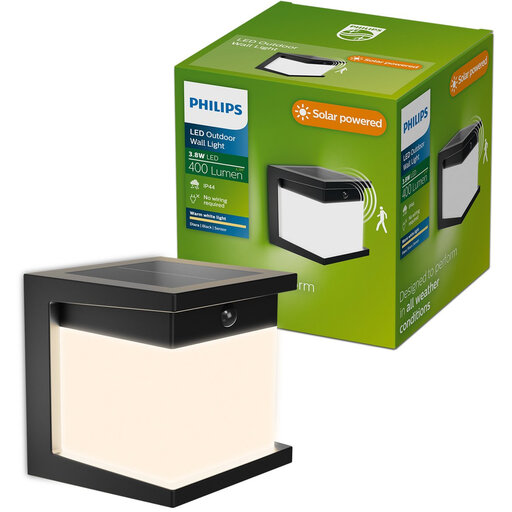
Why this fits the profile: This outdoor solar wall light is designed for those who want to light an entrance, balcony or garden wall without wiring. The light features an integrated LED, two light modes and a motion sensor.
The product description states IP44, so you can compare the splash-water protection against your chosen installation spot. The solar panel must receive free, direct daylight.
400 lm, 2700 K, integrated LED, two light modes and a stated lifespan of 25,000 hours.
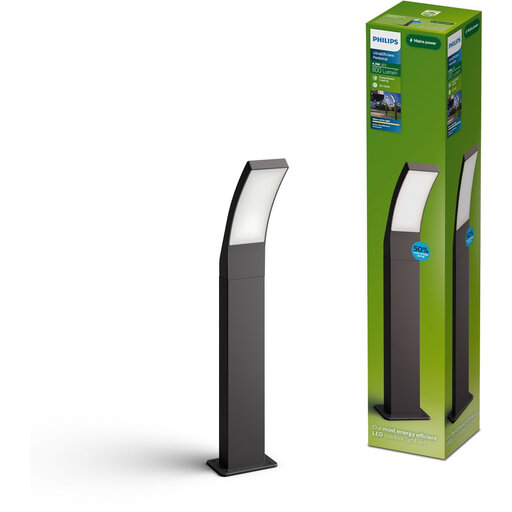
Why this fits the profile: This bollard light suits paths, borders and patios where a fixed, decorative lighting solution is desired.
The aluminium housing, IP44 rating and specific dimensions make it easier to assess the material and placement beforehand.
2700 K warm white light, integrated LED, 4.3 W and a stated lifespan of 50,000 hours according to the product information.

Why this fits the profile: The combination of solar power, motion sensor and a stated light output of 1000 lm suits entrances, driveways and areas where functional light is needed.
The two modes prevent the light from having to be used only automatically. IP44 makes the limits of splash-water protection clear.
1000 lm, 3000 K, dusk sensor, motion sensor and integrated LED according to the product data.
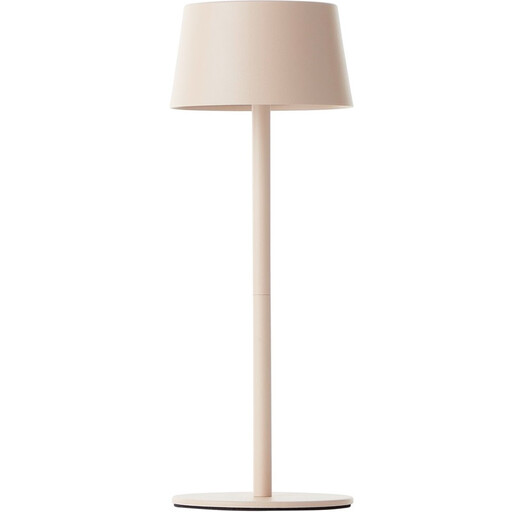
Why this fits the profile: This portable lamp for balcony and patio works with solar energy and USB charging. This means you can move it flexibly or top it up when there's little sun.
USB charging offers an alternative for limited sunlight. The light is freestanding, but must be placed on a stable, level surface.
170 lm, 3000 K, three dimming levels, solar and USB charging and IP44 splash-water protection.
We've put together a full, up-to-date list of products that fully meet these strict selection criteria and current European safety regulations.
Yes, as long as the panel receives enough daylight and is not constantly in the shade. The lighting duration can vary by season and weather conditions. Choose a spot with a clear view, keep the panel clean, and check whether the light can be switched on manually or via a sensor.
The stated lifespan varies by model. In the product specifications of the Philips lights mentioned, for example, you'll see 25,000 or 50,000 hours. This is a product specification and not a guarantee of actual usage time. Installation, moisture, temperature, charging cycles and maintenance can affect the practical lifespan.
A solar version uses no mains power according to the product description. A fixed LED light typically uses little power, but total consumption depends on wattage and burn time. A motion sensor can limit burn time when the light doesn't need to be on continuously. For a mains-powered light, always check the wattage and expected usage time.
