
Vandaag of morgen in huis

Kwaliteit gegarandeerd

Welkomstaanbiedingen ontgrendelen: GRATIS bezorging | Tot 80% korting | Gratis 30 dagen JoyPlus-proefperiode
Download de app
Good outdoor lighting makes an entrance easier to see, creates a welcoming atmosphere on a patio and helps illuminate paths and driveways. However, it’s easy to buy a light that isn’t right for the spot where you want to use it. A low price tells you little about how easy it is to install, how much light it produces or how well it stands up to the weather.
So, watch out for these three common pitfalls:
Start by deciding what you need it for. Warm white outdoor lighting and outdoor string lights work well in a cosy seating area. For a driveway or front door, an LED outdoor light, outdoor wall light or outdoor light with a motion sensor is more practical. To highlight a tree, flower bed or feature on your home’s exterior, consider an outdoor ground spotlight.
The power source also makes a difference:
For renters, solar garden lights, spike lights and string lights are often easy to put up without running cables through walls. Fixed 230-volt wall lights must be installed by a qualified electrician.
The IP rating shows how well a product is protected against the ingress of solid particles and water. An IP44 outdoor light is protected against splashing water from different directions. This makes it suitable for a sheltered exterior wall, covered balcony or patio, as long as it isn’t exposed to direct water jets.
IP65 outdoor lighting offers greater protection against dust and water jets. This can be useful in a more exposed location, such as a driveway or garden wall. Always check the product instructions too: an IP rating doesn’t automatically make a light suitable for immersion or pressure washing.
Colour temperature is measured in kelvins:
Light output is measured in lumens. A small solar garden light is often mainly decorative. A model with several LEDs and a higher lumen output is better suited to security lighting or a large driveway. Also consider how the light is distributed. A swivelling spotlight can direct light towards a tree or flower bed, while a wall light can illuminate an entrance more evenly.
Check in advance whether the light comes with a bulb. With a GU10 outdoor light, you may be able to replace the LED spotlight, but some models are sold without a GU10 bulb. An E27 bulb also gives you more choice, but check the maximum wattage.
With solar lighting, the position of the panel matters. Place it where it can get as much direct sunlight as possible, and clean it from time to time. For fixed lighting, consider the cable length, wall material and whether there’s a suitable outdoor socket.
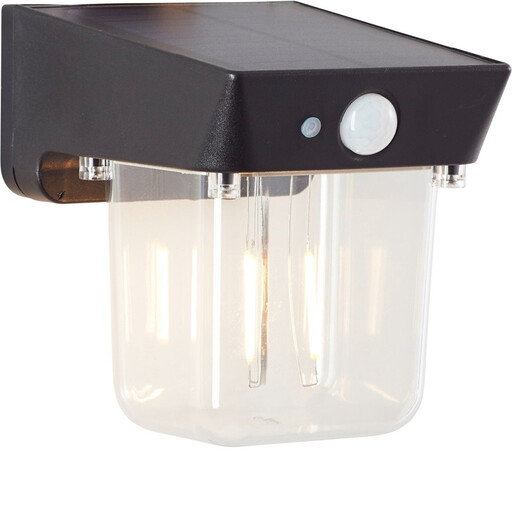
Why it suits this type of buyer: This compact wall light runs on solar power and doesn’t need to be connected to the mains. That makes it a practical choice for an entrance, shed or balcony.
The specifications list solar power, a motion sensor and IP44 protection. Make sure you install the light somewhere the panel will get enough daylight.
180 lumens, warm white 2700K light, built-in battery and motion sensor. The light is 11.5 cm high and designed for wall mounting.
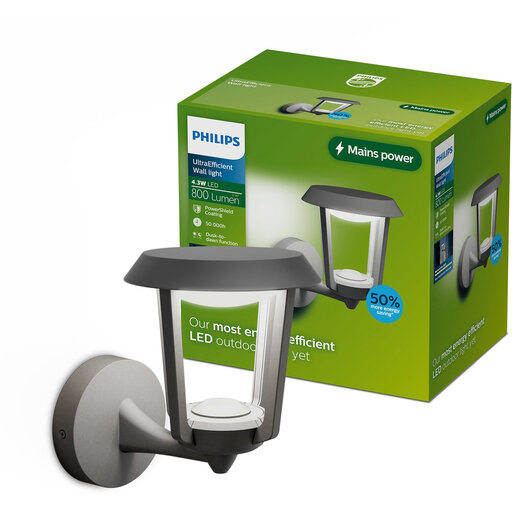
Why it suits this type of buyer: This fixed LED outdoor light is designed for anyone looking for a consistent lighting solution for an exterior wall, balcony or garden. It has an aluminium housing and integrated LED.
The product information lists 800 lumens, 2700K, 4.3 W and IP44. This means you can check the brightness, colour temperature and splash protection in advance.
Integrated LED, 800 lumens, warm 2700K light and a stated lifespan of 50,000 hours, according to the product description.

Why it suits this type of buyer: The three adjustable light heads and wide detection angle make this light well suited to driveways, garages, gardens and larger outdoor spaces.
The product details list IP65, three lighting modes, a detection range of 60 feet and a 180-degree angle. Check in advance that the wall you choose gets enough sunlight.
302 LEDs, a stated light output of 3000 lumens, three light heads and a motion sensor. The light runs on a built-in lithium-ion battery.
We’ve put together a complete, up-to-date list of products that meet these strict selection criteria and comply with current European safety regulations.
An outdoor wall light with warm white light is suitable for most front doors. A motion sensor switches the light on only when it detects movement. Check whether IP44 offers enough protection for a sheltered spot; if the light is directly exposed to rain, a higher protection rating may be more suitable.
How long it stays on depends on the battery capacity, panel size, sunlight and the lighting mode you choose. Solar lights may stay on for less time in winter and on cloudy days. Keep the panel clear of shade and clean it to avoid unnecessarily reducing its charging performance.
LED lighting generally uses less power than traditional light sources. Actual consumption depends on the wattage and how many hours the light is on. A light with a motion or dusk sensor can reduce the time it stays on. Solar outdoor lighting doesn’t use mains electricity, but its battery may need replacing over time.
