
Vandaag of morgen in huis

Kwaliteit gegarandeerd

Welkomstaanbiedingen ontgrendelen: GRATIS bezorging | Tot 80% korting | Gratis 30 dagen JoyPlus-proefperiode
Download de app
An attractive outdoor light may look convincing in the shop but disappoint at home. The light output may turn out to be too low, solar garden lighting may not receive enough sunlight, or an outdoor wall light may not be suitable for the place where you want to install it. If you focus only on design or a low price, you may end up paying again later.
Joybuy Product Recommendation Officer therefore helps you focus on measurable features: light output, colour temperature, IP protection, power supply and installation. This allows you to compare garden lighting based on practical value rather than marketing claims.
For LED outdoor lights, wattage mainly indicates energy consumption. The amount of light is measured in lumens. For example, a 4.3-watt outdoor light may deliver 800 lumens, while a solar light with very low power output may provide mainly decorative lighting.
So start by identifying how you will use the light:
A product description may mention weather resistance, but the IP rating provides the technical indication. The first digit refers to protection against solid particles and dust; the second indicates protection against water.
A higher IP rating does not automatically make a fitting suitable for every situation. Also pay attention to cables, connection points, fixings and the position of the light.
Solar outdoor lights are easy to install, but the solar panel needs sufficient direct daylight. Under a solid canopy, next to a tall fence or on a north-facing balcony, the operating time may be disappointing. Cloudy weather and short winter days also have an effect.
Check the following before buying:
Colour temperature is expressed in kelvin. Warm white at around 2700 to 3000 K generally creates a softer effect for a patio, balcony or flower bed. At 6500 K, the light appears much cooler and may be better suited to functional orientation, but it will not create an inviting atmosphere in every garden.
As well as kelvin, look at lumens. A 10-lumen path light is mainly intended to subtly indicate a route. A wall light with 800 lumens has a considerably higher light output and can provide more practical lighting for an entrance or façade.
Aluminium and stainless steel are often used for outdoor fittings. However, also check the finish, weight and fixing method. A lightweight solar lamp with a ground spike is easy to move, but may be less stable in loose soil.
Measure the available space before buying. An 80 cm-high path light may suit a wide garden path but be too large for a narrow border. For a façade, the projection depth and direction in which the light can be angled are more important than height alone.
A motion sensor can save energy because the light only switches on when movement is detected. Check that the sensor angle, activation time and installation height are suitable for your entrance or garden path.
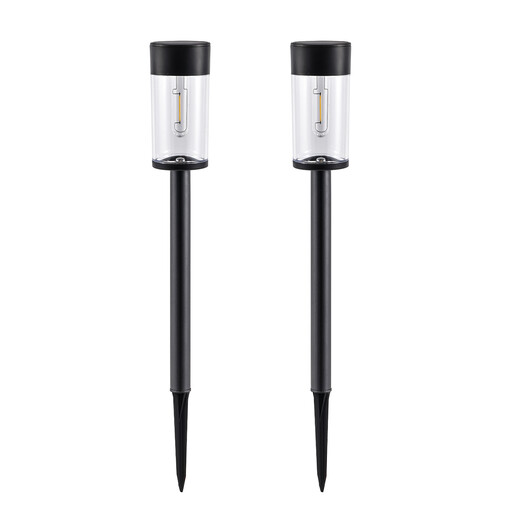
Why it suits this profile: This set contains two solar lights for paths, borders and driveways. The ground spikes make installation without wiring simple.
The specifications state 10 lumens per light and 3000 K. This makes it clear that these are soft path lights, not powerful area lights.
Solar power, automatic operation and an IP65 rating; according to the product information, 6 to 8 hours of sunlight are needed for charging.
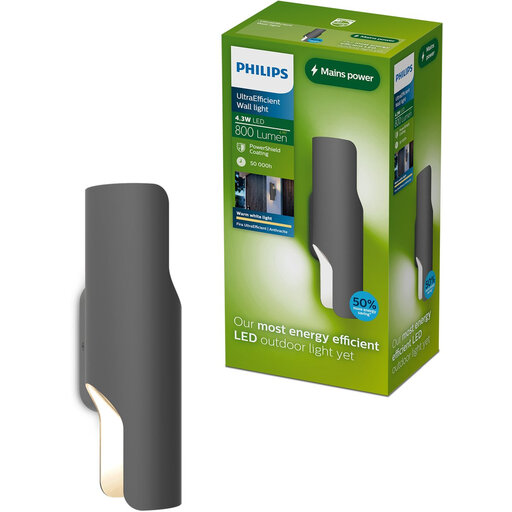
Why it suits this profile: This mains-powered outdoor wall light is designed for a fixed position on the façade, for example by an entrance, balcony or patio.
The product details list IP44, 800 lumens, 2700 K and an integrated LED. You therefore do not need to choose a separate light source, but you should allow for professional installation.
Two light outlets, an integrated LED and a stated power rating of 4.3 W. According to Philips, the stated lifespan is up to 50,000 operating hours.
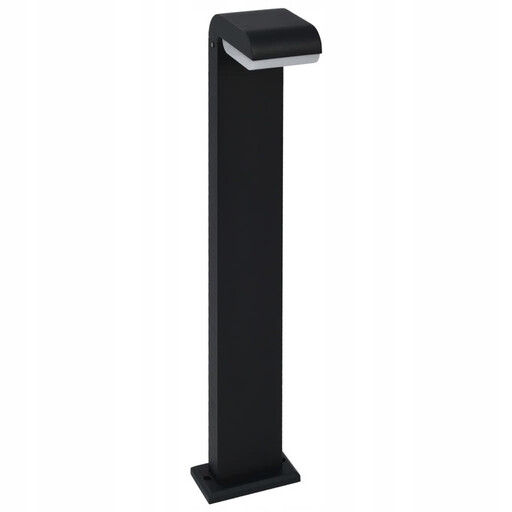
Why it suits this profile: The tall, 80 cm-high design is suitable for garden paths, borders and larger outdoor spaces where a fixed path light is required.
The 550 lumens give you a clear indication of the light output. The IP54 rating also makes it clear that this light does not offer the same level of protection as an IP65 model.
Integrated LED, 9 W power, 550 lumens and a die-cast aluminium housing with opal diffuser.
We have put together a complete, up-to-date list of products that fully meet these strict selection criteria and the applicable European safety regulations.
Place an outdoor light on a stable surface and prevent trip hazards caused by cables or ground spotlights. For a mains-powered outdoor light, the connection must comply with local electrical regulations. Switch off the power before installation or maintenance; have fixed 230V installations carried out by a qualified electrician.
Clean fittings regularly with a soft, dry cloth. Do not point an IP44 outdoor light towards a location where it will be continuously exposed to direct water jets. For solar lighting, keeping the panel free from dust, leaves and moss will help.
For decorative solar garden lighting, 10 to 50 lumens per light may be sufficient. For an entrance, façade or patio, a few hundred lumens is generally more appropriate. Several low-level light sources often create a more even effect than one very bright outdoor light.
IP44 is suitable for many sheltered outdoor locations, such as a covered balcony, patio or façade. The code indicates protection against splashing water, not immersion or powerful water jets. For an exposed location, a higher IP rating may be more suitable.
When in use, the energy comes from the charged battery, which is topped up via the solar panel during the day. No fixed mains connection is required. Actual operating time depends on sunlight, the season, battery capacity and the selected light intensity. Therefore, check the product specifications rather than relying solely on the term “energy-efficient”.
