
Vandaag of morgen in huis

Kwaliteit gegarandeerd

Welkomstaanbiedingen ontgrendelen: GRATIS bezorging | Tot 80% korting | Gratis 30 dagen JoyPlus-proefperiode
Download de app
A welcoming garden or well-lit entrance starts with more than the look of an outdoor light. The wrong IP rating, an awkward power connection or a light source that’s too weak could make your purchase less suitable than you expected. So don’t just look for terms such as “weather-resistant”, “energy-efficient” or “ambient”; check the technical specifications too.
In this guide, you’ll find out what to look for in outdoor lighting, how LED outdoor lights, solar outdoor lights and outdoor wall lights differ, and which type is right for you.
An IP44 outdoor light is protected against splashing water and objects larger than 1 millimetre. That doesn’t mean it’s suitable for direct water jets, immersion or a completely exposed location. For example, an outdoor wall light with IP44 is better suited to a covered area or sheltered exterior wall than to the middle of an open garden.
IP65 outdoor lighting offers greater protection against dust and water jets. However, always check the full product description and installation instructions. The IP rating doesn’t automatically tell you anything about the quality of the fixings, cable or connection.
A GU10 outdoor light may come with a fitting but no bulb. The Brilliant Jelani outdoor wall light, for example, doesn’t include a light source. This means you can choose your own GU10 LED bulb, but you’ll need to keep the maximum wattage of 10 W in mind.
According to the product specifications, the Philips Cylr ground spotlight does include a GU10 LED spotlight. So always check whether the description says “light source included” or “suitable for LED bulbs”. This helps you avoid extra costs and disappointment when you come to install it.
A solar outdoor light relies on getting enough daylight. So don’t place the solar panel under dense foliage or somewhere that’s in the shade for long periods. According to the Aigostar solar pendant light’s product specifications, charging takes 4 to 6 hours and the battery can provide up to 12 hours of light. Actual usage time can vary depending on the season, cloud cover and chosen light setting.
A portable battery-powered light gives you more flexibility, but needs to be recharged regularly. The Atmosphera Kiara is specified to run for 4 hours at full power, 9 hours on a medium setting and up to 60 hours on the low setting.
Use the IP rating as your first filter:
An IP rating doesn’t replace correct installation. Fixed 230V lighting must be connected in accordance with local regulations. Have any work on the mains supply carried out by a qualified electrician.
Light colour is measured in kelvin:
Also check the number of lumens. A lamp with 270 lumens will give a different result from a ceiling light with 2700 lumens. More lumens aren’t automatically better: too much light can be uncomfortable around a small table or planter.
Decide in advance whether you want a fixed, plug-in, battery-powered or solar outdoor light. An outdoor ground spotlight is useful for highlighting a tree, an architectural detail or a flowerbed. For a plug-in model, check the cable length and make sure you have a suitable outdoor socket.
A dimmable outdoor light can be a great choice for a patio, but whether it can be dimmed may depend on the light source or dimmer you use. The Brilliant GU10 outdoor wall light can be dimmed externally if you use a suitable dimmable bulb and installation. A portable LED outdoor light may have a dimmer built in.
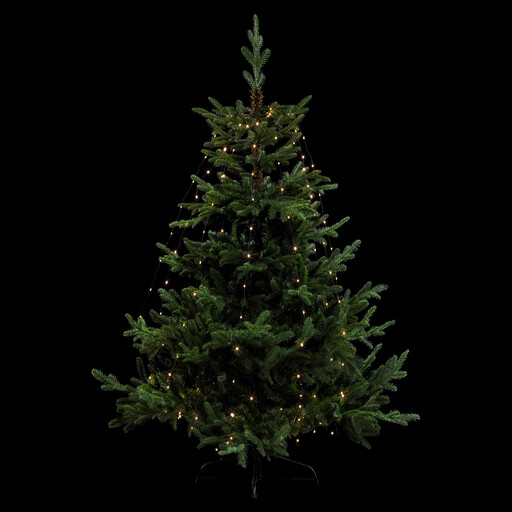
Why it suits this profile: This string light is easy to arrange around a balcony, fence or patio, and gives off a warm white glow. At 2.2 metres long, it’s a manageable choice for smaller outdoor spaces.
The product information lists eight lighting functions and gives clear dimensions, so you know what kind of decorative lighting you’re buying.
232 LEDs, warm white light, a length of 2.2 metres and a product weight of 145 grams.
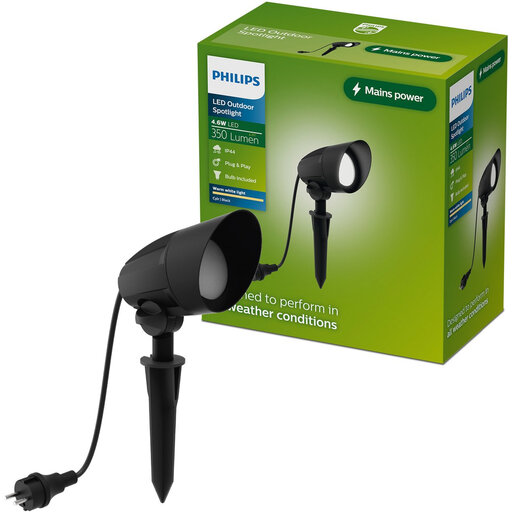
Why it suits this profile: This adjustable ground spotlight is designed for driveways, gates, flowerbeds and decorative accents. The included GU10 LED spotlight gives off warm white light at 2700K.
The specifications list both the included light source and the IP44 rating. Don’t place the spotlight in water or where it’s exposed to direct high-pressure jets.
350 lumens, 4.6 W, a 150 cm cable, aluminium and glass construction, and an adjustable spotlight.
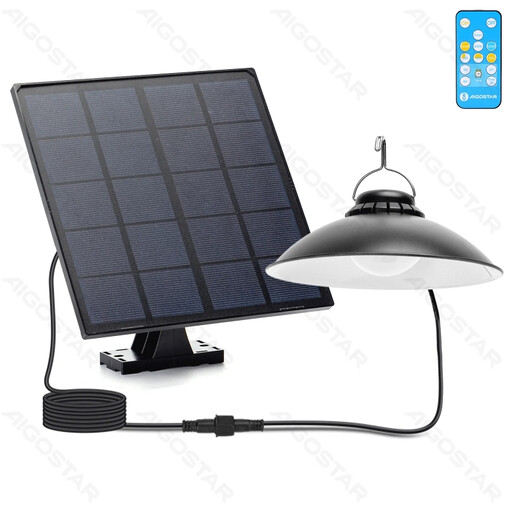
Why it suits this profile: This solar outdoor light is ideal for a patio, garden shed or covered area without a fixed power connection. You can adjust the light colour from warm to cool white.
The product specifications list IP65, a 175 by 175 mm solar panel and a 3-metre cable. This helps you assess the installation location in advance.
Three colour temperatures, a stated battery capacity of 5000 mAh and up to 12 hours of use according to the product information.
We’ve put together a full, up-to-date range of products that meet these strict selection criteria and the applicable European safety regulations.
For a sheltered location, IP44 is often suitable, as long as the light isn’t exposed to direct water jets. For more exposed locations, IP65 outdoor lighting may be a better choice. Check the instructions for cables, junction boxes and fixings too.
Energy use depends on the wattage and how many hours the light is on. A 5 W lamp that’s on for 5 hours a day uses about 9.1 kWh a year. Multiply this by your current electricity rate. A solar outdoor light doesn’t use mains electricity while it’s running, but its battery capacity and the weather determine how long it stays lit.
You can usually install a plug-in light or decorative string lights yourself, following the instructions. For a fixed 230V outdoor wall light, it’s best to have the connection made by a qualified electrician, and local regulations may require it. Always switch off the power before carrying out maintenance.
