
Vandaag of morgen in huis

Kwaliteit gegarandeerd

Welkomstaanbiedingen ontgrendelen: GRATIS bezorging | Tot 80% korting | Gratis 30 dagen JoyPlus-proefperiode
Download de app
A dark driveway, poorly lit entrance or terrace lacking atmosphere doesn’t automatically call for the most expensive light. With outdoor lighting, it’s all about finding the right balance of brightness, protection, power supply and placement. Solar garden lights, for example, work differently from mains-powered outdoor lights, while outdoor wall lights have different requirements from path lights.
These common pitfalls can often lead to a disappointing purchase:
IP44 outdoor lighting can be a practical choice for a covered balcony, sheltered wall or terrace. The housing is splash-resistant, but don’t place an IP44 light where a garden sprinkler or pressure washer is aimed directly at it. Check that the surface is stable, too. An outdoor ground light that tilts or sinks can become a trip hazard.
A higher IP rating may be more suitable for very exposed locations. Always check the product specifications rather than relying on terms such as “weather-resistant”.
Lumens indicate the amount of visible light. Decorative solar garden lights often have a modest light output and are mainly designed to create atmosphere. An outdoor light with a motion sensor, or a light by an entrance, will generally need to produce enough light for you to see the surrounding area clearly.
Also consider how the light is distributed:
A mains-powered LED outdoor light provides a constant power supply, but needs wiring or an outdoor socket. A solar garden light works without a fixed power connection, but its performance depends on the amount of daylight it receives. Don’t place the solar panel under a solid canopy or in constant shade.
An integrated LED is compact, but usually can’t be replaced by the user. With a GU10 outdoor light, you can choose or replace a suitable GU10 LED bulb, as long as the fitting and maximum wattage match. An E27 fitting offers similar flexibility with a different type of bulb base.
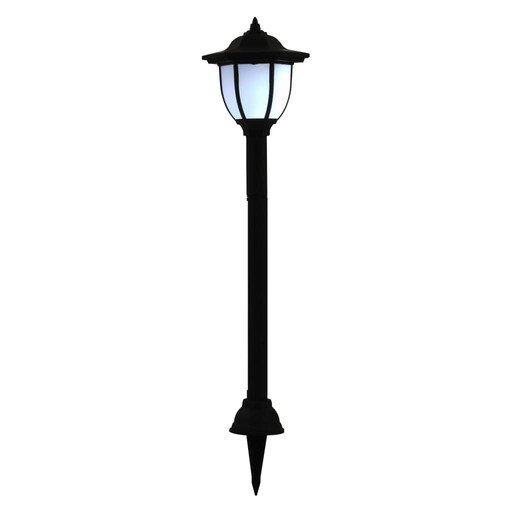
Why it suits this profile: These three lights offer an easy way to mark a garden path, flower bed, terrace or driveway without fixed wiring.
The product information clearly states that it’s solar-powered, uses a rechargeable AA battery, switches on automatically in the dark and has IP44 protection. Bear in mind that the lighting time can vary when there’s little sunshine.
Set of 3 lights, automatic operation, solar power and mounting materials included.
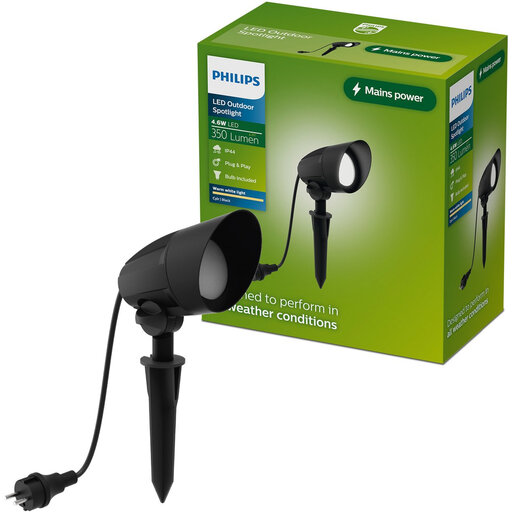
Why it suits this profile: This mains-powered ground light is a good fit if you’re looking for a fixed, directional light source for a driveway, gate, tree or striking feature in the garden.
The specifications list 350 lumens, 2700K, 4.6W, a GU10 LED bulb and IP44 protection. The light must be connected to a suitable, protected outdoor socket.
Adjustable spotlight, aluminium and glass construction, 150 cm cable and an included GU10 LED bulb producing warm white light.
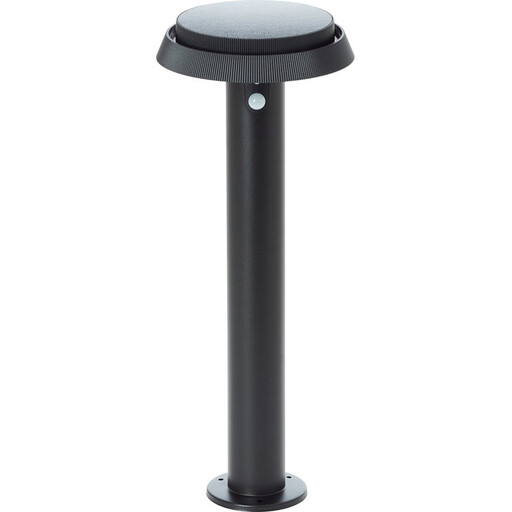
Why it suits this profile: A good choice for an entrance, garden path or driveway where you mainly need light when someone walks past.
The product description lists three modes, a motion sensor, 500 lumens and IP44 protection. It isn’t designed to be submerged or exposed to direct jets of water.
Solar power, integrated LED, motion sensor, dimming function and 3000K warm white light.
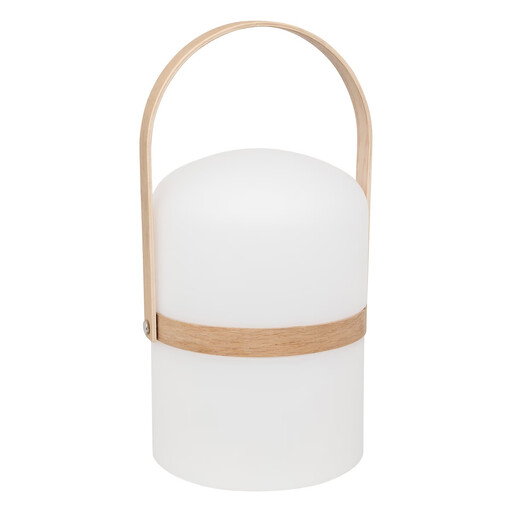
Why it suits this profile: This portable light is handy on a garden table, balcony or terrace if you don’t want to install fixed lighting.
The product details list three light settings, a dimmer and IP44 protection. The battery needs to be charged via USB, and the stated run time varies depending on the brightness setting.
270 lumens, warm white light, carry handle, three settings and a rechargeable lithium-ion battery.
We’ve put together a complete, up-to-date list of products that meet these strict selection criteria and the applicable European safety regulations.
IP44 is suitable for splashing water and many sheltered outdoor settings, such as a covered entrance, terrace or wall. This rating doesn’t protect against submersion, powerful jets of water or prolonged exposure to extreme conditions. Consider the exact installation location before choosing a light.
Solar garden lights use energy from the sun during the day to charge an internal battery, so there’s no need for a fixed mains connection. However, their brightness and run time can vary depending on the season, cloud cover, shade and the condition of the battery.
It depends on what you need it for. A low light output may be enough to create atmosphere in the garden. For an entrance, driveway or motion-sensor outdoor light, a brighter output is generally more practical. As well as lumens, compare the beam angle, mounting height and colour temperature.
