
Vandaag of morgen in huis

Kwaliteit gegarandeerd

Welkomstaanbiedingen ontgrendelen: GRATIS bezorging | Tot 80% korting | Gratis 30 dagen JoyPlus-proefperiode
Download de app
A dark driveway, a poorly lit entrance or a patio without atmosphere doesn’t always call for the same solution. With the right outdoor lighting, you can combine practical illumination with a look that suits your home. Yet it’s easy to overpay for a light that, in British conditions, performs less well than you’d expect.
Keep an eye on these common pitfalls:
Light output is measured in lumens (lm). As a practical guide:
Also pay attention to colour temperature. 2700–3000 K gives warm white light for a patio or garden. Around 4000 K looks more neutral. A higher value may be described as bright or cool in the product description, but always check the stated colour temperature. For example, some lights list 7000 K in the product info, yet the description calls it “warm white”. The technical value is the most reliable reference point here.
For a rented property, balcony or spot without a power point, a rechargeable outdoor light is practical. A built-in battery is charged via USB or a solar panel. Check:
Solar garden lighting doesn’t need a cable to a socket. However, place the panels where they get as much direct sunlight as possible. In winter, the output may be lower. For a mains-powered light, such as an LED string light for outdoors, you’ll usually need an extension lead or a suitable outdoor socket.
The IP classification tells you how well a product is protected against dust and water:
An IP rating doesn’t automatically make a product suitable for submersion. Also check that the light is fixed to a sturdy surface. A magnetic light, for example, needs to be mounted on a flat, suitable wall to prevent it from falling.
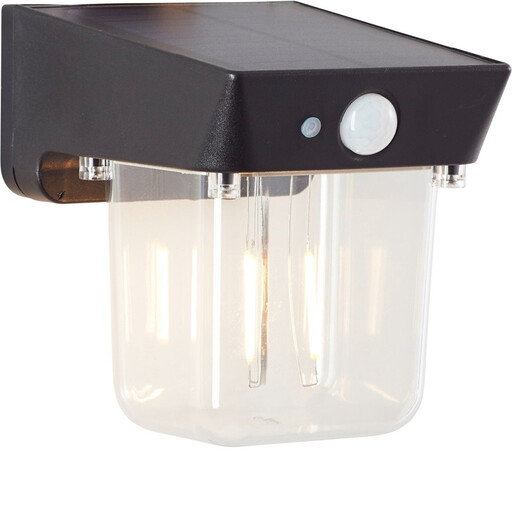
Why this fits the profile: This solar wall light works without a fixed mains connection and combines a motion sensor with integrated LED lighting. That makes it suitable for an entrance, small patio or balcony.
The product information states 180 lm, 2700 K and IP44. This makes the brightness and protection level easier to assess than with general marketing terms alone.
Solar panel, integrated rechargeable battery, motion sensor and a compact size of 11.5 cm high.

Why this fits the profile: The light can be placed wirelessly thanks to its magnetic mounting and rechargeable battery. That suits anyone who wants flexibility without a fixed electrical connection.
The product details list 300 lm, 3000 K, IP44 and a motion sensor. The light is splashproof, but not intended for direct water jets.
USB charging, magnetic mounting, integrated LED and a warm white colour temperature of 3000 K.

Why this fits the profile: The three adjustable light heads and stated wide coverage are aimed at larger areas, such as a driveway, garden or garage area.
The product description states 3000 lm, IP65, three modes and motion detection up to 60 ft. Before mounting, check whether the stated range suits your situation.
IP65 rating, solar power, 302 LEDs, three light modes and an adjustable three-head design.
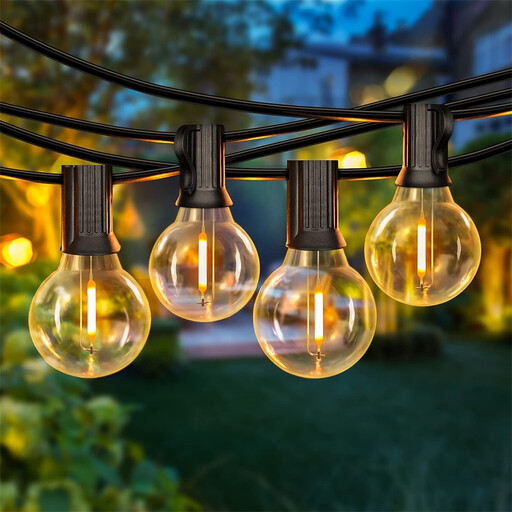
Why this fits the profile: This string light is designed for long patios, balconies, garden parties and decorative uses where even ambient lighting matters more than a strong beam.
It’s powered via a plug, so you’re not reliant on sunlight or loose batteries. Keep connections away from standing water.
30 metres length, 50+2 LEDs, dimmable function, multiple light modes and replaceable bulbs.
We’ve put together a full, up-to-date list of products that fully meet these strict selection criteria and comply with current European safety regulations.
For a covered entrance or sheltered balcony, IP44 can be enough. For a wall, garden path or other spot more exposed to rain and dust, IP65 is more suitable. Also check the installation instructions and don’t place the light in conditions the manufacturer excludes.
That depends on sunlight, battery capacity, temperature and the chosen light mode. For example, the product description of the Huacan solar garden light states a charging time of 4–6 hours and a burn time of 5–8 hours. This is a stated product specification, not a guarantee for every British garden. Position the panel free of shade and clean it occasionally.
LED lighting generally uses little electricity, but consumption varies by wattage and burn time. A 4 W lamp that runs for 1,000 hours uses about 4 kWh. Check the product’s wattage, the number of burn hours and whether it uses integrated LEDs or a replaceable bulb. For a mains-powered string light, a timer can help cut down unnecessary burn hours.
