
Vandaag of morgen in huis

Kwaliteit gegarandeerd

Welkomstaanbiedingen ontgrendelen: GRATIS bezorging | Tot 80% korting | Gratis 30 dagen JoyPlus-proefperiode
Download de app
Good outdoor lighting needs to do more than look attractive in a product photo. In a Dutch garden, on an open balcony or beside a front door, a light has to cope with rain, wind and changing temperatures. At the same time, you do not want unnecessary cables, high energy costs or a light that no longer suits the way you use it after just a few weeks.
An IP44 outdoor light is protected against solid objects and splashing water. This does not mean that it is waterproof or suitable for direct jets of water. IP44 may be suitable for a sheltered veranda, covered patio or façade. In a completely exposed location with heavy driving rain, you need to take extra care.
According to the classification, IP65 outdoor lighting offers greater protection against dust and jets of water. However, always check the full product description and installation instructions. The IP code does not automatically tell you anything about brightness, lifespan or corrosion resistance.
Wattage mainly indicates energy consumption. Lumens indicate how much light a lamp produces. For example, a compact LED outdoor light may use relatively little power while still providing enough light for a balcony or pathway. You need fewer lumens for ambient lighting than for functional lighting beside a garage or entrance.
Also pay attention to the colour temperature:
A solar outdoor light only works well if the panel receives enough light during the day. Installing it beneath a solid canopy, beside a tall fence or on a north-facing balcony can limit charging time. According to solar brands’ product information, these lights work without mains electricity, but actual runtime depends on sunlight, the season, battery capacity and the selected mode.
A solar-powered light is therefore convenient for wireless installation, but it is not always the right choice if you need consistent lighting throughout the evening. In that case, a model with USB charging may be more practical.
Choose between mains electricity, batteries, USB or solar power. A fixed outdoor wall light running at 230 volts is suitable for long-term lighting, but professional installation is required when the light needs to be connected to the mains. A wireless outdoor light is more flexible, but needs to be recharged regularly or have its batteries replaced.
An outdoor light with a motion sensor is particularly suitable for an entrance, shed or driveway. Check the detection angle, sensitivity and any stay-on time. A sensor does not automatically prevent the light from switching on unnecessarily when pets or passers-by move nearby.
Look at the number of lumens and the direction in which the light shines. An uplight and downlight highlight a façade differently from a lamp that spreads light in all directions. For a dining table on the patio, dimmed, warm light is often more pleasant than a powerful beam.
With an LED outdoor light, it is also important to check whether the light source is integrated or replaceable. With integrated LED, the entire fitting usually needs to be replaced when the light source reaches the end of its service life. A GU10 or E27 fitting gives you more freedom to choose a suitable bulb yourself.
Metal, aluminium, plastic and glass each require a different assessment. Pay attention to the fixing materials, stability and the surface on which you are placing the light. An outdoor table lamp needs to stand securely on a flat surface; an outdoor floor lamp should not be easy to knock over.
Also check whether cleaning with a dry or slightly damp cloth is recommended. With solar lighting, dirt on the panel can affect charging performance. Product claims about weather resistance come from the manufacturer, so assess them alongside the IP classification and the recommended positioning.
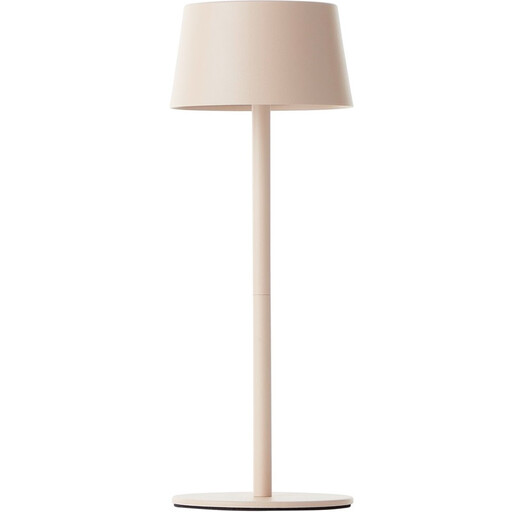
Why it suits this profile: This compact lamp is suitable for a balcony, small table or patio where you do not want to use a fixed connection. The solar and USB options offer flexibility.
The IP44 classification is clearly stated, and the product does not rely solely on sunlight: it can also be charged via USB.
170 lumens, warm white light at 3000K, three dimming levels and two installation options.
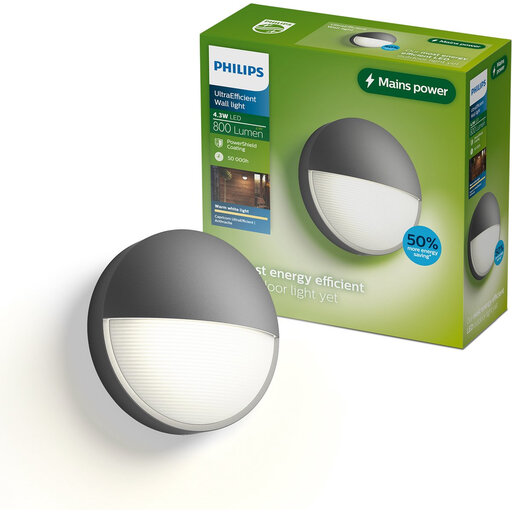
Why it suits this profile: For a fixed façade, entrance or balcony, this fitting offers a neat solution with integrated LED and warm white light.
The specifications state both 800 lumens and 2700K. This makes it easier to compare brightness and light colour before buying.
Aluminium and plastic construction, 800 lumens, IP44 and a stated power rating of 4.3 watts.

Why it suits this profile: This model is designed for larger areas such as a driveway, garden path, garage or patio where plenty of light is needed temporarily.
The IP65 classification, motion sensor and three lighting modes are stated explicitly. However, check that the installation location receives enough sunlight.
302 LEDs, a stated light output of 3000 lumens, three light heads and a 180-degree detection angle according to the product information.
We have compiled a complete, up-to-date list of products that fully meet these strict selection criteria and the applicable European safety regulations.
A solar-powered outdoor light does not use mains electricity during normal charging. However, costs may arise from replacing the battery or the light itself over the longer term. Runtime depends on sunlight, charge level, temperature and the selected lighting mode.
That depends on the location. IP44 is intended to protect against splashing water and may be suitable for a sheltered façade, balcony or patio. For a location exposed to heavy rain, dust or direct jets of water, it may be worth considering a higher level of protection, such as IP65. Always follow the manufacturer’s installation instructions.
Service life varies depending on the model, power supply, temperature and frequency of use. With integrated LED, the light source is not always replaceable. With a lamp featuring a GU10 or E27 fitting, you can replace the light source separately. Before buying, therefore, check whether the lamp is suitable for the maintenance you want to carry out yourself.
