
Vandaag of morgen in huis

Kwaliteit gegarandeerd

Welkomstaanbiedingen ontgrendelen: GRATIS bezorging | Tot 80% korting | Gratis 30 dagen JoyPlus-proefperiode
Download de app
The right outdoor lighting makes a driveway, balcony, exterior wall or patio more useful after dark. But a good-looking product photo is no guarantee that an outdoor light will suit your needs. It might not provide enough light, a sensor might be triggered in the wrong place, or a solar outdoor lighting set might barely charge in the shade.
That’s why the Joybuy Product Recommendation Officer has picked out the key product specifications and common buying pitfalls. This will help you compare an LED outdoor light, outdoor wall light, garden lighting or decorative outdoor lighting based on practical features, not just appearance.
Lumens indicate how much light a lamp emits, according to its product specifications. More lumens don’t automatically mean a better light. A bright lamp with a narrow beam might work well for a driveway, but be unsuitable for a small balcony. For a patio, warm light with a wider spread is often a better choice for creating ambience.
Pay attention to the colour temperature too:
The IP code consists of two digits. The first indicates protection against solid particles, while the second indicates protection against water. IP44 outdoor lighting is protected against splashes, but isn’t designed for immersion or powerful jets of water. It’s best installed in a sheltered spot, such as beneath an overhang.
IP54 outdoor lighting offers better protection against dust than IP44, but its water protection is still limited to splashes. IP65 outdoor lighting is dust-tight and designed to withstand water jets from different directions. Always check the full installation instructions and placement requirements: an IP rating doesn’t make a product suitable for every outdoor location.
Solar wall lights and other solar outdoor lighting work without a mains connection, but their performance depends on how much light reaches the panel. A panel on a north-facing wall, under a balcony or behind tall plants won’t charge as effectively. The light may also stay on for less time during dark, cloudy periods.
When choosing solar products, check:
First, decide what you need the light for. A path light that shines downwards can help illuminate a walkway, while an outdoor wall light by the front door should create an even pool of light. For a party or a long garden table, an LED string light may provide enough ambient lighting, but it shouldn’t be your only light for walking safely.
Check whether the light source is integrated too. With an integrated LED, you usually can’t replace the light source yourself. A fitting with a GU10 or E27 socket gives you more flexibility to choose a different bulb later. Check the maximum wattage and whether a bulb is included.
An outdoor light with a motion sensor can be useful by a front door, garage or side path. Check the detection range and angle, and whether you can adjust the sensor separately. Otherwise, a light pointing towards a public road or busy pavement could switch on unnecessarily often.
There are also several types of controls:
Aluminium can provide a sturdy housing, while plastic is often lighter and easier to move. Check that the fixings supplied are suitable for your wall, fence or balcony railing. A magnetic light should be attached to a flat, solid surface. Wired outdoor wall lights must be installed by a qualified electrician.
Clean solar panels and sensor windows with a soft cloth. Unplug LED string lights before cleaning them or replacing bulbs. Make sure the connections on string lights aren’t left in standing water.
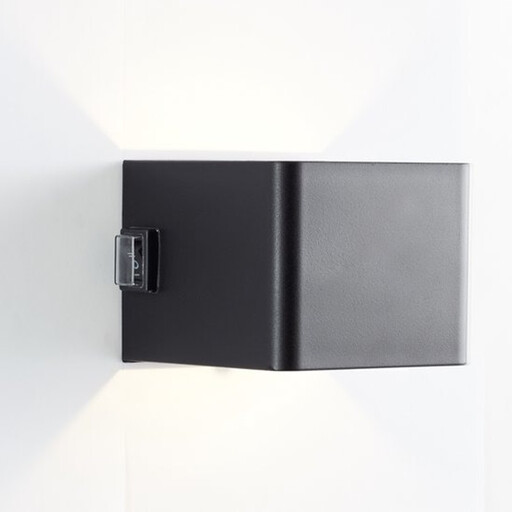
Why it suits this profile: This portable outdoor light runs on a rechargeable battery and has a magnetic fixing. That makes it a practical option for renters or beginners who don’t want to install wiring.
The product information states 300 lm, 3000 K and IP44. This makes it easy to assess the brightness, colour and splash protection before you buy.
Integrated LED, motion sensor, USB-C charging and a stated IP44 protection rating.
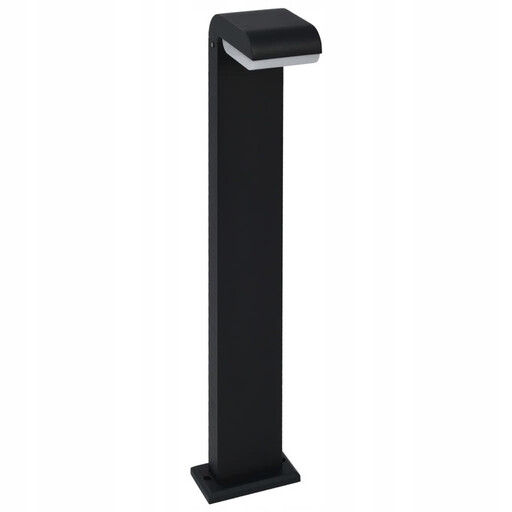
Why it suits this profile: This fixed path light is a good fit for homes that need a discreet, permanent lighting solution along a garden path or entrance.
The specifications list 550 lm, 9 W, a downward-facing beam and IP54. This makes it easier to match the product to path lighting and a sheltered outdoor spot.
Cast aluminium, 800 mm high, integrated LED and IP54 protection according to the product listing.

Why it suits this profile: For a driveway, garage or large garden area, a wide-beam solar floodlight with a motion sensor is more practical than several small lights.
The listing specifies 3000 lm, three lighting modes, a 180-degree detection angle and IP65. Make sure the installation spot gets enough direct sunlight.
Three adjustable light heads, solar panel, motion sensor and IP65 rating according to the product details.
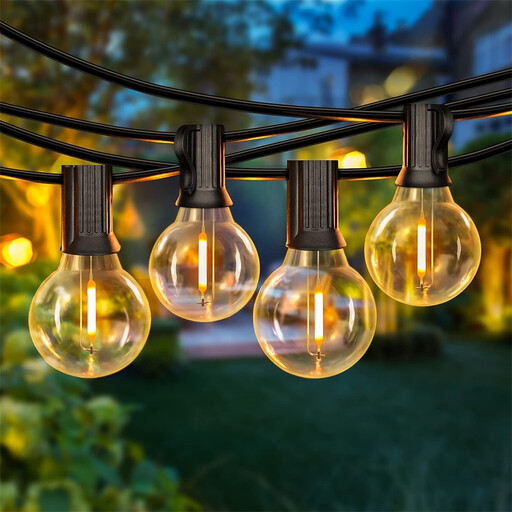
Why it suits this profile: This long string light is ideal for a patio, balcony, garden party or event where warm decorative outdoor lighting takes centre stage.
The product information states that it is 30 m long, has replaceable bulbs and is dimmable, with a maximum connection of 500 bulbs. Don’t leave the connections in standing water.
50+2 LED bulbs, dimming function, multiple lighting modes, timer and replaceable G40 bulbs.
We’ve put together a complete, up-to-date list of products that meet these strict selection criteria and the applicable European safety regulations.
IP44 is often used in sheltered spots, as this rating indicates protection against splashing water. For a more exposed installation spot, IP54 or IP65 may be more suitable. Check the installation instructions too, and make sure cables, plugs and connections are properly protected.
It depends on the wattage, how long it’s on and your electricity tariff. A 9 W light that’s on for five hours uses 0.045 kWh per evening. Multiply this by your electricity tariff to work out the cost. Solar outdoor lighting doesn’t use mains electricity while it’s on, but it does need enough sunlight to charge the battery.
Position the sensor so that the area where you expect people to walk is within its detection angle. Avoid pointing it unnecessarily at a road, moving branches or a busy entrance. Test the position in daylight, then check that the light doesn’t switch on every time there’s a small movement.
