
Vandaag of morgen in huis

Kwaliteit gegarandeerd

Welkomstaanbiedingen ontgrendelen: GRATIS bezorging | Tot 80% korting | Gratis 30 dagen JoyPlus-proefperiode
Download de app
Outdoor lighting makes a garden, balcony or driveway more useful after dark. However, an attractive product photo does not guarantee that a lamp will suit your situation. A small solar garden light may create a pleasant atmosphere, for example, but provide insufficient light for a dark driveway. An outdoor lamp with a motion sensor can be useful, but may switch on unnecessarily often if the sensor is aimed incorrectly.
As a Joybuy Product Recommendation Officer, I therefore focus mainly on verifiable specifications. Below, you’ll find out which features matter, which common marketing pitfalls can lead to a disappointing purchase and which type of outdoor lamp suits different users.
Lumen indicates how much light a lamp produces overall. How that light is distributed is just as important. An outdoor ground spotlight with a narrow beam will illuminate one shrub precisely, while a wide-beam outdoor LED lamp will cover a larger area.
Also consider the intended purpose:
A lamp with 3,000 lumens is not automatically suitable for a small patio. The light may actually be too harsh or intrusive there.
Solar outdoor lighting is easy to install, as it usually doesn’t require a power cable. However, performance depends on the amount of direct sunlight available. Don’t place a solar panel under a canopy, close to a high fence or somewhere that remains in the shade for most of the day.
In winter and on cloudy days, the operating time may be shorter. Therefore, check:
A solar garden light with an automatic dusk and light sensor will generally switch on by itself, but check during installation that the on/off switch is in the correct position.
The IP rating indicates how well a product is protected against solid particles and water. IP44 outdoor lighting is protected against splashing water and is often suitable for a sheltered façade, balcony or covered patio. Don’t place this type of lamp somewhere exposed to powerful jets of water or prolonged water accumulation.
According to the product classification, an IP65 waterproof outdoor lamp offers greater protection against dust and jets of water. This makes IP65 practical for an open garden, driveway or path, but correct installation and drainage remain important. No IP code means that a product can be placed underwater.
Colour temperature is expressed in Kelvin (K):
For a relaxed garden setting, 2700K or 3000K will usually work better than cool white light.
A solar lamp with a ground spike is usually quick to install and suitable for tenants or anyone who doesn’t want to drill. An outdoor wall lamp running at 230 volts will often need to be connected to the existing electrical installation. Have fixed electrical installations carried out in accordance with the applicable regulations, preferably by a qualified installer.
Also check whether the product comes with:
A GU10 outdoor lamp offers flexibility because you can replace or adjust the light source later. With integrated LED, the light source is part of the fitting.
A motion sensor is useful by a back door, driveway or garage. Check the stated detection range and angle. Don’t aim the sensor directly at a busy pavement or moving branches, as this can cause it to switch on unnecessarily.
Adjustability is important for an outdoor ground spotlight. Even lighting works better along a walkway than a bright beam focused on a single point. By a façade, indirect light may be more attractive.
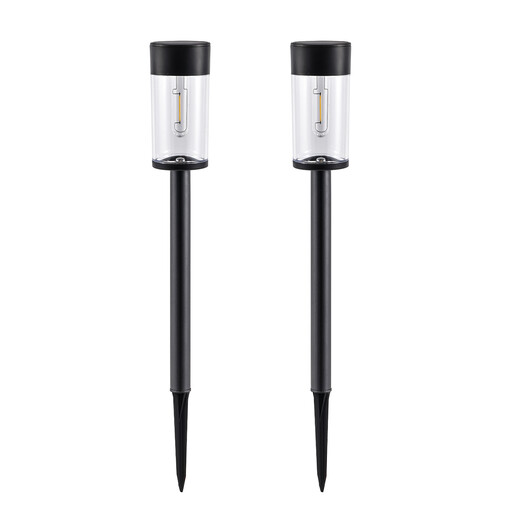
Why it suits this profile: This set is designed for garden paths, lawn edges and driveways. Installation with ground spikes requires no wiring.
The specifications state 10 lumens per lamp and 3000K. This makes it clear in advance that these are mainly atmospheric path lights, not powerful lighting for a large driveway.
Solar-powered, automatic dusk activation and IP65 rating according to the product information. The set contains two lamps.
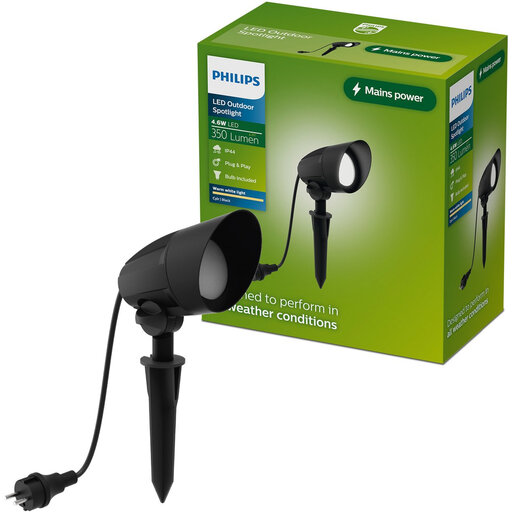
Why it suits this profile: A practical choice if you have a fixed 230V connection and want to highlight a shrub, tree, gate or façade.
The lamp comes with a GU10 LED bulb offering 350 lumens and 2700K. The brightness and colour temperature are therefore specified in advance.
Adjustable ground spotlight, aluminium housing and IP44 rating. The product information states that it has a 150 cm cable.

Why it suits this profile: Designed for users who want to brightly illuminate a large area around a garage, patio, shed or driveway and need a motion sensor.
The stated output of 3,000 lumens, detection angle of 180° and range of 60 feet clearly indicate its intended use.
Three adjustable light heads, three lighting modes and IP65 rating according to the product details. Installation works without a mains power cable.
We’ve put together a complete, up-to-date list of products that fully meet these strict selection criteria and the applicable European safety regulations.
Clean solar panels, sensors and lampshades regularly with a soft, slightly damp cloth. For ground lights, check that the spike is still firmly in place and that no water is collecting around the connection. With electrical lamps, the power must be switched off before carrying out any maintenance.
With solar outdoor lighting, watch out for leaves, dirt and shade. A clean panel will generally charge more efficiently than one that has been covered for a long time. Also check whether the battery still has sufficient capacity over time. Operating time depends on charging conditions, temperature, number of activations and the selected lighting mode.
For a decorative garden path, around 10 to 50 lumens per lamp may be sufficient. If you also want to see obstacles clearly, choose a stronger model or position several lamps at evenly spaced intervals. In addition to lumens, consider the beam angle.
According to the classification, IP44 provides protection against splashing water and is often used in sheltered outdoor locations. For a completely exposed area with heavy rain or exposure to jets of water, a product with IP65 may be more suitable. Always check the installation instructions and prevent water from collecting.
A solar lamp uses energy from sunlight during the day, so it doesn’t need a permanent mains connection. Its performance does depend on sunlight, battery capacity and the operating mode selected. With limited sunlight, the operating time may be shorter. A lamp with USB charging offers additional flexibility in these circumstances.
