
Vandaag of morgen in huis

Kwaliteit gegarandeerd

Welkomstaanbiedingen ontgrendelen: GRATIS bezorging | Tot 80% korting | Gratis 30 dagen JoyPlus-proefperiode
Download de app
Good outdoor lighting needs to suit the location, the weather and how you intend to use it. A light for a covered balcony has different requirements to lighting along an unpaved garden path or a driveway. Yet many products are mainly promoted with terms like “waterproof”, “super bright” or “energy-saving”. Without checking the technical details, you could end up paying for features you simply don’t need.
A product with IP44 is protected against solid objects larger than 1 millimetre and splashing water. That does not mean the light can withstand a direct water jet, prolonged rain exposure or submersion. IP44 is often suitable for a sheltered wall, balcony or patio, but it is less obvious a choice for a completely exposed location.
IP65 offers a higher level of protection against dust and water jets. Still, always check the installation instructions and make sure connections are not lying in puddles or standing water.
Lumens indicate the total light output, but they don’t tell you how much surface area will be well lit. The light beam, mounting height and direction also play a role. A wall light of 180 to 300 lumens can be pleasant near an entrance, whereas a wide solar floodlight needs more light for a driveway or spacious garden.
Also pay attention to colour temperature. Around 2700 to 3000 kelvin typically gives warm white light for a patio or decorative garden lighting. A higher colour temperature looks cooler and can be more functional, but it is not always suitable next to a home.
Solar garden lights don’t need a fixed mains connection, but their output depends on the amount of direct sunlight. If you place a panel under a canopy, next to a tall fence or on a north-facing balcony, the burn time may be shorter.
According to the product description for the Huacan lights, the panels charge in 4 to 6 hours with sufficient sun and then run for about 5 to 8 hours. That is a product specification under stated conditions, not a guarantee for every Dutch winter’s day.
First, choose the location:
So don’t use the term waterproof outdoor lighting as your only selection criterion. Always check the IP rating and the warnings in the product information.
LED outdoor lights generally use very little energy, but the difference between solar, batteries, USB charging and mains power is practically important:
An integrated LED light source is compact, but usually not user-replaceable. With a GU10 lamp, you can choose and replace a suitable LED bulb yourself.
An outdoor light with a motion sensor is practical near an entrance, shed or driveway. Check the detection angle, range, switch-on duration and whether the sensor only works in the dark. A sensor does not automatically prevent glare or unnecessary switching on: aim the light away from windows and neighbours.
For mood lighting, a dimming function, memory setting or multiple light modes are often more important than a high lumen count. For garden path lighting, an even spread along the path is what really counts.
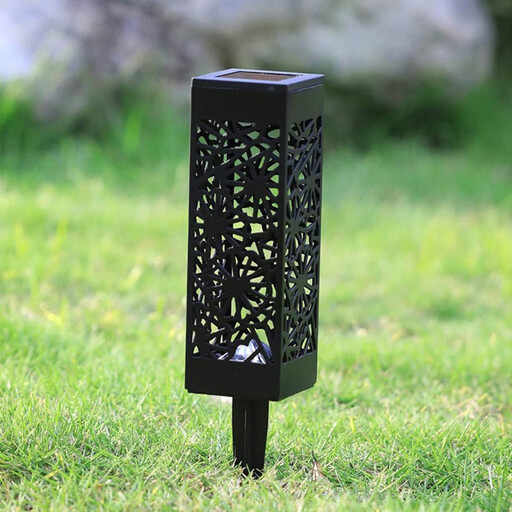
Why this fits the profile: A set of six solar lights offers a simple way to mark out a garden path, border or flower bed without running any cables.
The stated IP65 rating and solar specifications make it clear what the product is intended for. Just make sure to place the panels in a sunny spot.
Six lights, warm white LED light, automatic on/off and tool-free installation.
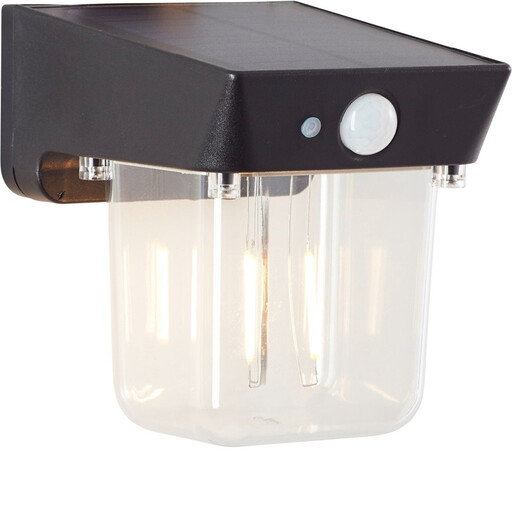
Why this fits the profile: This wall light combines a solar panel with a motion sensor and is ideal for an entrance, patio or balcony where you don’t want a fixed cable.
The description states 180 lumens, 2700 K, IP44 and an integrated battery. This makes the light level and placement limits clear from the start.
Solar powered, motion sensor, dimming function and warm white light in a compact wall light.

Why this fits the profile: For a driveway, garage or large back garden, a wide light distribution with motion detection is more practical than individual decorative lights.
According to the product description, there are three light modes, three adjustable heads and IP65 protection. Before installation, check that the location gets enough sun.
According to the product specs: 302 LEDs, 3000 lumens, a 180-degree detection angle and three light settings.
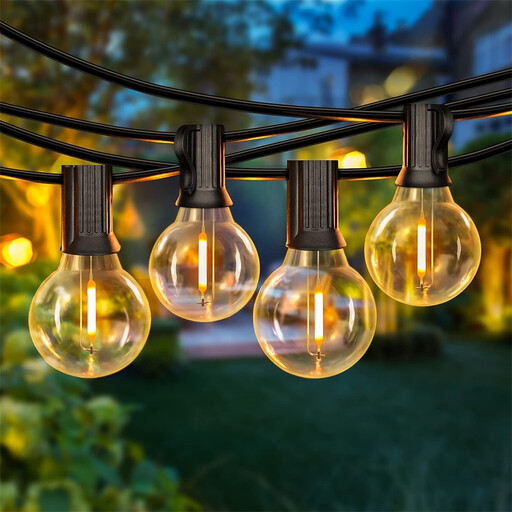
Why this fits the profile: The 30-metre string light is ideal for a patio, balcony, garden party or event where a continuous mains supply is more important than solar power.
The product information mentions dimmability, replaceable bulbs and timer functions. Keep connections away from standing water; the product is not designed for submersion.
30 metres long, 50+2 LEDs, replaceable G40 bulbs and mains power connection.
We’ve put together a full, up-to-date list of products that fully meet these strict selection criteria and comply with current European safety regulations.
For decorative lighting, relatively few lumens are often enough. For an entrance or balcony, around 150 to 300 lumens can be practical. A driveway or large garden requires a wider beam and possibly more total light output. As well as lumens, also consider the beam angle and mounting height.
The burn time depends on sunlight, season, temperature, battery capacity and the light setting chosen. A product listing might state 5 to 8 hours after sufficient charging. In winter or after several cloudy days, the actual duration may be lower.
The consumption depends on the wattage and the number of hours it is on. A 4-watt light that runs for 1,000 hours uses about 4 kWh. With solar lighting, there are no mains electricity costs during use, but the battery and panel do have a limited lifespan. So don’t just look at the purchase price; also consider replaceability, charging method and maintenance.
