
Vandaag of morgen in huis

Kwaliteit gegarandeerd

Welkomstaanbiedingen ontgrendelen: GRATIS bezorging | Tot 80% korting | Gratis 30 dagen JoyPlus-proefperiode
Download de app
A dark driveway, poor visibility along the garden path or a patio that feels short on atmosphere calls for a practical lighting solution. But choosing outdoor lighting isn’t simply a matter of picking the lamp with the highest light output. The location, power supply, protection against moisture and preferred light colour all determine whether a product is right for your needs.
A higher lumen count means more light, but not necessarily a more pleasant result. A bright lamp can cause glare on a patio, while a low-level garden path needs even lighting. Use brighter lighting mainly for a driveway, entrance or security area. For atmosphere, warm-white solar lights or a solar string light are often a better choice.
Pay attention to the light colour, too. 2700K to 3000K generally gives a warm glow. Around 4000K looks more neutral, while 6500K to 7000K gives a bright, cool white light. The right colour depends on how you’ll use it: ambient garden lighting calls for something different from an outdoor motion-sensor light by the garage.
The IP rating indicates how well a product is protected against dust and water getting inside. IP44 means protection against splashes, but not direct jets of water or immersion. It’s best to place IP44 outdoor lights in a sheltered spot, such as under a canopy or on a wall with limited exposure to rain.
For a more exposed location, such as an open fence or garden, IP65 may be a more suitable choice. Always check the product specifications rather than relying solely on words such as “waterproof” in an advert title.
Solar garden lights work without a fixed power connection, but the solar panel still needs enough daylight. Shade from a tree, balcony or fence reduces its charging capacity. The lights may also stay on for less time in winter and in cloudy weather.
Position the panel somewhere as open as possible and keep its surface clean. For solar lights, also check the battery capacity, stated charging time and expected run time. These figures depend on conditions and shouldn’t be taken as guaranteed performance.
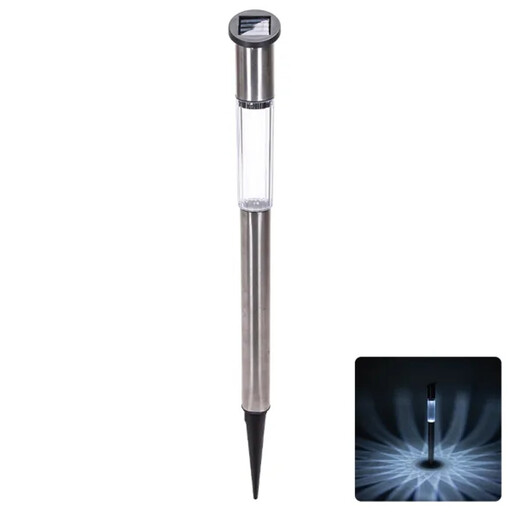
Why it’s a good match: This stake light is designed for garden paths, borders and lawns where you want to add several light points without cables. It stands 550 mm tall and has a stainless steel body.
The product specifications state a charging time of 4–6 hours, a run time of 8–12 hours and an IP44 rating. Place the light in a sunny, preferably sheltered spot.
Solar-powered, with a tall stake, stainless steel construction and a stated colour temperature of 6500K.
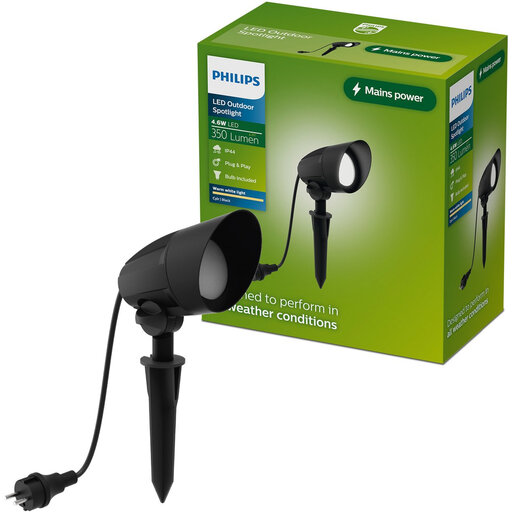
Why it’s a good match: This outdoor ground spotlight is ideal for illuminating a tree, shrub, driveway or gate. The spotlight can be angled and comes with a 2700K GU10 LED bulb.
The IP44 rating indicates that the spotlight is splash-resistant, but isn’t intended for immersion or direct jets of water. A sheltered outdoor power connection is essential.
350 lumens, a GU10 LED bulb included, aluminium and glass construction, plus a 1.5-metre cable.

Why it’s a good match: The three adjustable heads and motion sensor are practical for a driveway, garage, patio or larger area of the garden where you need plenty of light for a short time.
The listing states a 60-foot detection range, a 180° viewing angle and three modes. The stated IP65 rating makes it suitable for a more exposed installation spot, provided it’s installed correctly.
302 LEDs, a stated light output of 3000 lumens, three light heads and an 1800 mAh lithium-ion battery.
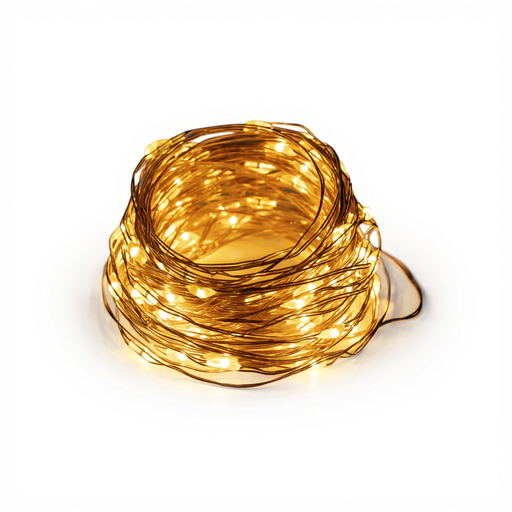
Why it’s a good match: These 10-metre solar string lights are ideal for a balcony, pergola, fence or patio where decorative lighting matters more than bright, practical illumination.
The product specifications state an IP65 rating, a charging time of 4–6 hours and a maximum run time of 12 hours. The panel needs to be in an open, sunny spot; the string lights aren’t a substitute for bright area lighting.
10-metre length, 160 LEDs, warm light, eight lighting modes and an adjustable solar panel.
We’ve put together a complete, up-to-date list of products that meet these strict selection criteria and current European safety regulations.
Place the solar panel somewhere that gets direct daylight, away from shade cast by trees, walls and canopies. Clean the panel regularly with a soft, damp cloth. Bear in mind that it may charge less on dark or cloudy days.
IP44 is suitable for splashes and sheltered outdoor locations, such as a covered patio or a wall beneath the eaves. For an exposed location, you may want to consider a product with a higher IP rating. Always check the installation and safety instructions, too.
Solar lights use energy from sunlight during the day and don’t need a fixed mains connection. Their light output and run time depend on the panel, battery, location and weather. For mains-powered lighting, you can estimate energy use based on the wattage and how long it’s switched on.
