
Vandaag of morgen in huis

Kwaliteit gegarandeerd

Welkomstaanbiedingen ontgrendelen: GRATIS bezorging | Tot 80% korting | Gratis 30 dagen JoyPlus-proefperiode
Download de app
Good outdoor lighting needs to suit the location, power supply and weather. Yet many buyers focus mainly on how a light looks or how many LEDs are listed on the packaging. The result? After a few weeks, it may turn out to be too dim, run out of power quickly or be unsuitable for the chosen spot.
The most common pitfalls:
An IP code consists of two digits. The second digit indicates protection against water. Examples from our range:
So, don’t place an IP44 light somewhere rainwater will hit it directly. Also check that the cable, plug and socket are suitable for outdoor use.
Lumens indicate how much light a lamp produces. A decorative LED garden light or outdoor string lights won’t need the same light output as lighting for a driveway.
Also consider the direction of the light. A ground spotlight directs light onto a shrub or wall, while a hanging outdoor wall light spreads it more widely.
Choose a power source that suits your routine:
A sensor light is especially practical by an entrance, garage or shed. Check the detection angle, range and whether the sensor is activated by movement alone or also responds to daylight.
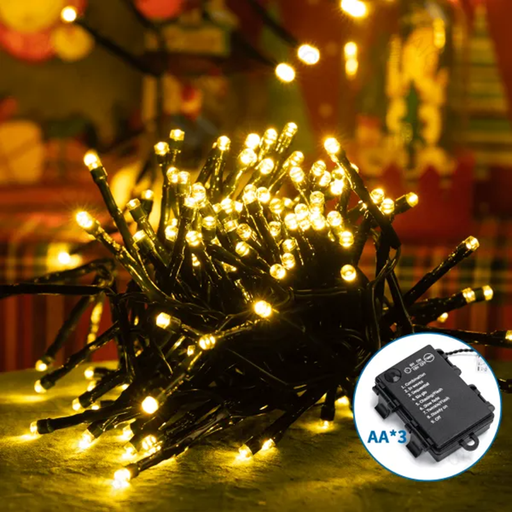
Why it suits this profile: These battery-powered outdoor string lights are easy to put up on a balcony, in a small garden or around a planter. No socket is needed.
The specifications list IP44, eight lighting modes, a timer and a memory function. Just remember to check the three AA batteries regularly.
5 metres long, with 200 LEDs and timer controls plus eight lighting modes, according to the product description.
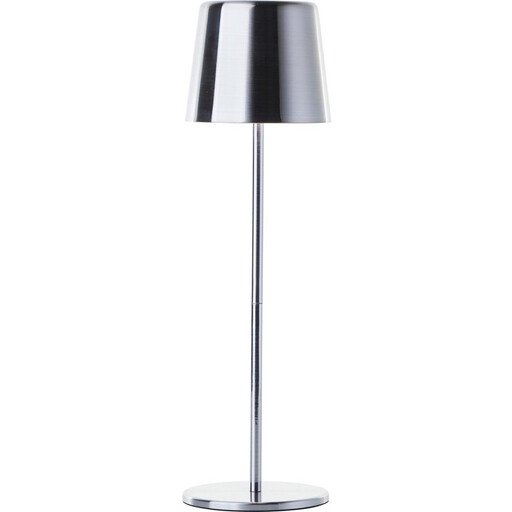
Why it suits this profile: This rechargeable table lamp is designed for anyone who wants adjustable mood lighting on a patio or balcony without fixed wiring.
The brightness, dimming function and colour temperature are clearly specified. IP44 still means protection against splashing water, not complete waterproofing.
300 lumens, integrated LED, touch dimming and an adjustable colour temperature from 3000 to 6500 K.

Why it suits this profile: This solar sensor light is designed for driveways, garages, patios and larger areas where automatic lighting is useful.
The product details list IP65, three modes, three adjustable heads and a sensor range of 60 feet. Make sure you position the panel in a sunny spot.
302 LEDs, a stated light output of 3000 lumens, a 180° detection angle and installation without fixed wiring.
First, measure the distance between the power point and the light. A hardwired outdoor wall light must be suitable for a 230-volt supply and installed in accordance with local regulations. Have the work carried out by a qualified electrician.
For solar garden lighting, positioning is just as important. A panel beneath a balcony, tree or canopy may not get enough direct sunlight. Clean it regularly with a soft, slightly damp cloth. With electric lights, don’t apply water or liquid cleaners directly to the fitting.
For patio lighting and lighting on balconies and patios, several smaller light sources are often more comfortable than one bright lamp. For example, combine a wall light for visibility with an LED garden light or string lights for ambience.
We’ve put together a complete, up-to-date list of products that meet these strict selection criteria and the applicable European safety regulations.
It depends on the wattage, how many hours the lights are on and your electricity tariff. LEDs generally use less power than traditional bulbs, but always check the stated wattage and energy consumption. A timer or motion sensor can help reduce unnecessary hours of use.
IP44 is suitable for areas exposed to splashing water and works well in sheltered locations, such as a covered patio or balcony. A higher IP rating may be more practical for a fully exposed spot. Always check the installation instructions and don’t place the light in standing water.
Run time varies by model, battery, season and amount of sunlight. Product descriptions may, for example, state charging and run times, but these figures depend on the conditions. Position the solar panel away from shade and keep it clean for the most consistent performance.
