
Vandaag of morgen in huis

Kwaliteit gegarandeerd

Welkomstaanbiedingen ontgrendelen: GRATIS bezorging | Tot 80% korting | Gratis 30 dagen JoyPlus-proefperiode
Download de app
Outdoor lighting makes an entrance easier to see, adds atmosphere to a patio and can help light a driveway or garden path. However, not every outdoor light is suitable for every location. A light that works well under a canopy may be more likely to cause problems when exposed to direct rain. And a high lumen output doesn’t automatically mean the light will be pleasant or directed where you need it.
These three common pitfalls are worth avoiding when buying garden lighting:
The IP code indicates how well a product is protected against solid particles and water. For outdoor use, IP44 and IP65 are particularly relevant:
The Brilliant wall lights in this selection have IP44. According to the product information, the UME Solar Outdoor Lights have IP65, making them suitable for a wider range of outdoor applications.
Light output is measured in lumens. A lower light output can be ideal for atmospheric garden and patio lighting, while a higher output is better suited to a driveway, garage or back door.
Also consider the colour temperature:
An outdoor GU10 or E27 light supplied without a bulb gives you more freedom to choose the brightness and colour temperature yourself. Check the fitting’s maximum wattage before choosing a bulb.
A fixed outdoor wall light is connected to 220–240 V and, according to the supplied safety information, should be installed by a qualified electrician. This applies to the Brilliant Jelani, Keola and Newport, among others.
A battery-powered or solar outdoor light is more flexible to position, but there are other things to consider:
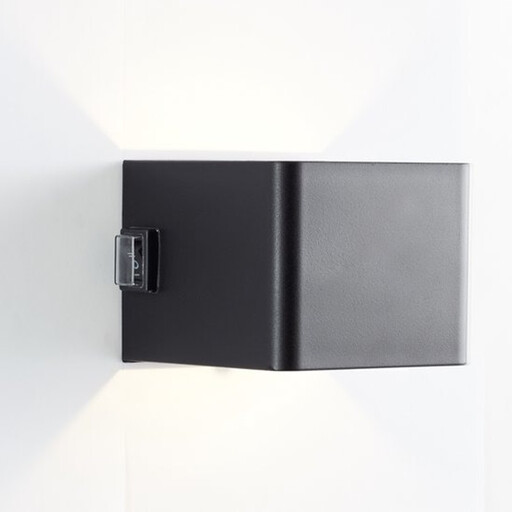
Why it suits this type of user: This portable outdoor light doesn’t need fixed wiring. According to the product information, it has an integrated motion sensor, USB-C charging and a magnetic mount.
There’s no need to have a fixed connection installed. Just remember to charge it regularly and attach the magnetic holder to a sturdy, flat surface.
300 lm, 3000 K, IP44, integrated LED and motion sensor; suitable for a balcony, patio or sheltered entrance.
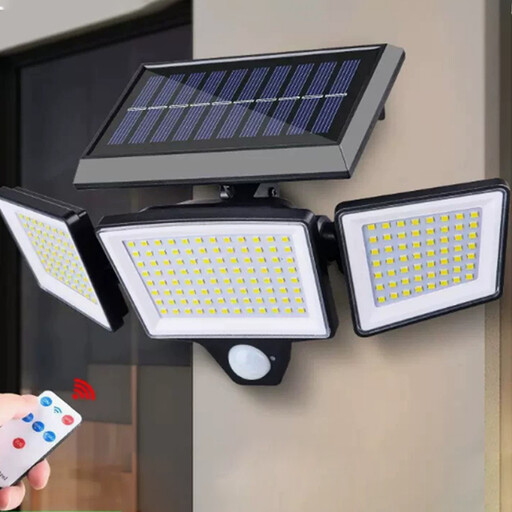
Why it suits this type of user: This solar outdoor light is designed for larger outdoor areas, such as a driveway, garden or garage. It combines three lighting modes with three adjustable heads.
Its IP65 rating makes it a better choice for a less sheltered location than an IP44 light. Make sure you position the solar panel where it will receive direct sunlight during the day.
According to the product information: 302 LEDs, 3000 lm, 180° motion detection, three lighting modes and an IP65-rated housing.
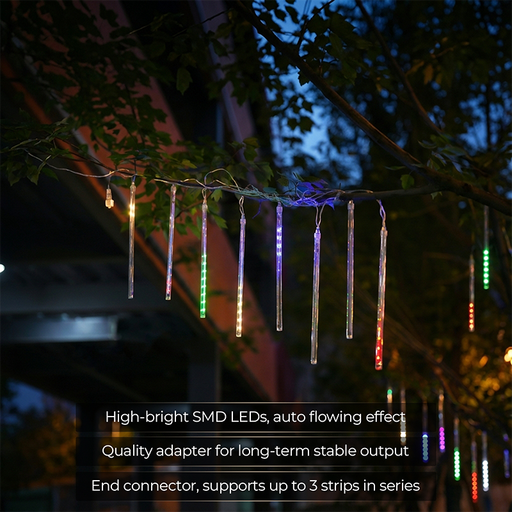
Why it suits this type of user: This decorative string light is designed for festive displays on a tree, wall or patio. It has eight hanging points, spaced 70 cm apart.
The dimensions and hanging points are clear in advance. However, IP44 means the string lights are only suitable for sheltered outdoor locations and splashing water.
192 multicolour LEDs, a 5 × 0.3 m span, a 5 m extension cable and a memory function, according to the product description.
For fixed wall lighting, you could also consider an E27 wall light, such as the Brilliant Newport outdoor light, or a compact GU10 light, such as the Brilliant Jelani. Both have IP44 and are supplied without a bulb. This gives you the freedom to choose your own light source, but mains installation requires extra planning.
We’ve put together a complete, up-to-date list of products that meet these strict selection criteria and the applicable European safety regulations.
First, check the IP rating and where the light will be installed. An IP44 outdoor light is suitable for splashing water and sheltered locations. For a more exposed spot, an IP65 outdoor light may be more practical. Also check whether the manufacturer advises against direct contact with water or jets of water.
A solar outdoor light uses energy from the sun during the day to charge its battery. It doesn’t need a fixed mains connection. However, how well it works depends on the amount of direct sunlight, the position of the panel and the battery’s charge level.
Lifespan varies depending on the product, how long it’s used, the battery and the conditions. With integrated LED lighting, the light source isn’t always replaceable. With a light that has an E27 or GU10 fitting, you can usually replace the bulb separately, as long as you use the right fitting and stay within the maximum wattage.
