
Vandaag of morgen in huis

Kwaliteit gegarandeerd

Welkomstaanbiedingen ontgrendelen: GRATIS bezorging | Tot 80% korting | Gratis 30 dagen JoyPlus-proefperiode
Download de app
Good outdoor lighting does more than just make a garden look more attractive. By the entrance, you want enough light to find the keyhole; along a garden path, even illumination is pleasant; and on a patio, it’s all about the atmosphere. Yet many people buy an outdoor light based on looks or a high lumen count, without checking the technical details.
This often leads to three problems:
Below, you’ll find out which features to check beforehand and which models suit different situations.
The IP rating indicates how well a fitting is protected against solid particles and water. An IP44 outdoor light is protected against splashing water from any direction. That’s suitable, for example, for a sheltered wall, balcony or canopy. IP44 does not mean the light is waterproof or suitable for direct water jets.
An IP65 outdoor light offers higher protection against dust and water jets. This can be useful on an unsheltered wall or by a driveway, but always check the full installation instructions. The rating does not make the product suitable for submersion.
A model with IP54, such as the vidaXL LED path light below, also has a specific degree of protection. Install the light according to the product information and avoid areas where water can pool for long periods.
Lumens (lm) indicate the total light output. For decorative garden lighting, a lower output may be sufficient. For an entrance or driveway, you usually need more directional light. A 400-lumen light doesn’t automatically give the same effect as a 400-lumen light with a wide beam.
Colour temperature is expressed in kelvin (K):
Also pay attention to the light source. An integrated LED outdoor light is ready to use straight away, but the LED module is not replaceable on many models. An E27 outdoor light or GU10 outdoor light gives you more choice in light colour, dimmability and replacement of the light source.
A solar-powered outdoor light doesn’t need to be connected to the mains. That makes installation practical in places where there’s no cable. However, performance depends on the amount of direct sunlight, the positioning of the panel and keeping it clean. In a shady Dutch garden, the run time can therefore vary.
An outdoor light with a motion sensor only switches on when movement is detected. So check the detection range and adjustment options. With fixed mains-powered lighting, you need to consider safe connection and local installation regulations.
Smart garden lighting offers features such as app control, RGB colours, adjustable colour temperature and dimming. The Brilliant Kamara model works, according to the product information, with Tuya Smart, Bluetooth and control via compatible voice assistants. The smart features require an app, account and connection. That’s handy for atmosphere, but less essential if you just want a light that turns on automatically.
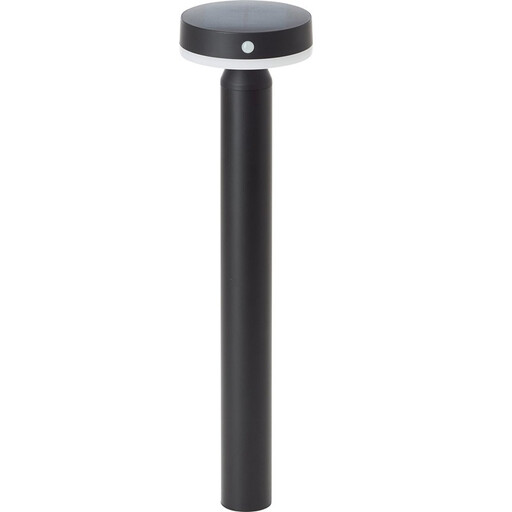
Why this fits the profile: This garden post light runs on solar power and doesn’t need a fixed mains connection. Its height of around 50 cm suits a garden path or border.
The product information clearly states IP44, 350 lumens and a motion sensor. Do check whether the location gets enough sunlight.
Solar function, motion sensor, 350 lm, 4000 K and a metal/plastic housing.
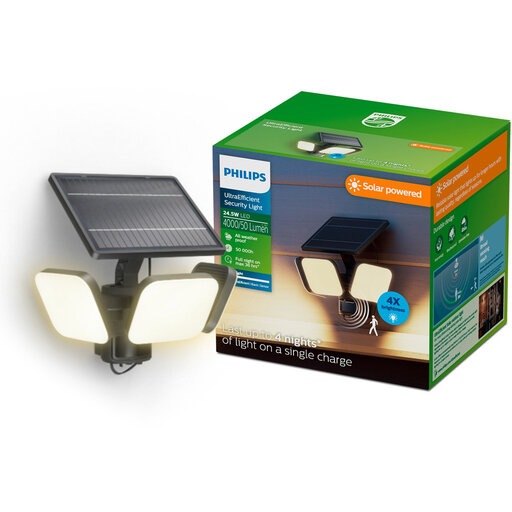
Why this fits the profile: For anyone looking for a powerful outdoor wall light for the entrance, wall or driveway. The light has an adjustable head and a PIR motion sensor.
The high lumen count is backed up by specific sensor ranges and IP65. Still, place the solar panel in a spot with direct light.
4000 lm, 3000 K, IP65, solar power and detection up to 8 metres on direct approach according to the product information.

Why this fits the profile: For garden owners who want to light up multiple zones and value smart control. The set is suitable for paths, borders and decorative accents.
The set states IP44, an 8-metre cable and installation with ground spikes. Keep cables away from walkways to reduce trip hazards.
Three integrated LED lights, 660 lm total, dimmable, RGB and adjustable colour temperature from 3000–6500 K.
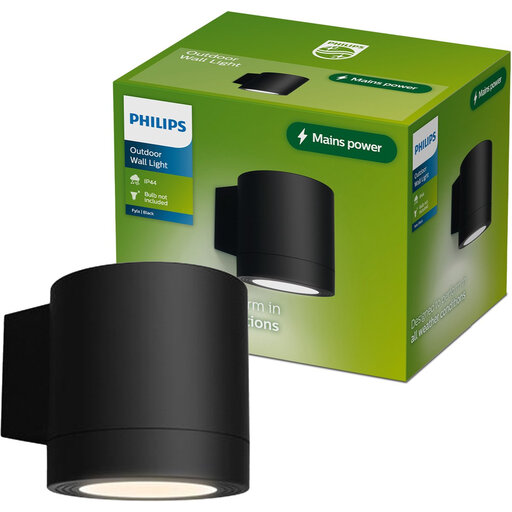
Why this fits the profile: This compact outdoor wall light is ideal for anyone who wants to choose their own GU10 light source, colour temperature and, if desired, smart features.
The light is supplied without a GU10 bulb. This means you know upfront that you need to choose and buy a suitable light source separately.
GU10 fitting, replaceable light source, aluminium housing and IP44 protection.
We’ve put together a full, up-to-date list of products that fully meet these strict selection criteria and comply with current European safety regulations.
Place a solar outdoor light where the panel receives direct sunlight during the day. Also check that branches, a balcony edge or a canopy don’t shade the panel. Clean the panel and housing according to the user manual, usually with a soft cloth.
For fixed wall lights, the surface must be suitable for the weight and fixing materials. Have a hardwired model with 230 volts connected by a qualified electrician. For ground spots and garden posts, lay cables away from walkways and check that the light is stable.
With a dimmable outdoor light, check the compatibility between the fitting, light source, dimmer and any app. An E27 lamp or GU10 bulb isn’t automatically dimmable; that depends on the light source you choose.
It can be, but performance depends on the available sunlight, positioning and battery capacity. In dark or cloudy periods, the run time may be lower. Choose a spot with as much direct daylight as possible and keep the solar panel clean.
For orientation and atmosphere, a lower number of lumens per light may be enough. For an entrance, driveway or security-focused application, more light is desirable. Don’t just look at lumens, but also at the distance between lights, the beam and the mounting height.
An IP44 model is designed for protection against splashing water, but it is not waterproof. Hang or place the light according to the product instructions and avoid direct water jets, submersion and areas where water can collect.
