
Vandaag of morgen in huis

Kwaliteit gegarandeerd

Welkomstaanbiedingen ontgrendelen: GRATIS bezorging | Tot 80% korting | Gratis 30 dagen JoyPlus-proefperiode
Download de app
Good outdoor lighting needs to do more than look attractive. A front door light should provide sufficient visibility, while garden lighting can mainly create ambience or help with orientation. Balconies, patios, driveways and sheds also have their own specific requirements.
Many disappointing purchases result from three common pitfalls:
By checking the technical specifications carefully, you can make a more informed choice between an LED outdoor lamp, solar outdoor lamp, outdoor wall light or outdoor ground spotlight.
The IP code consists of two digits. The first refers to protection against solid particles, while the second indicates protection against water.
No IP rating makes a fitting suitable for immersion. Also check that the lamp is installed correctly and that the seals close properly.
An integrated LED outdoor lamp is ready to use straight away and does not require a separate bulb. Pay attention to:
With an outdoor lamp featuring an E27 fitting or a GU10 outdoor lamp, you can choose which LED bulb to use. This gives you flexibility when it comes to light colour, dimming and, in some cases, smart control. Always check the maximum wattage and whether the fitting is suitable for your chosen light source.
An outdoor wall light provides illumination at eye level and is practical beside a door or along a frontage. An outdoor ground spotlight draws attention to a tree, shrub or architectural detail. For a path, a free-standing outdoor lamp with downward lighting often provides a clearer view.
A motion sensor can be useful on a driveway or at an entrance. Check the detection range, adjustment options and power supply. With solar lighting, direct sunlight is important; shade from a roof edge or tree can affect charging time.
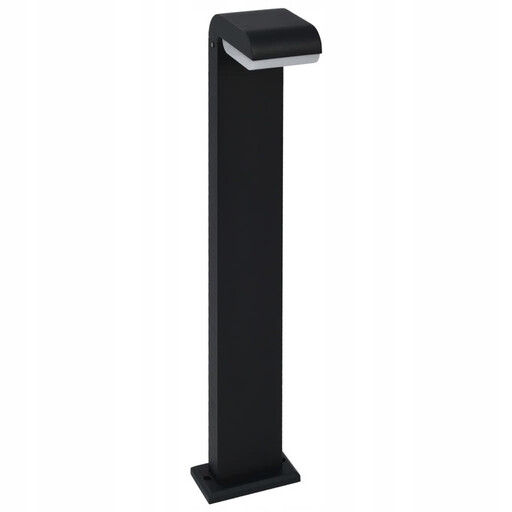
Why it suits this profile: This free-standing garden lamp is a practical choice for a path, flower border or entrance. The integrated LED means there is no need for a separate light source.
The product information clearly states that it has an integrated LED, 9W power rating, 550 lumens and IP54 protection. This means you do not need to order a fitting or separate bulb as well.
Black cast aluminium, opal diffuser, downward light distribution and a height of 80 cm.
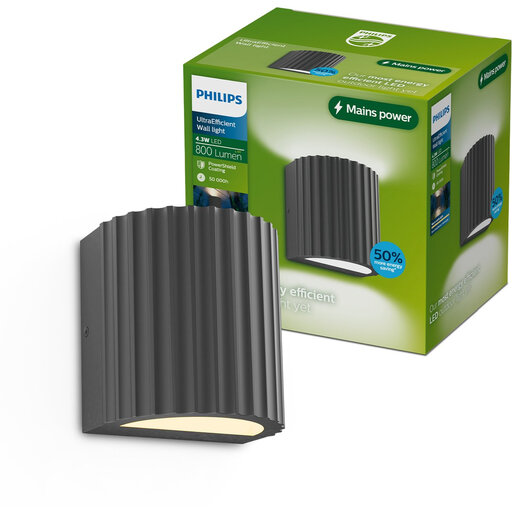
Why it suits this profile: If you are looking for fixed outdoor wall lighting with a calm, understated appearance, this fitting combines integrated LED technology with warm illumination.
The specifications separately list IP44, 800 lumens, 4.3W and 2700K. This makes it easier to estimate the brightness and energy consumption in advance than when relying on a vague claim about atmospheric lighting.
Aluminium and plastic construction, two-way light distribution, 230V connection and warm white light at 2700K.

Why it suits this profile: This solar outdoor lamp is designed for a driveway, back garden or other location without fixed wiring where a motion sensor is desirable.
The IP65 rating and specified detection range of 8 metres when approached directly and 16 metres when approached from the side are clearly stated. However, the lamp must still be positioned in direct sunlight.
4000 lumens, integrated LED, 5000K, two lighting modes and a solar panel. According to Philips, the lamp can provide up to four nights of lighting when the battery is fully charged.
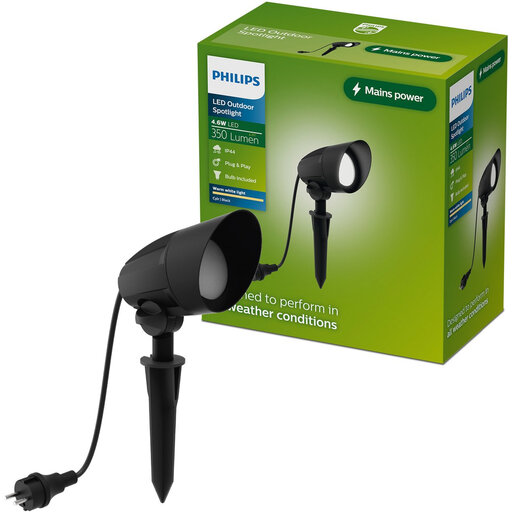
Why it suits this profile: This outdoor ground spotlight is ideal if you want to highlight a tree, flower border, driveway or architectural detail without installing a fixed wall light.
The GU10 light source is included, so you will not unexpectedly need to find and purchase a separate bulb. However, IP44 means that the spotlight is splashproof and must not be left standing in water.
Adjustable aluminium spotlight, 350 lumens, 2700K, 4.6W and a 150 cm cable. The lamp connects via a plug to a suitable outdoor socket.
We have put together a complete, up-to-date list of products that fully meet these strict selection criteria and the applicable European safety regulations.
With a fixed 230V outdoor wall light, the power must be switched off before you begin. If in doubt, have a fixed connection installed by a qualified electrician and follow local regulations. After installation, check that the glass, cover and seal are securely fitted.
A wireless outdoor lamp with a motion sensor requires less installation work. With a magnetic model, however, check that the surface is flat, clean and strong enough. With solar lighting, the panel needs an unobstructed view of the sun. Clean the panel regularly with a soft cloth.
Also consider the light colour:
An IP44 outdoor lamp is protected against splashing water and is often used on sheltered frontages, balconies and covered patios. For a completely exposed location or direct water jets, a higher rating such as IP65 may be more practical. Correct installation and sealing remain important.
This depends on the wattage and the number of hours it is switched on. A 4.3W lamp uses approximately 4.3 kWh over 1,000 hours of use. A 24.5W lamp uses approximately 24.5 kWh over the same period. Multiply this by your electricity tariff to calculate the running costs. A solar outdoor lamp does not use mains electricity, but its performance depends on sunlight and battery charge.
The lifespan varies depending on the light source, usage and conditions. According to Philips’ own information, some Philips models are stated to have a lifespan of up to 50,000 hours. This is a brand claim and is not a guarantee for every real-world situation. With an E27 or GU10 outdoor lamp, you can replace the light source; integrated LED light sources are generally not designed to be replaced. Therefore, check in advance which type of maintenance and replacement is suitable for your situation.
